Acetic Acid → Phenoxazine
Reaction equation

[C:1]1([O:7][CH3:8])[CH:6]=[CH:5][CH:4]=[CH:3][CH:2]=1.[C:9](O)(=O)C.Br[N:14]1[C:18](=O)[CH2:17][CH2:16][C:15]1=O>C(Cl)(Cl)Cl>[CH:5]1[C:6]2[NH:14][C:15]3[C:8](=[CH:9][CH:18]=[CH:17][CH:16]=3)[O:7][C:1]=2[CH:2]=[CH:3][CH:4]=1Participants
Reactant 3

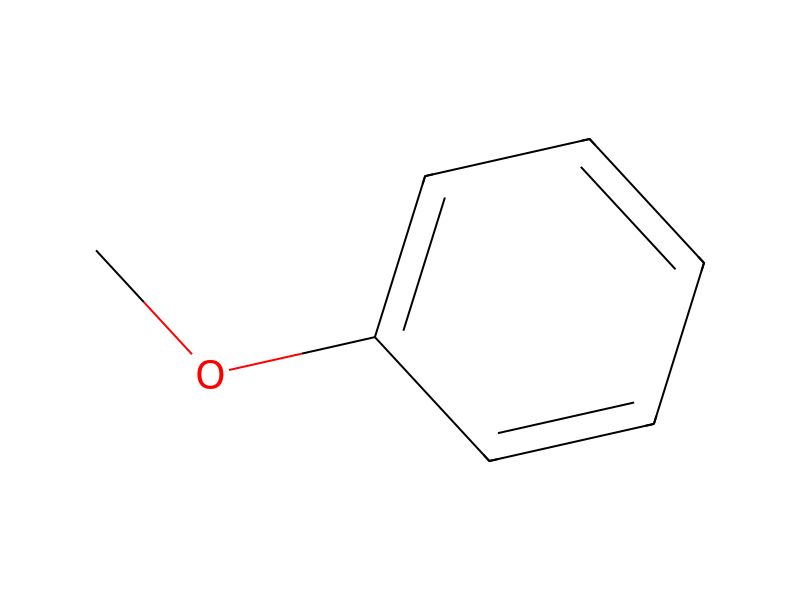

Product 1

Reagents, catalysts & solvents 1

Procedure
Phenoxazine (2.00 g, 10.92 mmol), 4-bromoanisole (2.25 g, 12.03 mmol), Pd2(dba)3 (0.10 g, 0.11 mmol), t-Bu3P (0.067 g, 0.33 mmol), and t-BuONa (1.57 g, 16.34 mmol) were dissolved in toluene (100 ml), and the reaction mixture was refluxed for 15 hours and cooled to room temperature. The solvent was removed under reduced pressure, and the residue was extracted with chloroform. The extracted solution was twice washed with a supersaturated sodium chloride solution and water (H2O), and the organic layer was collected and dried over anhydrous magnesium sulfate. The solvent was evaporated to obtain a crude product, and the crude product was purified by silica gel column chromatography to yield 2.27 g (72%) of a compound where the N-position of phenoxazine was substituted by anisole. The compound (2.00 g, 6.91 mmol) was dissolved in chloroform (100 ml), and acetic acid (100 ml) was added thereto. N-bromosuccinimide (NBS) (2.70 g, 15.20 mmol) was added in small amounts at 0° C., and the reaction mixture was heated to room temperature and incubated at room temperature for 10 hours. After the reaction was terminated, the solvent was removed under reduced pressure, and the residue was extracted with chloroform. The extracted solution was twice washed with a supersaturated sodium chloride solution and water (H2O), and the organic layer was collected and dried over anhydrous magnesium sulfate. The solvent was evaporated to obtain a crude product, and the crude product was purified by silica gel column chromatography to yield 2.62 g (85%) of a phenoxazine derivative compound substituted by a dibromo compound. The phenoxazine derivative compound (1.47 g, 3.29 mmol) was dissolved in tetrahydrofuran (100 ml), and n-butyllithium (4.6 ml, 7.36 mmol, 1.6 M solution) and 2-isopropoxy-4,4,5,5-tetramethyl-1,3,2-dioxaborolane (1.48 ml, 7.25 mmol) were gradually dropwise added thereto at −78° C. The reaction mixture was gradually heated to room temperature and incubated at room temperature for 15 hours. The reaction was terminated by the addition of water (H2O) (50 ml), and the resultant solution was extracted with chloroform. The extracted solution was twice washed with a supersaturated sodium chloride solution and water (H2O), and the organic layer was collected and dried over anhydrous magnesium sulfate. The solvent was evaporated to obtain a crude product, and the crude product was purified by silica gel column chromatography to yield 1.16 g (65%) of the intermediate D.
Workup
- customAfter the reaction was terminated
- customthe solvent was removed under reduced pressure
- extractionthe residue was extracted with chloroform
- washThe extracted solution was twice washed with a supersaturated sodium chloride solution and water (H2O)
- customthe organic layer was collected
- dry with materialdried over anhydrous magnesium sulfate
- customThe solvent was evaporated
- customto obtain a crude product
- customthe crude product was purified by silica gel column chromatography
Sources & evidence
- ORD record
- ord-00624ae908e84cc5b0805261ce64a924
- Source dataset
- uspto-grants-2010_05
- Patent number
- US07718278B2
Reaction notes
Loading…