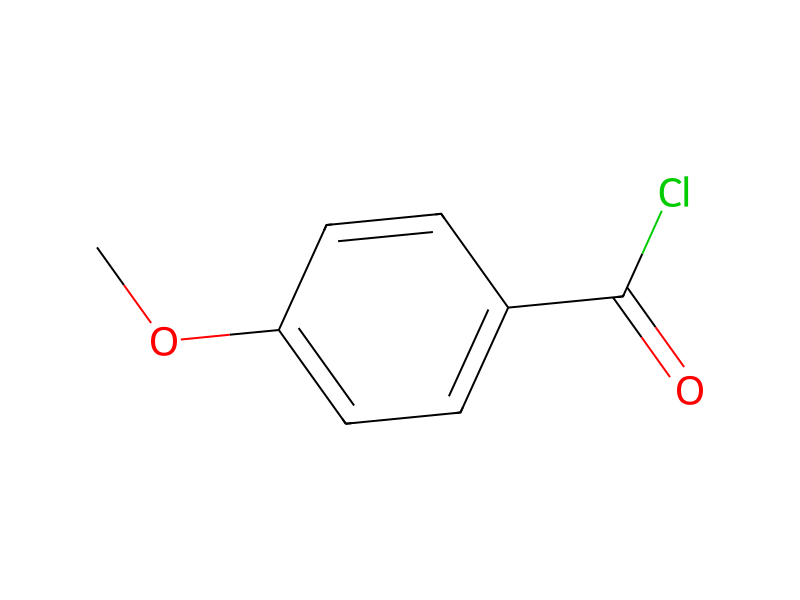
p-Anisoyl chloride → 2-Amino-4-(2-furyl)-5-(tetrahydropyran-4-ylcarbonyl)thiazole
Reaction equation

COC1C=CC(C(Cl)=O)=CC=1.[O:12]1[CH:16]=[CH:15][CH:14]=[C:13]1[C:17]1[N:18]=[C:19]([NH:30]C(=O)C2C=CC(OC)=CC=2)[S:20][C:21]=1[C:22]([CH:24]1[CH2:29][CH2:28][O:27][CH2:26][CH2:25]1)=[O:23]>>[O:27]1[CH2:28][CH2:29][CH:24]([C:22]([C:21]2[S:20][C:19]([NH2:30])=[N:18][C:17]=2[C:13]2[O:12][CH:16]=[CH:15][CH:14]=2)=[O:23])[CH2:25][CH2:26]1Participants
3


Procedure
In a manner similar to that in Example 456, by using 4-methoxybenzoyl chloride in place of cyclopropanecarbonyl chloride, the entitled Compound 463. (152 mg, 82%) was obtained as a grayish white solid from Compound 454 (125 mg, 0.450 mmol).
Sources & evidence
- ORD record
- ord-df3d6aeee7ee438db2fed9636fb12700
- Source dataset
- uspto-grants-2010_05
- Patent number
- US07718808B2
Reaction notes
Loading…