Ethylene Glycol → (3-Hydroxyphenyl)(triphenyl)phosphanium bromide
Reaction equation

[Br:1][C:2]1[CH:3]=[C:4]([OH:8])[CH:5]=[CH:6][CH:7]=1.[C:9]1([P:15]([C:22]2[CH:27]=[CH:26][CH:25]=[CH:24][CH:23]=2)[C:16]2[CH:21]=[CH:20][CH:19]=[CH:18][CH:17]=2)[CH:14]=[CH:13][CH:12]=[CH:11][CH:10]=1.C(O)CO>[Ni](Cl)Cl.O>[Br-:1].[C:22]1([P+:15]([C:9]2[CH:10]=[CH:11][CH:12]=[CH:13][CH:14]=2)([C:16]2[CH:21]=[CH:20][CH:19]=[CH:18][CH:17]=2)[C:2]2[CH:7]=[CH:6][CH:5]=[C:4]([OH:8])[CH:3]=2)[CH:23]=[CH:24][CH:25]=[CH:26][CH:27]=1Participants
6
Reactant 3

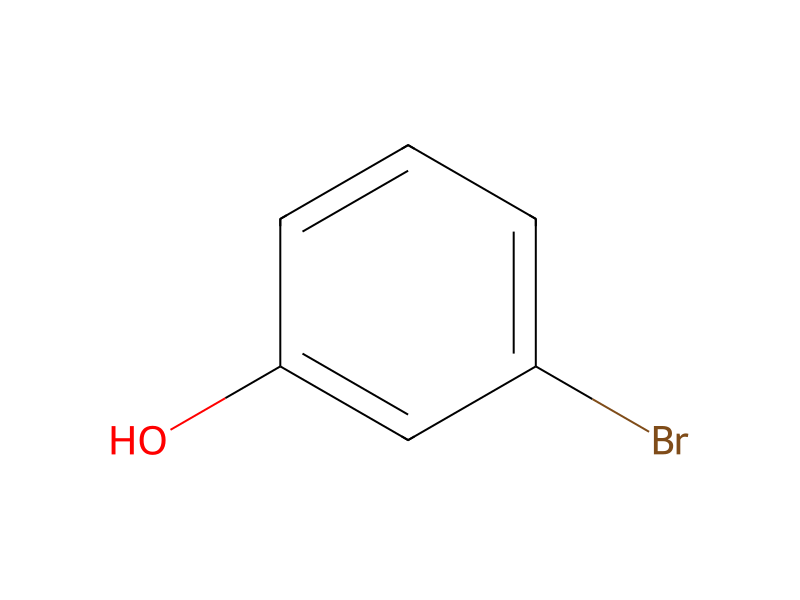

Product 1

Reagents, catalysts & solvents 2


Conditions
- Temperature
- 160 °C
Procedure
Into a separable flask (the capacity: 200 ml) equipped with a condenser and a stirrer, 10.4 g (0.060 moles) of 3-bromophenol, 17.3 g (0.066 moles) of triphenylphosphine, 0.65 g (5 mmole) of nickel chloride and 40 ml of ethylene glycol were placed, and the reaction was allowed to proceed by heating at 160° C. under stirring. After the reaction solution was cooled, 40 ml of pure water was slowly added dropwise. The separated crystals were washed with toluene, separated by filtration and dried, and triphenyl(3-hydroxyphenyl)phosphonium bromide was obtained
Workup
- customInto a separable flask (the capacity: 200 ml) equipped with a condenser and a stirrer
- temperatureAfter the reaction solution was cooled
- washThe separated crystals were washed with toluene
- customseparated by filtration
- customdried
Sources & evidence
- ORD record
- ord-1e24cf1567c74598ac1efd120984f1fc
- Source dataset
- uspto-grants-2010_05
- Patent number
- US07723444B2
Reaction notes
Loading…