Trimethyl phosphite → 1-(Benzothiazol-2-yl)-4-dimethoxyphosphinylmethylbenzene
Reaction equation

[S:1]1[C:5]2[CH:6]=[CH:7][CH:8]=[CH:9][C:4]=2[N:3]=[C:2]1[C:10]1[CH:15]=[CH:14][C:13]([CH2:16]Br)=[CH:12][CH:11]=1.[P:18]([O:23]C)([O:21][CH3:22])[O:19][CH3:20]>>[S:1]1[C:5]2[CH:6]=[CH:7][CH:8]=[CH:9][C:4]=2[N:3]=[C:2]1[C:10]1[CH:15]=[CH:14][C:13]([CH2:16][P:18]([O:21][CH3:22])([O:19][CH3:20])=[O:23])=[CH:12][CH:11]=1Participants
3
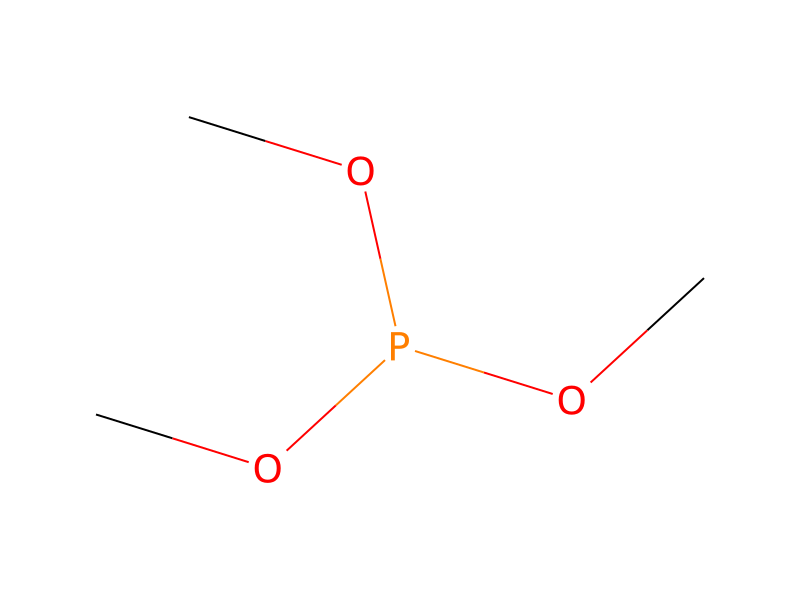


Procedure
6.08 g (0.2 mol) of 4-(benzothiazol-2-yl) bromomethylbenzene was reacted with 10 ml of trimethyl phosphite in nitrogen gas at 130°-160° C. for 15 minutes. The reaction mixture was allowed to cool down to room temperature and the resulting crystals were crystallized from n-hexane to give 3.9 g (83%) of colorless flakes of 1-(benzothiazol-2-yl)-4-dimethoxyphosphinylmethylbenzene melting at 129.5°-130.5° C.
Workup
- customthe resulting crystals were crystallized from n-hexane
Sources & evidence
- ORD record
- ord-af63bdd480874f3b9724ea1a733a4288
- Source dataset
- uspto-grants-1980_11
- Patent number
- US04232010
Reaction notes
Loading…