Diisopropylamine → Stannane, benzoyltributyl-
Reaction equation

C(NC(C)C)(C)C.[Li]CCCC.CCCCCC.[Sn:19]([CH:32]([C:34]1[CH:39]=[CH:38][CH:37]=[CH:36][CH:35]=1)[OH:33])([CH2:28][CH2:29][CH2:30][CH3:31])([CH2:24][CH2:25][CH2:26][CH3:27])[CH2:20][CH2:21][CH2:22][CH3:23].N(C(N1CCCCC1)=O)=NC(N1CCCCC1)=O>C1COCC1>[Sn:19]([C:32]([C:34]1[CH:35]=[CH:36][CH:37]=[CH:38][CH:39]=1)=[O:33])([CH2:20][CH2:21][CH2:22][CH3:23])([CH2:28][CH2:29][CH2:30][CH3:31])[CH2:24][CH2:25][CH2:26][CH3:27]Participants






Conditions
- Temperature
- -30 °C
Procedure
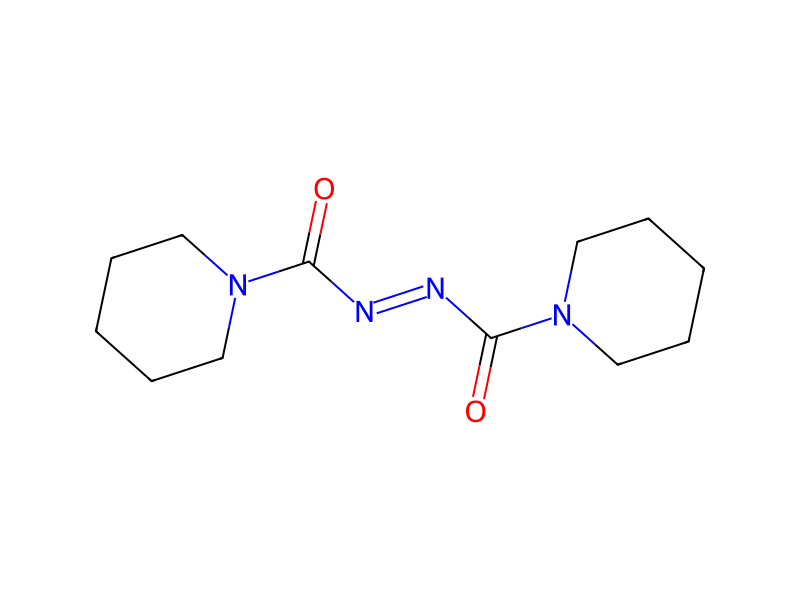
This example demonstrates the synthesis and purification of the acylstannane complex Bu3SnC(O)Ph. In a nitrogen-filled glove box, a 250 mL three-neck round bottom flask was charged with diisopropylamine (1.31 g, 13.0 mmol) and 40 mL dry THF. The solution was cooled to about −30° C. and 2.5 M BuLi in hexane (5.2 mL, 13.0 mmol) was added slowly by syringe. The reaction mixture was allowed to warm to room temperature. A dropping funnel containing Bu3SnCH(OH)Ph (5.00 g, 12.6 mmol) dissolved in 20 mL dry THF, a nitrogen inlet, and a glass stopper were attached to the round bottom flask. The apparatus was removed from the glove box. The reaction setup was connected to a nitrogen-filled Schlenk line. The reaction mixture was cooled to about −78° C., and the Bu3SnCH(OH)Ph/THF solution was added dropwise. After the addition, the reaction mixture was allowed to stir for 15-20 min at −78° C., during which time the color changed from yellow to light orange. The glass stopper was then removed, and 1,1′-(azo dicarbonyl)dipiperidine (3.18 g, 12.6 mmol) was quickly added as a solid. The resulting reaction mixture was allowed to stir for 20-30 min at −78° C., during which time the reaction mixture turned dark orange. The reaction mixture was allowed to warm to about 0° C., and stirred for approximately 30 min at that temperature. The reaction was quenched at 0° C. by the addition of approximately 14 mL saturated ammonium chloride; solids formed in the reaction mixture. The reaction mixture was brought into a nitrogen-filled glove-box, filtered, dried (MgSO4), and concentrated to afford an orange oil. Chromatography on silica gel using 95/5 hexane/ethyl acetate as the eluent afforded 1.80 g of Bu3SnC(O)Ph as a yellow-orange oil. 1H NMR (C6D6) δ 7.9 (2H, d, Hortho), 7.3 (3H, mult, Hmeta & Hpara), 1.8-0.9 (27H, Bu's); 119Sn NMR (CDCl3) δ 87.4 relative to SnMe4; 13C NMR (CDCl3) δ 244.8 (CO), 142.9, 132.8, 128.8, 127.7 (Caromatic), 29.1, 27.3, 13.6, 11.5 (Cbutyl).
Workup
- additionIn a nitrogen-filled glove box, a 250 mL three-neck round bottom flask
- temperatureto warm to room temperature
- customa nitrogen inlet, and a glass stopper were attached to the round bottom flask
- customThe apparatus was removed from the glove box
- additionfilled Schlenk line
- temperatureThe reaction mixture was cooled to about −78° C.
- additionthe Bu3SnCH(OH)Ph/THF solution was added dropwise
- additionAfter the addition
- customThe glass stopper was then removed
- customThe resulting reaction mixture
- stirringto stir for 20-30 min at −78° C., during which time the reaction mixture
- temperatureto warm to about 0° C.
- stirringstirred for approximately 30 min at that temperature
- customThe reaction was quenched at 0° C. by the addition of approximately 14 mL saturated ammonium chloride
- customsolids formed in the reaction mixture
- additionfilled glove-box
- filtrationfiltered
- dry with materialdried (MgSO4)
- concentrationconcentrated
- customto afford an orange oil
Sources & evidence
- ORD record
- ord-0597a4d5e5834b3a9a266732dec1b0c0
- Source dataset
- uspto-grants-2010_03
- Patent number
- US07683004B2
Reaction notes
Loading…