Dichloromethane → N-(4-[1,3]dioxolan-2-yl-2,5-dimethylphenyl)acrylamide
Reaction equation

[O:1]1[CH2:5][CH2:4][O:3][CH:2]1[C:6]1[C:11]([CH3:12])=[CH:10][C:9]([NH2:13])=[C:8]([CH3:14])[CH:7]=1.ClCCl.C(N(C(C)C)CC)(C)C.[C:27](Cl)(=[O:30])[CH:28]=[CH2:29]>O>[O:1]1[CH2:5][CH2:4][O:3][CH:2]1[C:6]1[C:11]([CH3:12])=[CH:10][C:9]([NH:13][C:27](=[O:30])[CH:28]=[CH2:29])=[C:8]([CH3:14])[CH:7]=1Participants





Procedure
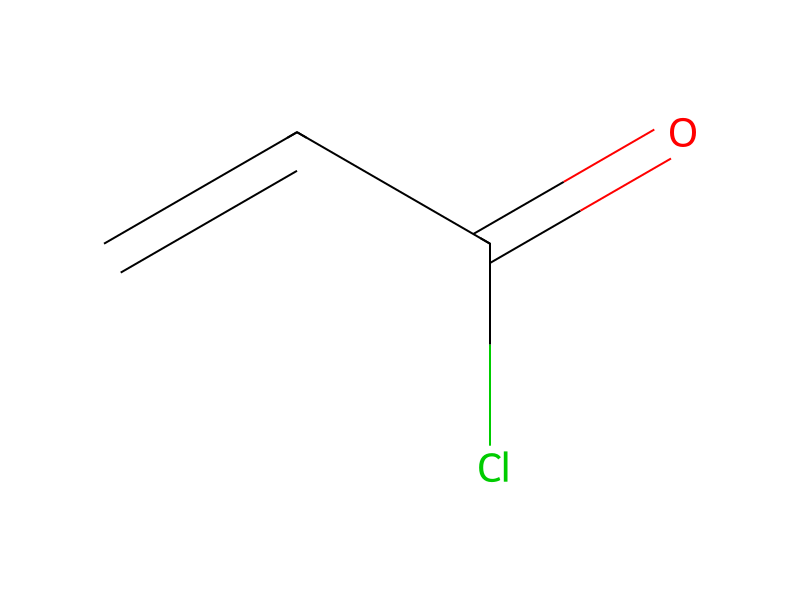
To a 500 mL round-bottom flask was added crude 4-[1,3]dioxolan-2-yl-2,5-dimethylphenylamine (5.6 g, 29 mmol), dichloromethane (100 mL) and diisopropylethylamine (7.6 mL, 43.5 mmol). The resulting mixture was stirred at room temperature until the ingredients dissolved and then the mixture was cooled to 0° C. Acryloyl chloride (2.35 mL, 29 mmol) was then added dropwise over a 5 minute period. The reaction mixture was stirred at 0° C. to 5° C. for 1 hour and then water (50 mL) was added and stirring was continued for about 30 minutes at which time fine solids had formed. The mixture was filtered to collect the solids. The layers of the filtrate were then separated and the organic layer was concentrated under reduced pressure to dryness. Dichloromethane (50 mL) was added to the residue and this mixture was stirred until a free-flowing slurry developed. The slurry was filtered (using the same funnel used to collect the fine solids above) and the filter cake was washed with dichloromethane (10 mL) and dried to provide N-(4-[1,3]dioxolan-2-yl-2,5-dimethylphenyl)acrylamide (3.1 g, 97% purity) as a white to off-white solid.
Workup
- dissolutiondissolved
- temperaturethe mixture was cooled to 0° C
- stirringThe reaction mixture was stirred at 0° C. to 5° C. for 1 hour
- stirringstirring
- customfine solids had formed
- filtrationThe mixture was filtered
- customto collect the solids
- customThe layers of the filtrate were then separated
- concentrationthe organic layer was concentrated under reduced pressure to dryness
- additionDichloromethane (50 mL) was added to the residue
- stirringthis mixture was stirred until a free-flowing slurry
- filtrationThe slurry was filtered (
- customto collect the fine solids above) and the filter cake
- washwas washed with dichloromethane (10 mL)
- customdried
Sources & evidence
- ORD record
- ord-60b25ceb9a514fc793e95b5d2e6d1ab0
- Source dataset
- uspto-grants-2010_03
- Patent number
- US07687521B2
Reaction notes
Loading…