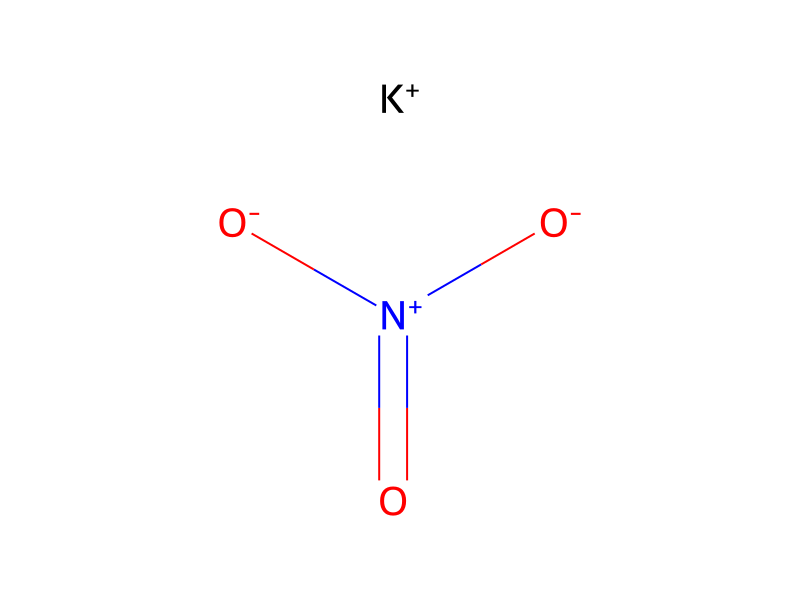
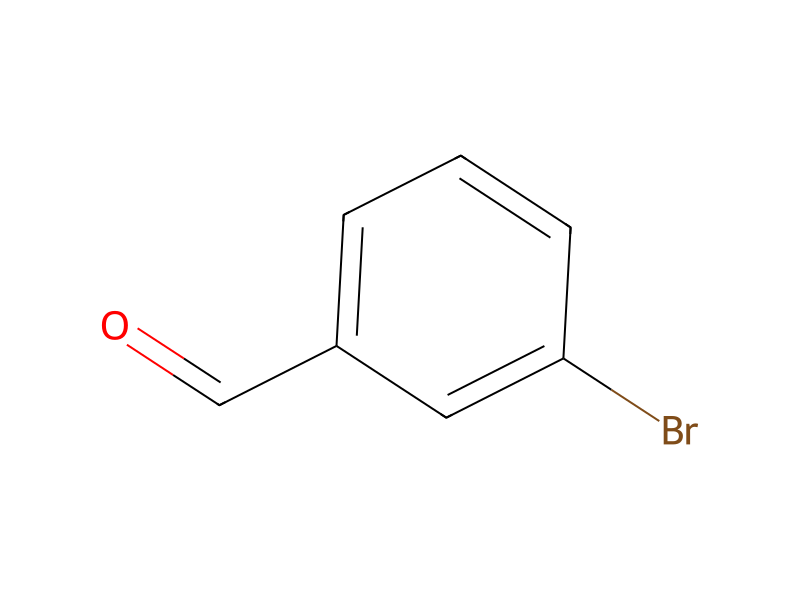
Potassium Nitrate → 5-Bromo-2-nitrobenzaldehyde
Reaction equation

[Br:1][C:2]1[CH:3]=[C:4]([CH:7]=[CH:8][CH:9]=1)[CH:5]=[O:6].[N+:10]([O-])([O-:12])=[O:11].[K+]>S(=O)(=O)(O)O>[Br:1][C:2]1[CH:9]=[CH:8][C:7]([N+:10]([O-:12])=[O:11])=[C:4]([CH:3]=1)[CH:5]=[O:6]Participants
4
Reactant 2
Product 1

Reagents, catalysts & solvents 1

Conditions
- Temperature
- 0 °C
Procedure
3-Bromobenzaldehyde (18.5 g, 100 mmol) was added dropwise to a solution of potassium nitrate (20.2 g, 200 mmol) in concentrated sulfuric acid (100 mL) cooled to 0° C. by an ice water bath. The solution was stirred for an additional 15 minutes upon complete addition of 3-bromobenzaldehyde whereupon the entire reaction mixture was added to ice (250 g). The precipitate was isolated by filtration, and the solid was washed with de-ionized water until the pH of the wash was neutral. Drying for 12 hours under vacuum gave the yellow solid, 5-bromo-2-nitrobenzaldehyde was (11.8 g, 51% yield).
Workup
- customThe precipitate was isolated by filtration
- washthe solid was washed with de-ionized water until the pH of the wash
- customDrying for 12 hours under vacuum
Sources & evidence
- ORD record
- ord-f0b34c99028b4d63b36d102ebb4f1002
- Source dataset
- uspto-grants-2008_01
- Patent number
- US07319038B2
Reaction notes
Loading…