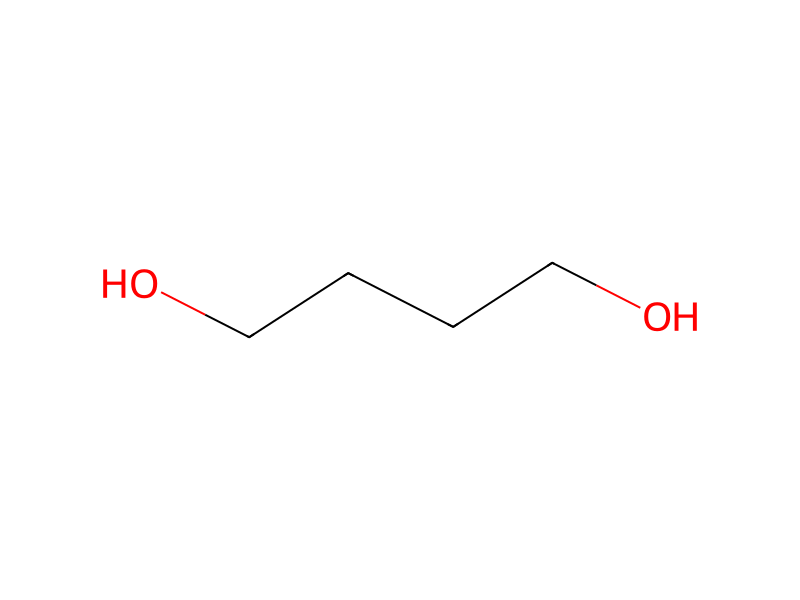
1,4-Butanediol → Bisphenol A
Reaction equation

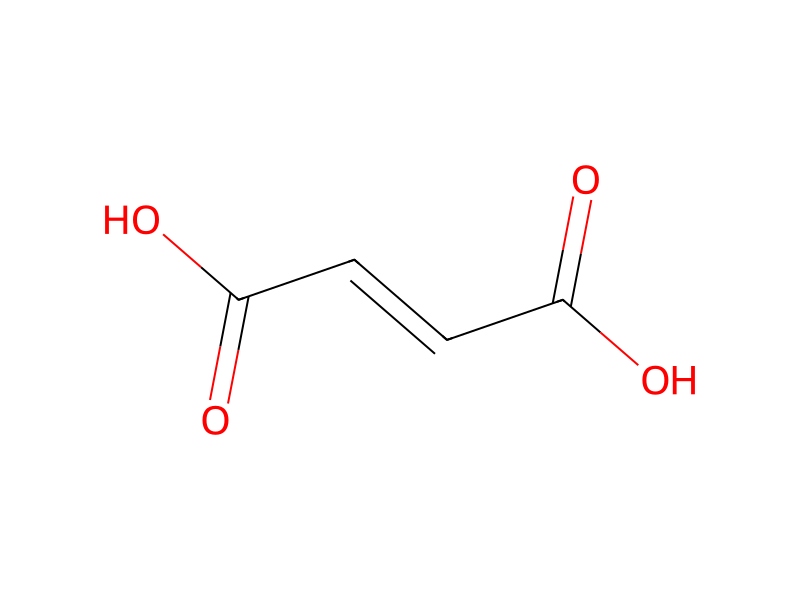
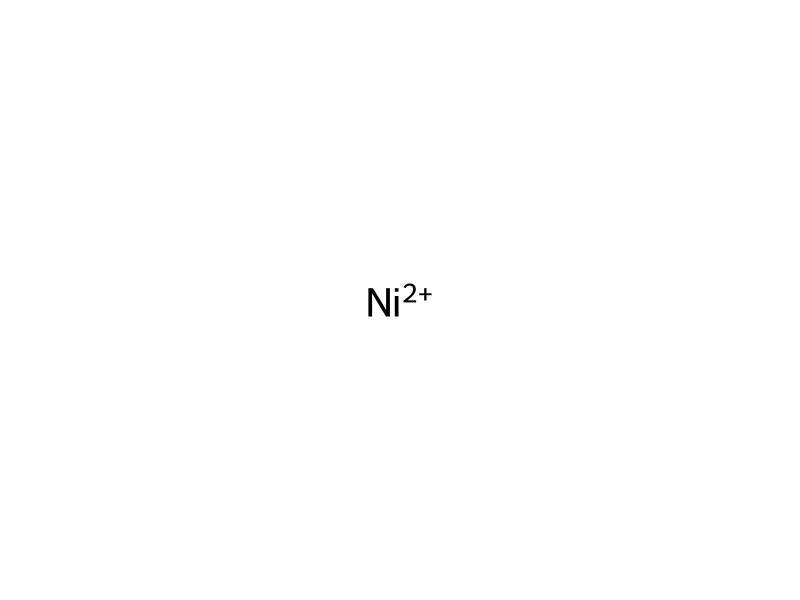
[CH2:1](O)[CH2:2][CH2:3][CH2:4]O.C(O)CCCCO.C(O)CCCCCO.C(O)(=O)/C=C/C(O)=O.C([O:38][C:39]1[CH:44]=[CH:43][C:42]([C:45]([C:48]2[CH:53]=[CH:52][C:51]([O:54]CC=CCCCC=C)=[CH:50][CH:49]=2)([CH3:47])[CH3:46])=[CH:41][CH:40]=1)C=CCCCC=C>[Pd].C=CC=C.[Ni+2]>[CH2:1]=[CH:2][CH:3]=[CH2:4].[OH:38][C:39]1[CH:40]=[CH:41][C:42]([C:45]([C:48]2[CH:49]=[CH:50][C:51]([OH:54])=[CH:52][CH:53]=2)([CH3:47])[CH3:46])=[CH:43][CH:44]=1Participants
Reactant 5



Product 2


Reagents, catalysts & solvents 3

Procedure
The use of low levels of palladium catalyst in 1,3-butadiene telomerizations is disclosed in British patent No. 2,114,974. This patent teaches that when 1,4-butanediol, 1,5-pentanediol, and 1,6-hexanediol telomerized with butadiene, about a 61% yield of monoether based on butadiene can be realized by using a molar ratio of catalyst/diene equal to about 1/20,600. The patent also discloses that a large stoichiometric excess of diol is also necessary in order to obtain high yields of the desired monoether product. For best yields of monoether, the above patent also teaches that the optimum catalytic effect is obtained by combining the palladium catalyst with a nickel(II) compound and a base such as a quaternary ammonium hydroxide. The patent also discloses a method of removing the palladium catalyst with ion exchange resins from the reaction mixture after the reaction has been completed. The palladium levels are obviously not low enough to preclude the recovery step; an operation which the present invention eliminates. U.S. Pat. No. 3,746,749 discloses that octadienyl esters of adipic acid can be prepared in 86% yield by employing a molar ratio of Pd/Acid/Butadiene equal to 1/12,300/56,000 and octadienyl esters of fumaric acid can be prepared in 67% yield by employing a molar ratio of Pd/Acid/Butadiene equal to 1/60,000/28,000. However, these low palladium levels are used in conjunction with from 0.1 to 10 moles of an alkali metal salt of a carboxylic acid/mole of carboxylic acid. U.S. Pat. No. 3,518,315 teaches that 2,2-bis(4-(2,7-octadienyloxy)phenyl) propane is formed by the telomerization of 1,3-butadiene with 2,2-bis(4-hydroxyphenyl) propane (bisphenol A) using a palladium (II) catalyst wherein the palladium (II)/bisphenol A/butadiene ration is 1/39/295 at a temperature of 100° C. for 48 hours.
Workup
- customto obtain high
- customyields of the desired monoether product
- customFor best yields of monoether
- customis obtained
- customof removing the palladium catalyst with ion exchange resins from the reaction mixture after the reaction
- customcan be prepared in 86% yield
- customcan be prepared in 67% yield
Sources & evidence
- ORD record
- ord-bc874049103a428cbbf7211de63986b1
- Source dataset
- uspto-grants-1993_08
- Patent number
- US05236909
Reaction notes
Loading…