
Basic information
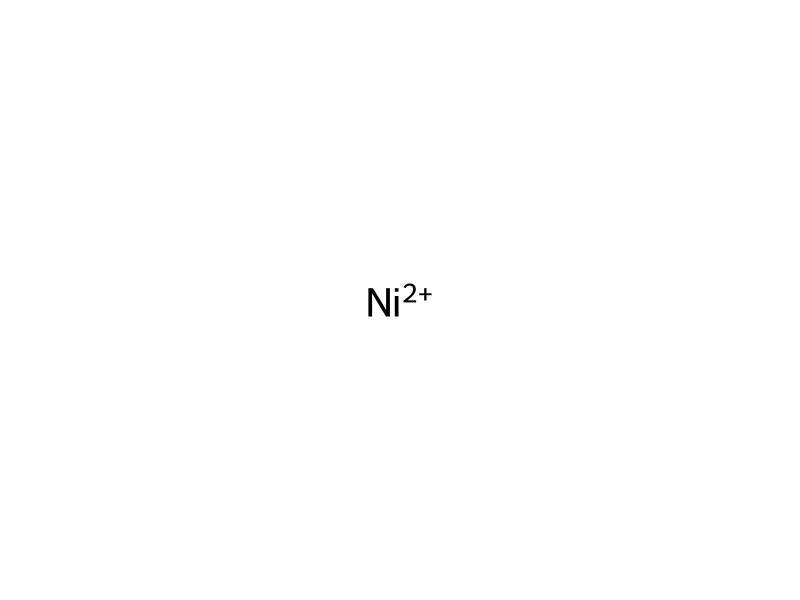
- Standard SMILES
[Ni+2]- InChIKey
VEQPNABPJHWNSG-UHFFFAOYSA-N- Molecular formula
- Ni+2
- Average molar mass
- 58.693 g/mol
- Monoisotopic mass
- 57.93424574
Overview
Nickel(2+) is a nickel cation in which the nickel carries a double positive charge. It has a role as a cofactor. It is a nickel cation, a monoatomic dication, a divalent metal cation and a metal cation allergen.
Names & identifiers
- Preferred name
- Nickel cation
- IUPAC
- nickel(2+)
- English name
- Nickel
- Molecular formula
- Ni
- Molecular weight
- 58.69
Names & synonyms
Nickel(2+)Nickel cationnickelous ionNICKEL (II) IONNickel, ion (Ni2+)nickel(2+) ionNickel ionsNickel(II) ionNickel(2+)ionsnickel(II) cationNi++Ni2+
Show more names
Niraney niRaney nickelNickel powderSILVER(I) NITRATENickel, p.a.Ranery NiNickel 270nickel atomNickel plate
Nickel ion(2+)14701-22-5Nickel cation (Ni2+)OIS2CXW7AMUNII-OIS2CXW7AMNiIICHEBI:49786Ni(2+)
Database identifiers
- CAS
14701-22-5、7440-02-0- PubChem CID
- 934
- DTXSID
DTXSID60163564- ChEBI
CHEBI:49786- UNII
- OIS2CXW7AM
- Nikkaji
- J2.510.549D
Properties
Computed structural properties
- Topological polar surface area
- 0 Ų
- Hydrogen bond donors
- 0
- Hydrogen bond acceptors
- 0
- Rotatable bonds
- 0
- Heavy atoms
- 1
- Formal charge
- 2
- Complexity
- 0
Experimental & physicochemical properties
Melting Point1455 °C
Physical DescriptionSolid
Physicochemical properties
- Melting point
- 1453 °C · 1453 °C (lit.)
- Boiling point
- 2732 °C · 2732 °C (lit.)
- Density
- 8.9 g/mL · 8.9 g/mL at 25 °C (lit.)
- bulk density
- 1600 · 1600-2600kg/m3
- vapor density
- 5.8 · 5.8 (vs air)
- storage temp.
- no restrictions.
- solubility
- 2 O; · insoluble in H2O; slightly soluble in dilute acid solutions
- form
- wire
- color
- White to gray-white
- Specific Gravity
- 8.9 · 8.9
- Odor
- Odorless
- PH Range
- 9 · 9 - 11 at 20 °C
- PH
- 8.5 · 8.5-12.0
- Flame Color
- Colorless to silvery white
- Resistivity
- 6.97 μΩ-cm, · 6.97 μΩ-cm, 20°C
- Electrical Conductivity
- 1.4 · 1.4× 107S/m
- Water Solubility
- It is insoluble in water.
- Thermal Conductivity
- 91 W/ · 91 W/(m·K)
- Specific Heat Capacity
- 0.44 J/ · Cp(crystal): 0.44 J/(g·K); Cp(gas): 0.4 J/(g·K), at 25℃
- Sensitive
- air sensitive
- Merck
- 14 · 14,8107
- Exposure limits
- 0.2 mg/m3,Inhalable · ACGIH:TLV-TWA 0.2 mg/m3,Inhalable nickel particulate mass— Insoluble compounds A1 — Confirmed Human CarcinogenOSHA:PEL-TWA 1 mg/m3NIOSH:REL-TWA 0.015 mg/m3
- Stability
- Stable in massive form. Powder is pyrophoric - can ignite spontaneously. May react violently with titanium, ammonium nitrate, potassium perchlorate, hydrazoic acid. Incompatible with acids, oxidizing agents, sulfur.
- InChI
- 1S/Ni
- InChIKey
- PXHVJJICTQNCMI-UHFFFAOYSA-N
- SMILES
- [Ni]
- Modulus of Elasticity
- 207 GPa · 207 GPa
- Poissons Ratio
- 0.31 · 0.31
- Shear Modulus
- 76 GPa · 76.0 GPa
- SCOGS (Select Committee on GRAS Substances)
- Nickel (elemental)
- CAS DataBase Reference
- 7440 · 7440-02-0(CAS DataBase Reference)
- Substances Added to Food (formerly EAFUS)
- NICKEL
- REACH Annex XVII Substances List
- Nickel (7440-02-0)
- FDA 21 CFR
- 176.18 · 176.180
- EWG's Food Scores
- 10 · 10
- FDA UNII
- 7 OV03QG267 · 7OV03QG267
- Proposition 65 List
- Nickel (Metallic)
- NIST Chemistry Reference
- Nickel(7440-02-0)
- IARC
- 2 B · 2B (Vol. Sup 7, 49) 1990
- EPA Substance Registry System
- Nickel (7440-02-0)
- Toxicological Profile|ATSDR
- Nickel|Toxicological Profile|ATSDR
- UNSPSC Code
- 41122203 · 41122203
- NACRES
- 24 · NA.24
- Symbol(GHS)
- 2 · GHS02,GHS08
- Signal word
- Danger
- Hazard statements
- 370 · H370-H372-H317-H334-H351-H413-H228-H250
- Precautionary statements
- 501 · P501-P273-P272-P222-P260-P270-P202-P240-P210-P201-P241-P264-P280-P284-P302+P352-P370+P378-P335+P334-P342+P311-P308+P311-P362+P364-P304+P340-P333+P313-P422-P405
- Hazard Codes
- C,Xi,Xn,F,T
- Risk Statements
- 34 · 34-50/53-43-40-10-17-52/53-48/23
- Safety Statements
- 26 · 26-45-60-61-36-22-36/37-16-15-5-36/37/39-43-28
- OEB
- D
- OEL
- 0.015 mg/m3 · TWA: 0.015 mg/m3 [*Note: The REL does not apply to Nickel carbonyl.]
- RIDADR
- 1493 · UN 1493 5.1/PG 2
- WGK Germany
- 3 · 3
- RTECS
- 4725000 · VW4725000
- F
- 8 · 8
- Autoignition Temperature
- 87 °C · 87 °C
- TSCA
- TSCA listed
- HazardClass
- 4.1 · 4.1
- PackingGroup
- II
- HS Code
- 38151100 · 38151100
- Storage Class
- 6.1 D · 6.1D - Non-combustible acute toxic Cat.3toxic hazardous materials or hazardous materials causing chronic effects
- Hazard Classifications
- 2 Skin · Carc. 2Skin Sens. 1STOT RE 1
- Hazardous Substances Data
- 7440 · 7440-02-0(Hazardous Substances Data)
- Toxicity
- 25 years; · Occupational exposures may occur in its mining, smelting, and refining. The general population ingests nickel in food. Skin sensitization and dermatitis leading to chronic eczema, called “nickel itch,” frequently occurs, especially in wearers of pierced earrings. Nickel can also irritate the conjunctiva and respiratory tract mucous membranes. Absorption from the digestive tract is poor, so systemic poisoning is rare, but since it is an irritant it acts as an emetic. Systemic effects include hyperglycemia, capillary damage, CNS depression, myocardial weakness, and kidney damage. Nickel and its compounds are carcinogenic following inhalation, but not following ingestion or skin contact. Cancer of the lung and nasal passages results, with a latent period of about 25 years; smokers are at greater risk. In addition to irritation and carcinogenesis, nickel carbonyl (nickel tetracarbonyl, Ni(CO)4) exerts relatively mild, tran_x0002_sientinitial symptoms including headache, giddiness, nausea, and shortness of breath. These symptoms are followed by very serious symptoms hours to days later, consisting of tightness in the chest, shortness of breath, rapid respiration, pulmonary edema, cyanosis, and extreme weakness; this can be fatal. Heat decomposition of nickel carbonyl yields carbon monoxide. Chelating agents can be used to remove nickel from the body.
- IDLA
- 10 mg · 10 mg Ni/m3
- REACH Registrations
- Active
- Limited Quantities
- 1 Kg · 1.0 Kg (2.2 lbs)
- Excepted Quantities
- Not Permitted as Excepted Quantity
Safety & regulation
Safety & protection
Minimum Risk LevelIntermediate Inhalation: 0.0002 mg/m3 (L134)
Chronic Inhalation: 0.00009 mg/m3 (L134)
Toxicology
TreatmentExcess exposure to nickel is usually handled by preventing further exposure and symptomatic treatment. Nickel poisoning may also be treated using chelation therapy with sodium diethyldithiocarbamate. (L42)
Health Effects
The most common harmful health effect of nickel in humans is an allergic reaction. This usually manifests as a skin rash, although some people experience asthma attacks. Long term inhahation of nickel causes chronic bronchitis and reduced lung function, as well as damage to the naval cavity. Ingestion of excess nickel results in damage to the stomach, blood, liver, kidneys, and immune system, as well as having adverse effects on reproduction and development. (L41)
Exposure RoutesOral (L41) ; inhalation (L41) ; dermal (L41)
Toxicity Summary
Nickel is known to substitute for other essential elements in certain enzmes, such as calcineurin. It is genotoxic, and some nickel compounds have been shown to promote cell proliferation. Nickel has a high affinity for chromatin proteins, particularly histones and protamines. The complexing of nickel ions with heterochromatin results in a number of alterations including condensation, DNA hypermethylation, gene silencing, and inhibition of histone acetylation, which have been shown to disturb gene expression. Nickel has also been shown to alter several transcription factors, including hypoxia-inducible transcription factor, activating transcription factor, and NF-KB transcription factor. There is also evidence that nickel ions inhibit DNA repair, either by directly inhibiting DNA repair enzymes or competing with zinc ions for binding to zinc-finger DNA binding proteins, resulting in structural changes in DNA that prevent repair enzymes from binding. Nickel ions can also complex with a number of cellular ligands including amino acids, peptides, and proteins resulting in the generation of oxygen radicals, which induce base damage, DNA strand breaks, and DNA protein crosslinks. (L41, A40)
Signs and SymptomsSymptoms of nickel poisoning include headache, nausea, vomiting, dizziness, irritability, and difficulty sleeping, followed by chest pains, sweating, rapid heart beat, and a dry cough. (L42)
Carcinogen ClassificationMetallic nickel is possibly carcinogenic to humons (Group 2B). Nickel compounds are carcinogenic to humans (Group 1). (L135)
Toxicity DataLD50: 250 mg/kg (Intraperitoneal, Rat) (T26)
Safety data
- F
- 8
- OEB
- D
- OEL
- TWA: 0.015 mg/m3 [*Note: The REL does not apply to Nickel carbonyl.]
- wgk
- 3
- IDLA
- 10 mg Ni/m3
- tsca
- TSCA listed
- rtecs
- VW4725000
- ridadr
- UN 1493 5.1/PG 2
- hs_code
- 38151100
- Toxicity
- Occupational exposures may occur in its mining, smelting, and refining. The general population ingests nickel in food. Skin sensitization and dermatitis leading to chronic eczema, called “nickel itch,” frequently occurs, especially in wearers of pierced earrings. Nickel can also irritate the conjunctiva and respiratory tract mucous membranes. Absorption from the digestive tract is poor, so systemic poisoning is rare, but since it is an irritant it acts as an emetic. Systemic effects include hyperglycemia, capillary damage, CNS depression, myocardial weakness, and kidney damage. Nickel and its compounds are carcinogenic following inhalation, but not following ingestion or skin contact. Cancer of the lung and nasal passages results, with a latent period of about 25 years; smokers are at greater risk. In addition to irritation and carcinogenesis, nickel carbonyl (nickel tetracarbonyl, Ni(CO)4) exerts relatively mild, tran_x0002_sientinitial symptoms including headache, giddiness, nausea, and shortness of breath. These symptoms are followed by very serious symptoms hours to days later, consisting of tightness in the chest, shortness of breath, rapid respiration, pulmonary edema, cyanosis, and extreme weakness; this can be fatal. Heat decomposition of nickel carbonyl yields carbon monoxide. Chelating agents can be used to remove nickel from the body.
- risk_code
- 34-50/53-43-40-10-17-52/53-48/23
- Signal word
- Danger
- Symbol(GHS)
- GHS02,GHS08
- hazard_code
- C,Xi,Xn,F,T
- safety_code
- 26-45-60-61-36-22-36/37-16-15-5-36/37/39-43-28
- hazard_class
- 4.1
- Storage Class
- 6.1D - Non-combustible acute toxic Cat.3toxic hazardous materials or hazardous materials causing chronic effects
- packing_group
- II
- Hazard statements
- H370-H372-H317-H334-H351-H413-H228-H250
- Limited Quantities
- 1.0 Kg (2.2 lbs)
- Excepted Quantities
- Not Permitted as Excepted Quantity
- REACH Registrations
- Active
- Hazard Classifications
- Carc. 2Skin Sens. 1STOT RE 1
- Autoignition Temperature
- 87 °C
- Precautionary statements
- P501-P273-P272-P222-P260-P270-P202-P240-P210-P201-P241-P264-P280-P284-P302+P352-P370+P378-P335+P334-P342+P311-P308+P311-P362+P364-P304+P340-P333+P313-P422-P405
- Hazardous Substances Data
- 7440-02-0(Hazardous Substances Data)
Chemistry & industry
Pharmacology
Metabolism/Metabolites
Nickel is absorbed mainly through the lungs and gastrointestinal tract. Once in the body it enters the bloodstream, where it binds to albumin, L-histidine, and α2-macroglobulin. Nickel tends to accumulate in the lungs, thyroid, kidney, heart, and liver. Absorbed nickel is excreted in the urine, whereas unabsorbed nickel is excreted in the faeces. (L41)
Uses & manufacturing
UsesPure nickel is mainly used to make alloys, which are found in items such as coins, jewelry, valves and heat exchangers. Nickel compounds are used for nickel plating, to color ceramics, to make some batteries, and as catalysts. (L41)
Applications
HistoryNickel was isolated first and recognized as an element by Cronstedt in 1751. The metal was derived in pure form by Richter in 1804. The metal takes its name from two German words ‘Nickel’ and ‘kupfernickel’, which mean Old Nick’s (or Satan) and Old Nick’s copper, respectively. The abundance of nickel in the earth’s crust is only 84 mg/kg, the 24th most abundant element. It is found in most meteorites, particularly in the iron meteorites or siderites, alloyed with iron. Its average concentration in seawater is 0.56 μg/mL. Nickel is one of the major components of the earth’s core, comprising about 7%. The most common nickel ores are pentlandite, (Ni,Fe)9S16, limonite, (Fe,Ni)O(OH)•nH2O, and garnierite, (Ni,Mg)6Si4O10(OH)8. Other ores that are of rare occurrence are the sulfide ores, millerite, NiS, polydymite Ni3S4 and siegenite, (Co,Ni)3S4; the arsenide ores niccolite, NiAs, gersdorffite, NiAsS, and annabergite, Ni3As2O8•8H2O; and the antimonide ore, NiSb.
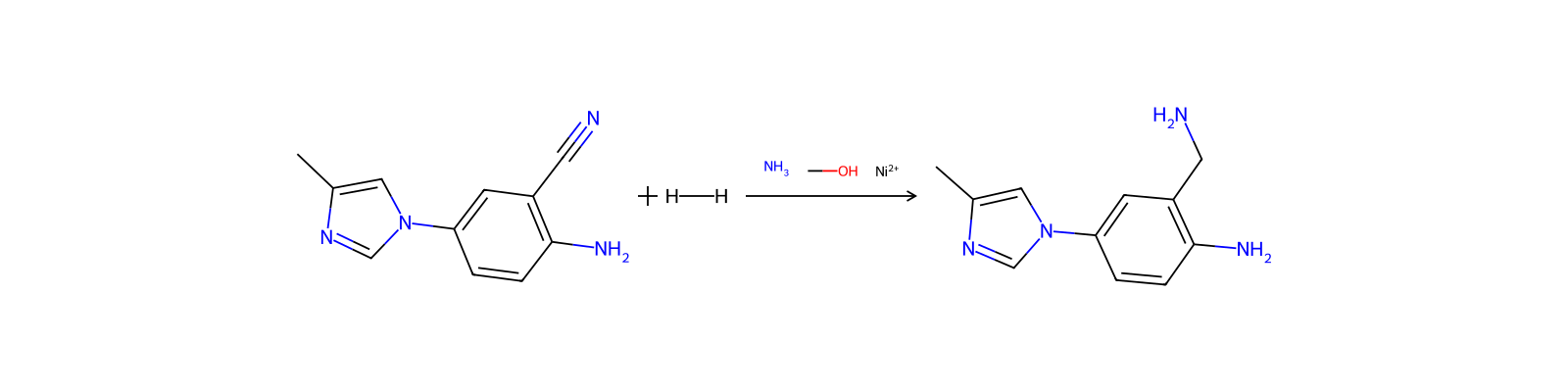
UsesThe most important applications of nickel metal involve its use in numerous alloys. Such alloys are used to construct various equipment, reaction vessels, plumbing parts, missile, and aerospace components. Such nickel-based alloys include Monel, Inconel, Hastelloy, Nichrome, Duranickel, Udinet, Incoloy and many other alloys under various other trade names. The metal itself has some major uses. Nickel anodes are used for nickel plating of many base metals to enhance their resistance to corrosion. Nickel-plated metals are used in various equipment, machine parts, printing plates, and many household items such as scissors, keys, clips, pins, and decorative pieces. Nickel powder is used as porous electrodes in storage batteries and fuel cells. Another major industrial use of nickel is in catalysis. Nickel and raney nickel are used in catalytic hydrogenation or dehydrogenation of organic compounds including olefins, fats, and oils.
DescriptionNickel is a hard, silvery white, malleable metal chunk or grey powder. Nickel powder is pyrophoric – can ignite spontaneously. It may react violently with titanium, ammonium nitrate, potassium perchlorate, and hydrazoic acid. It is incompatible with acids, oxidising agents, and sulphur. The industrially important nickel compounds are nickel oxide (NiO), nickel acetate (Ni(C2H3O2), nickel carbonate (NiCO3), nickel carbonyl (Ni(CO)4), nickel subsulphide (NiS2), nickelocene (C5H5)2Ni, and nickel sulphate hexahydrate (NiSO4 · 6H2O). Nickel compounds have been well established as human carcinogens. Investigations into the molecular mechanisms of nickel carcinogenesis have revealed that not all nickel compounds are equally carcinogenic: certain water-insoluble nickel compounds exhibit potent carcinogenic activity, whereas highly water-soluble nickel compounds exhibit less potency. The reason for the high carcinogenic activity of certain water-insoluble nickel compounds relates to their bioavailability and the ability of the nickel ions to enter cells and reach chromatin. The water-insoluble nickel compounds enter cells quite efficiently via phagocytic processes and subsequent intracellular dissolution. Nickel is classified as a borderline metal ion because it has both soft and hard metal properties and it can bind to sulphur, nitrogen, and oxygen groups. Nickel ions are very similar in structure and coordination properties to magnesium.
OccurrenceNickel is the 23rd most abundant element found in the Earth’s crust. It is somewhat plentiful but scattered and makes up one-hundredth of 1% of igneous rocks. Nickel metal is foundin meteorites (as are some other elements). It is believed that molten nickel, along with iron,makes up the central sphere that forms the core of the Earth.There are several types of nickel ores. One is the major ore for nickel called pentlandite(NiS 2FeS), which is iron/nickel sulfide. Another is a mineral called niccolite (NiAs), discovered in 1751 and first found in a mining area of Sweden. By far, the largest mining area fornickel is located in Ontario, Canada, where it is recovered from what is thought to be a verylarge meteorite that crashed into the Earth eons ago. This large nickel deposit is one reasonfor the theory of the Earth’s core being molten nickel and iron, given that both the Earth andmeteorites were formed during the early stages of the solar system. Some nickel ores are alsofound in Cuba, the Dominican Republic, and Scandinavia. Traces of nickel exist in soils, coal,plants, and animals.
HistoryDiscovered by Cronstedt in 1751 in kupfernickel (niccolite). Nickel is found as a constituent in most meteorites and often serves as one of the criteria for distinguishing a meteorite from other minerals. Iron meteorites, or siderites, may contain iron alloyed with from 5 to nearly 20% nickel. Nickel is obtained commercially from pentlandite and pyrrhotite of the Sudbury region of Ontario, a district that produces much of the world’s nickel. It is now thought that the Sudbury deposit is the result of an ancient meteorite impact. Large deposits of nickel, cobalt, and copper have recently been developed at Voisey’s Bay, Labrador. Other deposits of nickel are found in Russia, New Caledonia, Australia, Cuba, Indonesia, and elsewhere. Nickel is silvery white and takes on a high polish. It is hard, malleable, ductile, somewhat ferromagnetic, and a fair conductor of heat and electricity. It belongs to the iron-cobalt group of metals and is chiefly valuable for the alloys it forms. It is extensively used for making stainless steel and other corrosion- resistant alloys such as Invar, Monel, Inconel, and the Hastelloys. Tubing made of a copper-nickel alloy is extensively used in making desalination plants for converting sea water into fresh water. Nickel is also now used extensively in coinage and in making nickel steel for armor plate and burglar-proof vaults, and is a component in Nichrome, Permalloy, and constantan. Nickel added to glass gives a green color. Nickel plating is often used to provide a protective coating for other metals, and finely divided nickel is a catalyst for hydrogenating vegetable oils. It is also used in ceramics, in the manufacture of Alnico magnets, and in batteries. The sulfate and the oxides are important compounds. Natural nickel is a mixture of five stable isotopes; twenty-five other unstable isotopes are known. Nickel sulfide fume and dust, as well as other nickel compounds, are carcinogens. Nickel metal (99.9%) is priced at about $2/g or less in larger quantities.
UsesNickel is used in various alloys, such asGerman silver, Monel, and nickel–chrome;for coins; in storage batteries; in spark plugs;and as a hydrogenation catalyst.
UsesThe most common use of nickel is as an alloy metal with iron and steel to make stainlesssteel, which contains from 5% to 15% nickel. The higher the percentage of nickel in stainlesssteel, the greater the steel’s resistance to corrosion—particularly when exposed to seawater.Nickel is also alloyed with copper to make Monel metal, which was widely used before stainless steel became more economical and practical. It was used for many purposes as varied ashousehold appliances and general manufacturing. Nickel is also used to electroplate othermetals to provide a noncorrosive protective and attractive finish.
UsesNickel-plating; for various alloys such as new silver, Chinese silver, German silver; for coins, electrotypes, storage batteries; magnets, lightning-rod tips, electrical contacts and electrodes, spark plugs, machinery parts; catalyst for hydrogenation of oils and other organic substances. See also Raney nickel. manufacture of Monel metal, stainless steels, heat resistant steels, heat and corrosion resistant alloys, nickel-chrome resistance wire; in alloys for electronic and space applications.
General DescriptionNickel catalyst, is extremely fine powdered nickel. Nickel is grayish colored. Insoluble in water. Nickel catalyst is used to promote the chemical action in manufacturing synthetics and to process vegetable oil and petroleum. If exposed to air or moisture, Nickel may become hot enough to ignite. Nickel is insoluble in water and does not react with larger volumes of water.
Preparation methods
PreparationThe carbonyl process is most commonly employed when very pure nickel is required. The impure metal is reacted with pure carbon monoxide at 50° and the carbonyl produced fractionated several times prior to pyrolysis at around 200°. The nickel thus obtained has a purity of 99.90-99.99% depending upon the materials used. Electrolytic methods for producing high purity nickel depend upon the production of high purity nickel salts. The nickel obtained by the electrolysis of pure nickel chloride solution with inert platinum-iridium anodes is 99.99% pure.
Upstream & downstream products
Upstream raw materials
Downstream products
Suppliers50 total
国药集团化学试剂有限公司86-21-63210123 · [email protected]
北京华美互利生物化工010-56205725 · [email protected]
梯希爱(上海)化成工业发展有限公司021-67121386 · [email protected]
上海阿拉丁生化科技股份有限公司400-6206333 13167063860 · [email protected]
上海光铧科技有限公司13801626616 · [email protected]
Dayang Chem (Hangzhou) Co.,Ltd.+86-0571-88938639 17705817739 · [email protected]
科瑞迪化学400-821-5857 021-64326257 · [email protected]
上海三广电工合金有限公司13918116803 · [email protected]
上海迈瑞尔生化科技有限公司4006356688 18621169109 · [email protected]
上海晶抗生物工程有限公司021-54721350 13524668266 · [email protected]
阿法埃莎(中国)化学有限公司400-6106006 · [email protected]
安耐吉化学&3A(安徽泽升科技股份有限公司)400-0056266 · [email protected]
武汉卡诺斯科技有限公司027-83238443 15327105076 · [email protected]
上海瀚鸿科技股份有限公司021-54306202 13764082696 · [email protected]
雨木(宁波)新材料有限公司13116661121
上海景颜化工科技有限公司13817811078 · [email protected]
嘉兴市艾森化工有限公司0573-85285100 18627885956 · [email protected]
山东西亚化学有限公司13355009207 13355009207 · [email protected]
玛雅试剂+86 (573) 82222445 (0)18006601000 452520369 · [email protected]
四川库利南科技有限公司400-1166-196 18981987031 · [email protected]
天津希恩思生化科技有限公司400 638 7771 · [email protected]
北京研诺信诚化工有限公司86-10-82830276
南京维奥化工有限公司Please Send Email 18652950785 · [email protected]
南京化学试剂股份有限公司025-58369808 17895012682 · [email protected]
斯百全化学(上海)有限公司021-021-021-67601398-809-809-809 15221380277 · [email protected]
艾科试剂4008-755-333 18080918076 · [email protected]
上海思域化工科技有限公司86-21-34053660 · [email protected]
赛默飞世尔科技(中国)有限公司800-810-5118 · [email protected]
北京伊诺凯科技有限公司400-810-7969 010-59572699 · [email protected]
南京诺利斯医药科技有限公司13901585132 · [email protected]
江苏艾康生物医药研发有限公司025-66113011 13913916777 · [email protected]
TOKYO CHEMICAL INDUSTRY CO., LTD.03-36680489 · [email protected]
上海倍卓生物科技有限公司021-61119791,13386096464 · [email protected]
北京环宇世纪化学科技有限公司hysj_bj.com
上海将来实业股份有限公司400-0066400 13621662912 · [email protected]
上海将来实业股份有限公司021-61552785 · [email protected]
HBCChem, Inc.+1-510-219-6317 · [email protected]
福斯曼科技(北京)有限公司64646565 18210196513 · [email protected]
美岚实业(上海)有限公司021-58958189 · [email protected]
上海爱蝶实业有限公司021-58957966 18930537195 · [email protected]
成都零六生物科技有限公司400-1166-196 13458535857 · [email protected]
广拓化学(上海)有限公司021-60899189-8001 18918189673 · [email protected]
上海御略医药科技有限公司021-60345187 13671753212 · [email protected]
上海德榜化工有限公司021-61531158 · [email protected]
上海麦克林生化科技股份有限公司15221275939 15221275939 · [email protected]
杭州杰恒化工有限公司0571-87396432 · [email protected]
上海兴鲁化工科技有限公司02120970332 · [email protected]
成都润泽本土化工有限公司13096311329 028-88469284 616445927 · [email protected]
池州凯隆进出口贸易有限公司[email protected]
Sigma-Aldrich西格玛奥德里奇(上海)贸易有限公司021-61415566 800-8193336 · [email protected]
Additional notes
DefinitionA transition metal that occurs naturally as the sulfide and silicate. It is extracted by the Mond process, which involves reduction of nickel oxide using carbon monoxide followed by the formation and subsequent decomposition of volatile nickel carbonyl. Nickel is used as a catalyst in the hydrogenation of alkenes, e.g. margarine manufacture, and in coinage alloys. Its main oxidation state is +2 and these compounds are usually green. Symbol: Ni; m.p. 1453°C; b.p. 2732°C; r.d. 8.902 (25°C); p.n. 28; r.a.m. 58.6934.
Definitionnickel: Symbol Ni. A malleable ductilesilvery metallic transition element;a.n. 28; r.a.m. 58.70; r.d. 8.9;m.p. 1450°C; b.p. 2732°C. It is foundin the minerals pentlandite (NiS),pyrrhoite ((Fe,Ni)S), and garnierite((Ni,Mg)6(OH)6Si4O11.H2O). Nickel isalso present in certain iron meteorites(up to 20%). The metal isextracted by roasting the ore to givethe oxide, followed by reductionwith carbon monoxide and purificationby the Mond process. Alternativelyelectolysis is used. Nickel metalis used in special steels, in Invar, and,being ferromagnetic, in magnetic alloys,such as Mumetal. It is also aneffective catalyst, particularly for hydrogenation reactions (see also raneynickel). The main compounds areformed with nickel in the +2 oxidationstate; the +3 state also exists (e.g.the black oxide, Ni2O3). Nickel wasdiscovered by Axel Cronstedt(1722–65) in 1751.
DefinitionChEBI: Chemical element (nickel group element atom) with atomic number 28.
Related reactions
29 records






Linked notes
Loading…