Hydrogen Peroxide → Acetophenone
Reaction equation

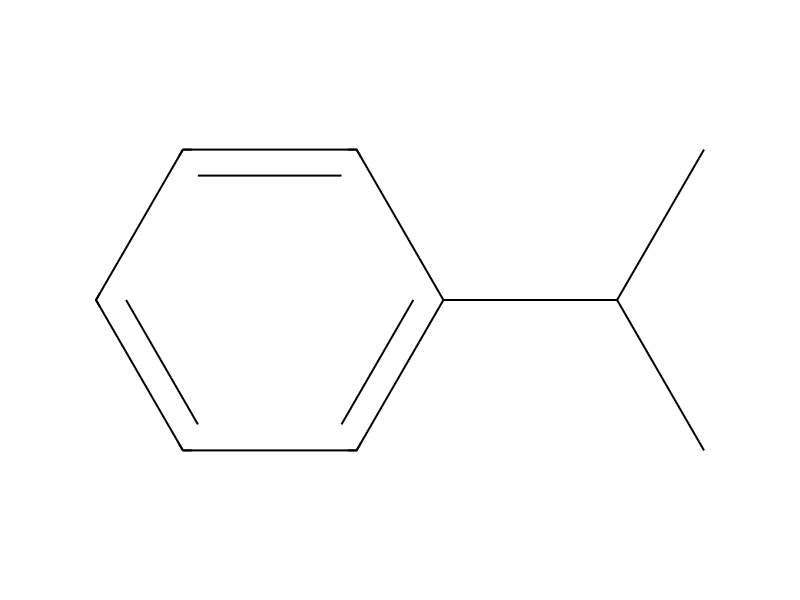
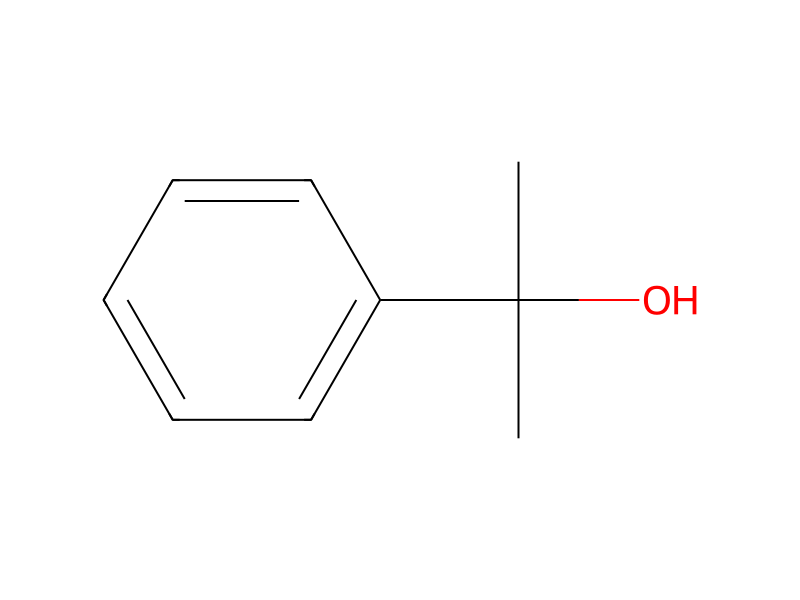
[C:1]1([CH:7]([CH3:9])[CH3:8])[CH:6]=[CH:5][CH:4]=[CH:3][CH:2]=1.[OH:10]O>>[C:7]([C:1]1[CH:6]=[CH:5][CH:4]=[CH:3][CH:2]=1)(=[O:10])[CH3:9].[C:1]1([C:7]([OH:10])([CH3:9])[CH3:8])[CH:6]=[CH:5][CH:4]=[CH:3][CH:2]=1Participants
4


Procedure
The procedure of Example III was repeated, but this time cumene (0.056 moles) and hydrogen peroxide (35%, 0.22 moles) were used. The reaction mixture, analysed by HPLC, revealed that 87.4% of the cumene had been consumed, yielding products including acetophenone (43.1% yield) and 2-phenyl-2-propanol (30.6% yield).
Workup
- customhad been consumed
- customyielding products
Sources & evidence
- ORD record
- ord-547c335ee50e467486ad66929307b752
- Source dataset
- uspto-grants-1995_12
- Patent number
- US05473101
Reaction notes
Loading…