M-Cresol → Glycol monoethyl ether acetate
Reaction equation

[CH:1]1[C:6]([OH:7])=CC=CC=1C.CC1C(C)=CC(C)=[CH:12][C:11]=1[OH:18].C=O.O.O.[C:23](O)(=O)[C:24](O)=[O:25]>O.O1CCOCC1>[CH3:23][CH2:24][O:25][CH2:12][CH2:11][O:18][C:6]([CH3:1])=[O:7]Participants
Reactant 4
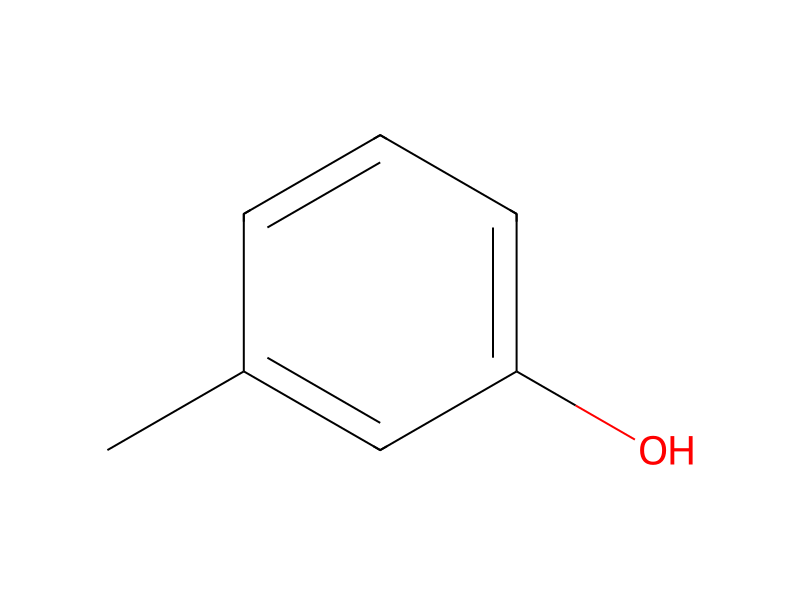



Product 1

Reagents, catalysts & solvents 2


Procedure
Into 2000-ml autoclave were charged 86.5 g (0.8 mol) of m-cresol, 27.2 g (0.2 tool) of 2,3,5-trimethylphenol, 75.0 g (0.925 tool) of formalin (37% by weight aqueous formaldehyde solution), 7.56 g (0.06 mol) of oxalic acid dihydrate, 384.5 g of dioxane and 77.5 g of water. Thereafter, the autoclave was immersed in an oil bath and the internal temperature thereof was kept at 140° C. to effect polycondensation for 6 hours. Thereafter, the internal temperature of the autoclave was returned to the neighborhood of room temperature, and the reaction mixture was taken out and allowed to stand until the suspension was separated to two layers, after which the resin layer was taken out. Thereto was added 432 g of ethyl cellosolve acetate, and unreacted formaldehyde, dioxane and water were removed by distillation under reduced pressure, to obtain an ethyl cellosolve acetate solution. The solution thus obtained was washed with water to remove the oxalic acid used as a catalyst and the ethyl cellosolve acetate and water were removed by distillation under reduced pressure to recover Resin A [hereinafter referred to as "Resin A (8)"].
Workup
- customThereafter, the autoclave was immersed in an oil bath
- customthereof was kept at 140° C.
- customfor 6 hours
- customwas returned to the neighborhood of room temperature
- customwas separated to two layers
- additionThereto was added 432 g of ethyl cellosolve acetate, and unreacted formaldehyde, dioxane and water
- customwere removed by distillation under reduced pressure
Sources & evidence
- ORD record
- ord-63af16884d36469d88740f5a3d39100e
- Source dataset
- uspto-grants-1995_12
- Patent number
- US05478691
Reaction notes
Loading…