Diisopropylamine → 2-Fluoro-2-methyl-1-tetralone
Reaction equation

C(NC(C)C)(C)C.C([Li])CCC.C(NC(C)C)(C)C.[Li].[CH3:21][CH:22]1[CH2:31][CH2:30][C:29]2[C:24](=[CH:25][CH:26]=[CH:27][CH:28]=2)[C:23]1=[O:32].C1C=CC(S(N(S(C2C=CC=CC=2)(=O)=O)[F:43])(=O)=O)=CC=1>O1CCCC1>[CH3:21][C:22]1([F:43])[CH2:31][CH2:30][C:29]2[C:24](=[CH:25][CH:26]=[CH:27][CH:28]=2)[C:23]1=[O:32]Participants






Procedure
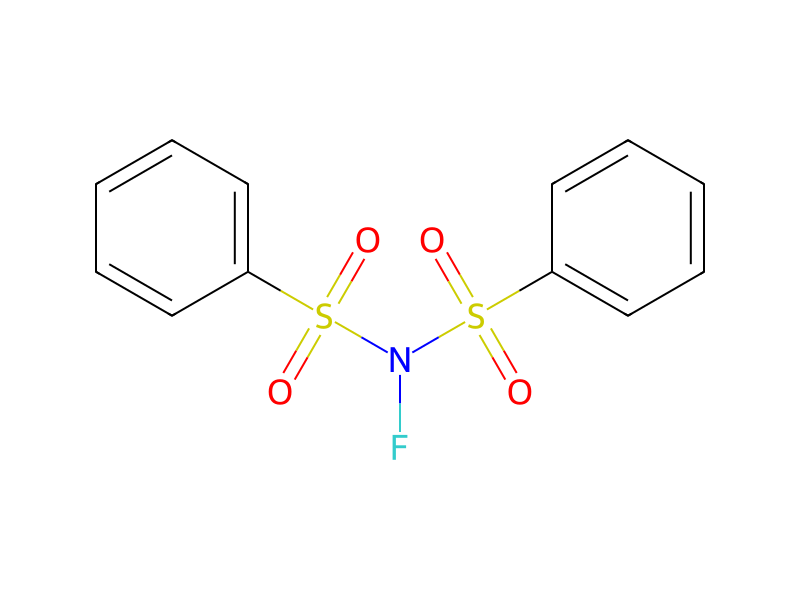
0.16 milliliter diisopropylamine in 10 milliliters tetrahydrofuran were allowed to stand with 1.15 equivalents butyllithium at -25° C. The resulting solution of lithium diisopropylamine was cooled to -78° C. and 1 equivalent 2-methyl-1-tetralone in 5 milliliters tetrahydrofuran solution was dropped in. The mixture was allowed to stand at -70° C. for 100 minutes. 1.5 equivalents N-fluorobenzenesulfonimide prepared according to Example 1 above in 11 milliliters tetrahydrofuran were mixed rapidly with the mixture at -95° C. The mixture was quenched with 30 milliliters ammonium chloride solution and extracted with dichloromethane. The organic phase was dried with magnesium sulfate, filtered, and evaporated. 2-methyl-2-fluoro-tetralone was obtained in 50% yield.
Workup
- additionwere mixed rapidly with the mixture at -95° C
- customThe mixture was quenched with 30 milliliters ammonium chloride solution
- extractionextracted with dichloromethane
- dry with materialThe organic phase was dried with magnesium sulfate
- filtrationfiltered
- customevaporated
Sources & evidence
- ORD record
- ord-b0dfa93ee75a4bcaaf1bc74e069c32f3
- Source dataset
- uspto-grants-1995_12
- Patent number
- US05478964
Reaction notes
Loading…