Tetrahydrofuran → C6H5CH2Ocochfch3
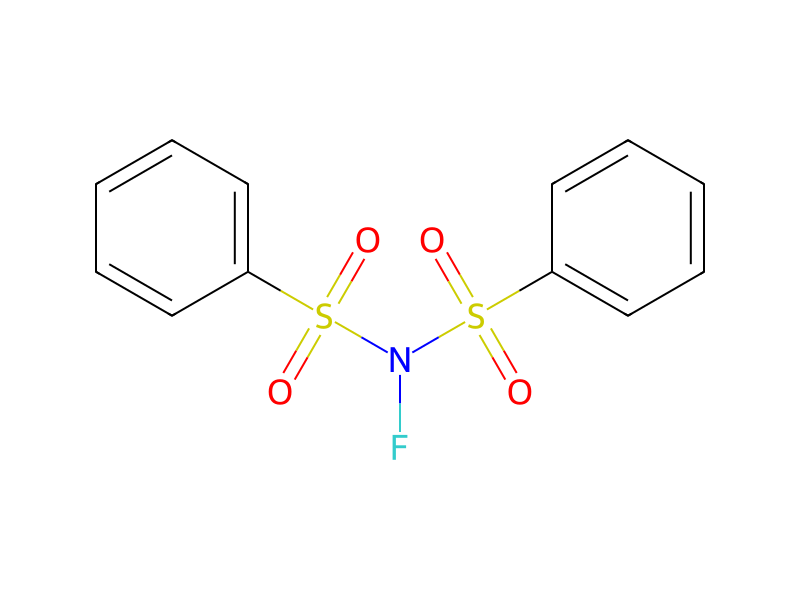
Reaction equation

CC1(F)CC[C:9]2[C:4](=[CH:5][CH:6]=[CH:7][CH:8]=2)[C:3]1=[O:12].C1C=CC(S(N(S(C2C=CC=CC=2)(=O)=O)[F:24])(=O)=O)=CC=1.[O:34]1C[CH2:37][CH2:36][CH2:35]1>>[C:4]1([CH2:3][O:12][C:35]([CH:36]([CH3:37])[F:24])=[O:34])[CH:5]=[CH:6][CH:7]=[CH:8][CH:9]=1Participants
4



Procedure
The precursor was stirred with 2 millimoles lithium diisopropylamine (preparation described in Example 12) in tetrahydrofuran at -78° C. for 1 hour. 1.2 equivalents N-fluorobenzenesulfonimide prepared according to Example 1 above in 3 milliliters tetrahydrofuran were added to the mixture which was stirred for 80 minutes. Stirring was continued as the mixture was allowed to warm up to room temperature, quenched with ammonium chloride, extracted with dichloromethane, dried, and evaporated. Purification was carried out on a silica gel column. C6H5CH2OCOCHFCH3 was obtained in 47% yield.
Workup
- additionwere added to the mixture which
- stirringStirring
- customquenched with ammonium chloride
- extractionextracted with dichloromethane
- customdried
- customevaporated
- customPurification
Sources & evidence
- ORD record
- ord-eeb965ccad0b4b98b743f9b321011b5c
- Source dataset
- uspto-grants-1995_12
- Patent number
- US05478964
Reaction notes
Loading…