Hydrochloric Acid → 2-Chloro-4-morpholinothieno[3,2-d]pyrimidine-6-carbonitrile
Reaction equation

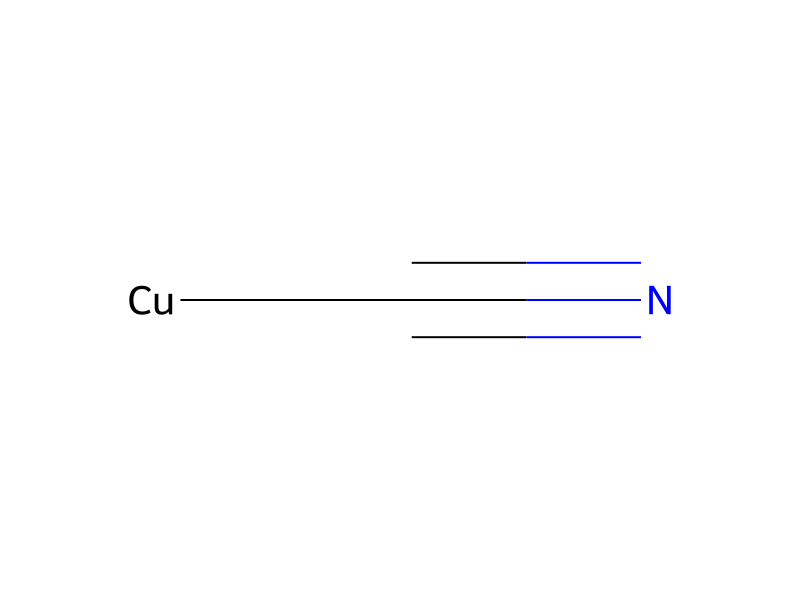
[Cl:1][C:2]1[N:3]=[C:4]([N:12]2[CH2:17][CH2:16][O:15][CH2:14][CH2:13]2)[C:5]2[S:10][C:9](I)=[CH:8][C:6]=2[N:7]=1.[C:18]([Cu])#[N:19].Cl>N1C=CC=CC=1>[Cl:1][C:2]1[N:3]=[C:4]([N:12]2[CH2:17][CH2:16][O:15][CH2:14][CH2:13]2)[C:5]2[S:10][C:9]([C:18]#[N:19])=[CH:8][C:6]=2[N:7]=1Participants
5




Procedure
A solution of 2-chloro-6-iodo-4-morpholinothieno[3,2-d]pyrimidine 19 from Example 12 (0.2 g, 0.5 mmol) and CuCN (50 mg, 0.6 mmol) in pyridine (1 mL) was heated at 115° C. for 2 h then cooled to room temperature and stirred 18 h. The reaction was poured into 1 M HCl and ice and the aqueous layer was extracted with CH2Cl2. The product was purified by silica gel chromatography (0-75% EtOAc in hexane) to provide 2-chloro-4-morpholinothieno[3,2-d]pyrimidine-6-carbonitrile (35 mg).
Workup
- extractionthe aqueous layer was extracted with CH2Cl2
- customThe product was purified by silica gel chromatography (0-75% EtOAc in hexane)
Sources & evidence
- ORD record
- ord-65f3fa68465f465e8f53235a46764ff2
- Source dataset
- uspto-grants-2010_12
- Patent number
- US07846929B2
Reaction notes
Loading…