Iodine → Triphenylphosphine Oxide
Reaction equation

[C:1]([O:4][C@@H:5]1[C@H:9]([O:10][C:11](=[O:13])[CH3:12])[C@@H:8]([CH2:14][O:15][C:16](=[O:18])[CH3:17])[O:7][C@H:6]1[N:19]1[C:48]2[N:47]=[C:26]([NH:27]C(C3C=CC=CC=3)(C3C=CC=CC=3)C3C=CC=CC=3)[NH:25][C:23](=O)[C:22]=2[N:21]=[CH:20]1)(=[O:3])[CH3:2].II.[CH:51]1[CH:56]=[CH:55][C:54]([P:57]([C:64]2[CH:69]=[CH:68][CH:67]=[CH:66][CH:65]=2)[C:58]2[CH:63]=[CH:62][CH:61]=[CH:60][CH:59]=2)=[CH:53][CH:52]=1.[CH2:70]([C:73]1[NH:74][CH:75]=[CH:76][N:77]=1)[CH2:71][CH3:72].CCN(C(C)C)C(C)C>C1(C)C=CC=CC=1.C(O)(C(F)(F)F)=O.O>[C:1]([O:4][C@@H:5]1[C@H:9]([O:10][C:11](=[O:13])[CH3:12])[C@@H:8]([CH2:14][O:15][C:16](=[O:18])[CH3:17])[O:7][C@H:6]1[N:19]1[CH:20]=[N:21][C:22]2[C:48]1=[N:47][C:26]([NH2:27])=[N:25][C:23]=2[N:74]1[CH:75]=[CH:76][N:77]=[C:73]1[CH2:70][CH2:71][CH3:72])(=[O:3])[CH3:2].[P:57]([C:54]1[CH:53]=[CH:52][CH:51]=[CH:56][CH:55]=1)([C:64]1[CH:69]=[CH:68][CH:67]=[CH:66][CH:65]=1)([C:58]1[CH:63]=[CH:62][CH:61]=[CH:60][CH:59]=1)=[O:3]Participants
Reactant 5





Product 2
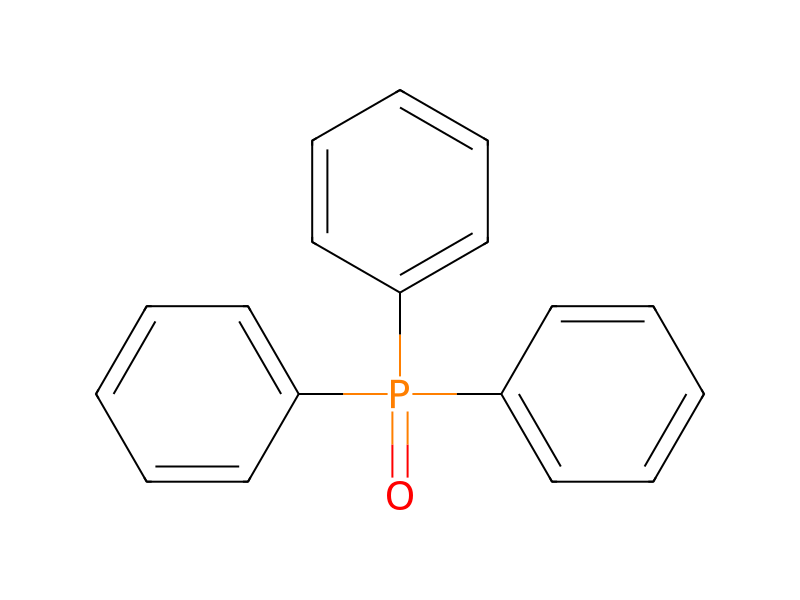

Reagents, catalysts & solvents 2


Conditions
- Temperature
- 95 °C
Procedure
A mixture of 2′,3′,5′-tri-O-acetyl-2-N-tritylguanosine (5.92 g, 9.1 mmol), I2 (11.55 g, 45.5 mmol), Ph3P (11.93 g, 45.5 mmol) and 2-propylimidazole (5.01 g, 45.5 mmol) was stirred in toluene (180 mL) at 95° C. for 15 min. DIPEA (15.9 mL, 11.80 g, 91.3 mmol) was added, and the mixture was stirred at 95° C. overnight. After removal of volatiles in vacuo, the residue was extracted with boiling EtOAc. The combined EtOAc extracts were evaporated to dryness, and the residue was dried under vacuum. The material obtained was stirred in TFA/H2O (9:1, 250 mL) at 0° C. for 4 h. Volatiles were evaporated in vacuo, and the residue was chromatographed (CH2Cl2→MeOH/CH2Cl2, 1:12). This solid material was treated with charcoal in MeOH. Volatiles were evaporated in vacuo, and the residue was dissolved in CH2Cl2 and washed (NaHCO3/H2O, brine) and dried (Na2SO4) to give 9-(2,3,5-tri-O-acetyl-β-D-ribofuranosyl)-2-amino-6-(2-propylimidazol-1-yl)purine as a colored solid (3.20 g, 81%, contaminated with Ph3PO).
Workup
- customAfter removal of volatiles in vacuo
- extractionthe residue was extracted with boiling EtOAc
- customThe combined EtOAc extracts were evaporated to dryness
- customthe residue was dried under vacuum
- customThe material obtained
- customVolatiles were evaporated in vacuo
- customthe residue was chromatographed (CH2Cl2→MeOH/CH2Cl2, 1:12)
- additionThis solid material was treated with charcoal in MeOH
- customVolatiles were evaporated in vacuo
- dissolutionthe residue was dissolved in CH2Cl2
- washwashed (NaHCO3/H2O, brine)
- dry with materialdried (Na2SO4)
Sources & evidence
- ORD record
- ord-6ca05d0b0b3b4eafa558b3583107b31e
- Source dataset
- uspto-grants-2010_12
- Patent number
- US07855285B2
Reaction notes
Loading…