Phenylacetyl chloride → HCID 10901406, compound
Reaction equation

O=[C:2]1[C:7]([C:8]([O:10][CH2:11][CH3:12])=[O:9])=[CH:6][NH:5][CH:4]=[C:3]1[C:13]1[CH:18]=[CH:17][CH:16]=[CH:15][CH:14]=1.C1(CC([Cl:28])=O)C=CC=CC=1>P(Cl)(Cl)(Cl)=O>[Cl:28][C:2]1[C:7]([C:8]([O:10][CH2:11][CH3:12])=[O:9])=[CH:6][N:5]=[CH:4][C:3]=1[C:13]1[CH:18]=[CH:17][CH:16]=[CH:15][CH:14]=1Participants
4
Reactant 2
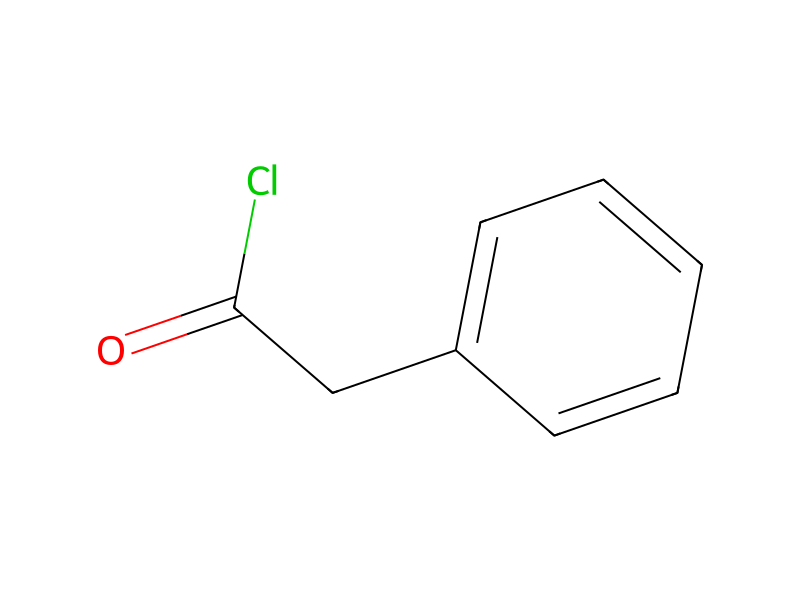

Product 1

Reagents, catalysts & solvents 1

Procedure
A mixture of ethyl 1,4-dihydro-4-oxo-3-phenyl-5-pyridinecarboxylate (prepared from phenylacetyl chloride according to the procedures described in J. Org. Chem. 1978, 43, 2087-2088 and J. Heterocyclic Chem. 1980, 17, 359-368) (3.82 g, 15.7 mmol) and phosphorus oxychloride (50 ml) was heated at reflux overnight. The excess solvent was removed in vacuo. The residue was partitioned between ice-cold aqueous Na2CO3 and ethyl acetate, and the organic layer was evaporated in vacuo to afford 3.72 g (90%) of the title compound as a brown solid; 1H NMR (250 MHz, CDCl3) δ1.44 (3H, t, J 7.2 Hz), 4.47 (2H, q, J 7.2 Hz), 7.40-7.54 (5H, m), 8.62 (1H, s), 8.91 (1H, s); MS (ES+) m/z 262/264 [MH]30 .
Workup
- temperatureat reflux overnight
- customThe excess solvent was removed in vacuo
- customThe residue was partitioned between ice-cold aqueous Na2CO3 and ethyl acetate
- customthe organic layer was evaporated in vacuo
Sources & evidence
- ORD record
- ord-61a1d1f9e8d54bb9b5e56295a08fbb88
- Source dataset
- uspto-grants-2001_12
- Patent number
- US06333336B1
Reaction notes
Loading…