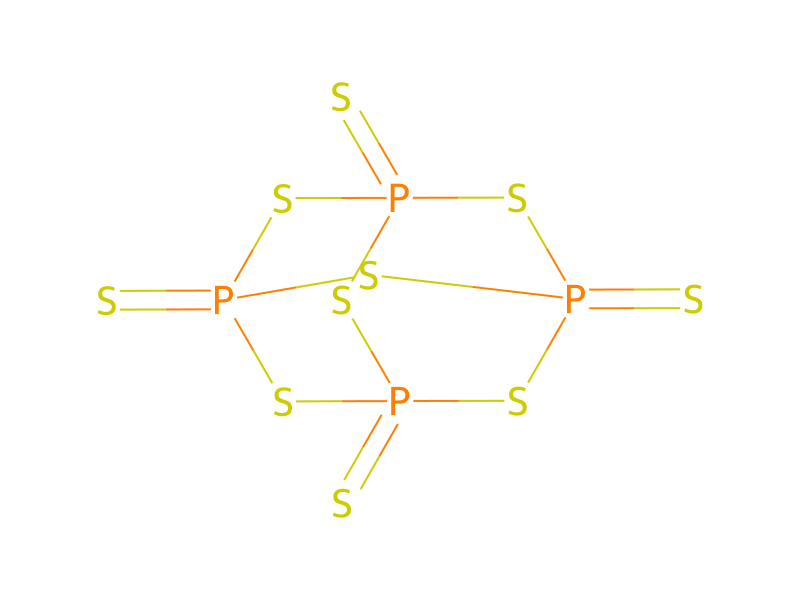
Phosphorus sulfide (P2S5) → HCID 3594920, compound
Reaction equation

[CH2:1]([N:8]1[CH2:14][CH2:13][C:12](=O)[NH:11][CH2:10][CH2:9]1)[C:2]1[CH:7]=[CH:6][CH:5]=[CH:4][CH:3]=1.C(=O)(O)[O-].[Na+].P12(SP3(SP(SP(S3)(S1)=S)(=S)S2)=S)=[S:22]>O1CCOCC1>[CH2:1]([N:8]1[CH2:14][CH2:13][C:12](=[S:22])[NH:11][CH2:10][CH2:9]1)[C:2]1[CH:7]=[CH:6][CH:5]=[CH:4][CH:3]=1Participants
5
Reactant 3


Product 1

Reagents, catalysts & solvents 1

Conditions
- Temperature
- 75 °C
Procedure
To a solution of 1-benzyl-1,4-diazepan-5-one (2.00 g, 9.80 mmol) in anhydrous dioxane (40 mL), sodium bicarbonate (8.81 g, 105 mmol) and phosphorus pentasulfide (2.92 g, 13.1 mmol) were added. The mixture was heated to 75° C. for 6 h. Dioxane was removed under reduced pressure and the residue was treated with water (80 mL). The resultant mixture was stirred at 50° C. for 1 h and then stirred an additional 2 h at 25° C. Sodium chloride (30.0 g) was added to the mixture and the aqueous phase was extracted with dichloromethane. The organic phase was concentrated to yield the desired compound, which was used without further purification.
Workup
- customDioxane was removed under reduced pressure
- additionthe residue was treated with water (80 mL)
- stirringstirred an additional 2 h at 25° C
- additionSodium chloride (30.0 g) was added to the mixture
- extractionthe aqueous phase was extracted with dichloromethane
- concentrationThe organic phase was concentrated
Sources & evidence
- ORD record
- ord-34008aba67c5471299066f3acb103938
- Source dataset
- uspto-grants-2009_07
- Patent number
- US07560455B2
Reaction notes
Loading…