HCID 70983650, compound → HCID 70983672, compound
Reaction equation

[CH3:1][CH:2]1[CH2:7][CH:6]([C:8]([C:10]2[S:11][CH:12]=[CH:13][N:14]=2)=[O:9])[CH2:5][CH2:4][CH:3]1[C:15]([O:17][CH2:18][CH3:19])=[O:16].[CH3:20][Mg+].[Br-]>C1COCC1>[OH:9][C:8]([CH:6]1[CH2:5][CH2:4][CH:3]([C:15]([O:17][CH2:18][CH3:19])=[O:16])[CH:2]([CH3:1])[CH2:7]1)([C:10]1[S:11][CH:12]=[CH:13][N:14]=1)[CH3:20]Participants
4
Reactant 2

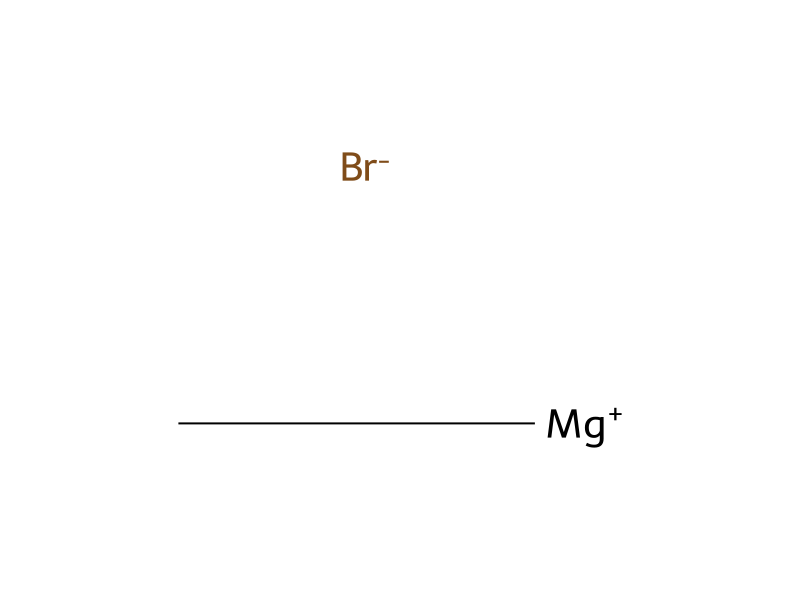
Product 1

Reagents, catalysts & solvents 1

Conditions
- Temperature
- -40 °C
Procedure
To a solution of ethyl 2-methyl-4-(1,3-thiazol-2-ylcarbonyl)cyclohexanecarboxylate (2.8 g, 10 mmol) in THF (28 mL) at −40° C. was added MeMgBr (3.0 M in THF, 4.0 mL, 12 mmol) at such a rate the internal temperature did not exceed −30° C. The reaction mixture was stirred for 15 minutes at −40° C., and was then quenched with saturated aqueous ammonium chloride (50 mL) and warmed to room temperature. EtOAc (20 mL) was added, the layers separated, and the aqueous layer was extracted a second time with EtOAc (50 mL). The organic layers were combined, dried over MgSO4, filtered, absorbed on silica, and purified by silica gel chromatography to afford ethyl 4-[1-hydroxy-1-(1,3-thiazol-2-yl)ethyl]-2-methylcyclohexanecarboxylate.
Workup
- customdid not exceed −30° C
- customwas then quenched with saturated aqueous ammonium chloride (50 mL)
- temperaturewarmed to room temperature
- additionEtOAc (20 mL) was added
- customthe layers separated
- extractionthe aqueous layer was extracted a second time with EtOAc (50 mL)
- dry with materialdried over MgSO4
- filtrationfiltered
- customabsorbed on silica
- custompurified by silica gel chromatography
Sources & evidence
- ORD record
- ord-a1bdfe85bf964f7f939d6a4ee4ab4bfc
- Source dataset
- uspto-grants-2015_09
- Patent number
- US09120785B2
Reaction notes
Loading…