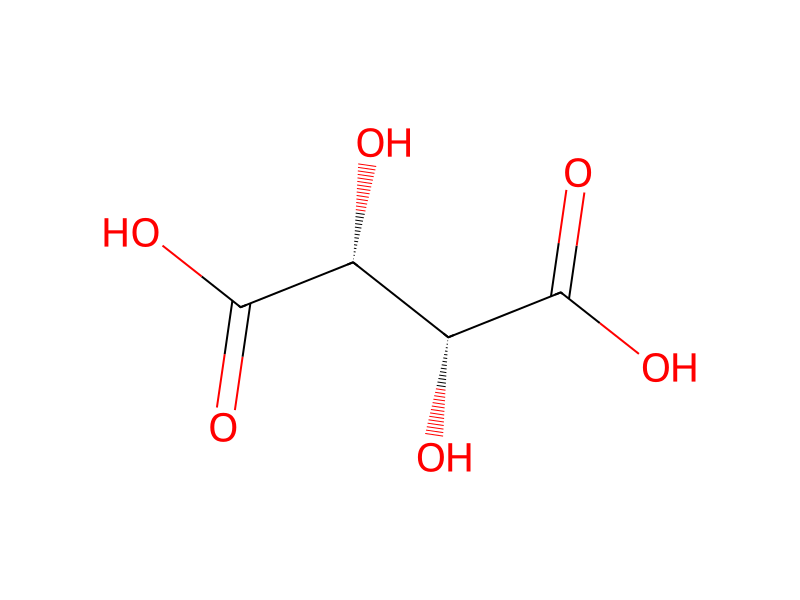
L-Tartaric acid → HCID 66860548, compound
Reaction equation

[CH3:1][C:2]1[CH:7]=[C:6]([CH3:8])[CH:5]=[CH:4][C:3]=1[S:9][C:10]1[CH:15]=[CH:14][CH:13]=[CH:12][C:11]=1[N:16]1[CH2:21][CH2:20][NH:19][CH2:18][CH2:17]1.[C:22]([OH:31])(=[O:30])[C@@H:23]([C@H:25]([C:27]([OH:29])=[O:28])[OH:26])[OH:24]>CC(C)=O>[C:22]([OH:31])(=[O:30])[CH:23]([CH:25]([C:27]([OH:29])=[O:28])[OH:26])[OH:24].[CH3:1][C:2]1[CH:7]=[C:6]([CH3:8])[CH:5]=[CH:4][C:3]=1[S:9][C:10]1[CH:15]=[CH:14][CH:13]=[CH:12][C:11]=1[N:16]1[CH2:17][CH2:18][NH:19][CH2:20][CH2:21]1Participants
4
Reactant 2

Product 1

Reagents, catalysts & solvents 1

Procedure
11.1 ml of a 0.30 M solution of 1-[2-(2,4-Dimethylphenylsulfanyl)-phenyl]piperazine in acetone was treated with 0.5 gram L-(+)-tartaric acid dissolved in 5 ml acetone. The mixture was stirred at room temperature for 30 minutes during which precipitation took place. Filtration and washing first with 5 ml acetone and then 3 ml diethyl ether achieved the product as a white solid that was dried in vacuum (50° C.) over night. 1-[2-(2,4-Dimethylphenylsulfanyl)-phenyl]piperazine (+)-tartaric acid was isolated in 1.2 gram (81%). NMR complies with structure. Elemental analysis: 58.86%; C, 6.30%; N, 6.38%; H (Theory for a 1:1 salt: 58.91%; C, 6.25%; N, 6.29%; H)
Workup
- filtrationFiltration
- washwashing first with 5 ml acetone
- customthat was dried in vacuum (50° C.) over night
Sources & evidence
- ORD record
- ord-cf31c40448cf4386963259077c0f7a62
- Source dataset
- uspto-grants-2015_09
- Patent number
- US09125910B2
Reaction notes
Loading…