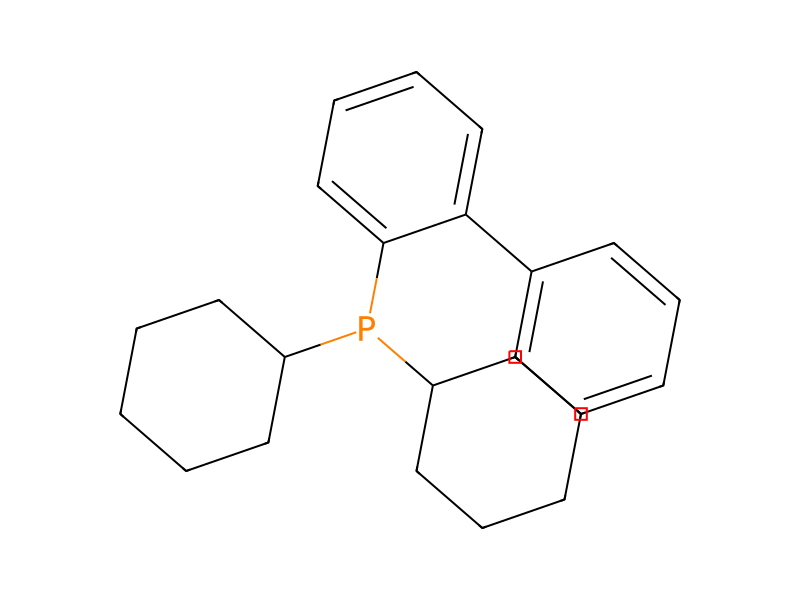
2-(Dicyclohexylphosphino)biphenyl → HCID 67211650, compound
Reaction equation

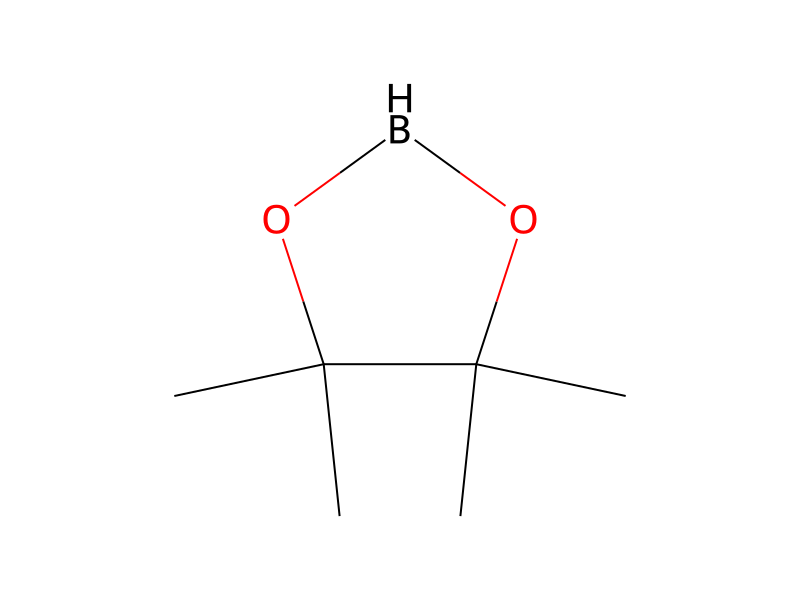
[F:1][C:2]1[C:11](I)=[C:10]([CH3:13])[CH:9]=[CH:8][C:3]=1[C:4]([O:6][CH3:7])=[O:5].C1(C2C=CC=CC=2)C=CC=CC=1P(C1CCCCC1)C1CCCCC1.[CH3:39][C:40]1([CH3:47])[C:44]([CH3:46])([CH3:45])[O:43][BH:42][O:41]1>C(O[Pd]OC(=O)C)(=O)C.O1CCOCC1>[F:1][C:2]1[C:11]([B:42]2[O:43][C:44]([CH3:46])([CH3:45])[C:40]([CH3:47])([CH3:39])[O:41]2)=[C:10]([CH3:13])[CH:9]=[CH:8][C:3]=1[C:4]([O:6][CH3:7])=[O:5]Participants
Reactant 3

Product 1

Reagents, catalysts & solvents 2


Conditions
- Temperature
- 60 °C
Procedure
In a 100 ml 3-neck round bottom flask equipped with a condenser, magnetic stirrer and nitrogen outlet was placed methyl 2-fluoro-3-iodo-4-methylbenzoate (2.0 g, 6.80 mmol), 10.0 ml of anhydrous 1,4-dioxane, diacetoxypalladium (0.076 g, 0.340 mmol) and [1,1′-biphenyl]-2-yldicyclohexylphosphine (0.477 g, 1.360 mmol) under nitrogen. 4,4,5,5-tetramethyl-1,3,2-dioxaborolane (2.96 ml, 20.40 mmol) was added drop wise via syringe. The reaction mixture was heated at 60° C. for 2 hours and stirred at room temperature overnight. LCMS showed almost 100% conversion. The dioxane was removed and the residue was purified on 80 g ISCO silica column using ethyl acetate/hexane gradient and then switched to methanol/DCM gradient to give 1.25 g (62.5%) of IXS-5-48-1, 1.25 g (62.5%). 1H NMR (DMSO-d6, 400 MHz) δ 7.81 (t, 1H), 7.16 (d, 1H), 3.83 (s, 3H), 2.42 (s, 3H), 1.33 (s, 12H), and MS: [MH+]=295).
Workup
- customIn a 100 ml 3-neck round bottom flask equipped with a condenser, magnetic stirrer and nitrogen outlet
- customThe dioxane was removed
- customthe residue was purified on 80 g ISCO silica column
- customto give 1.25 g (62.5%) of IXS-5-48-1, 1.25 g (62.5%)
Sources & evidence
- ORD record
- ord-7bca1f71253b4b3d88ab21de25aa370d
- Source dataset
- uspto-grants-2015_09
- Patent number
- US09127024B2
Reaction notes
Loading…