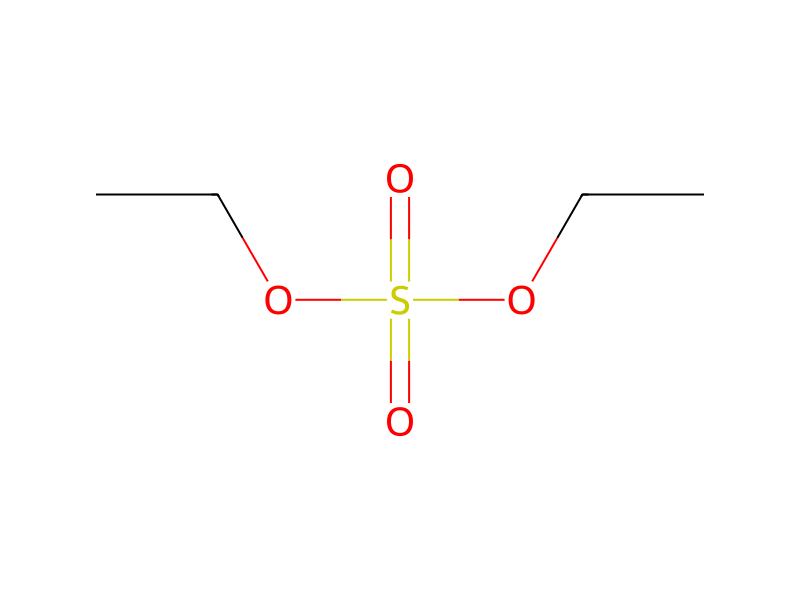
Diethyl Sulfate → Ethyl 2-ethoxy-3-(3-nitrophenyl)prop-2-enoate
Reaction equation

S(OCC)(O[CH2:5][CH3:6])(=O)=O.[OH:10][C:11](=[CH:15][C:16]1[CH:21]=[CH:20][CH:19]=[C:18]([N+:22]([O-:24])=[O:23])[CH:17]=1)[C:12]([OH:14])=O.[C:25](=O)([O-])[O-].[Cs+].[Cs+].CN([CH:34]=[O:35])C>>[CH2:5]([O:10][C:11](=[CH:15][C:16]1[CH:21]=[CH:20][CH:19]=[C:18]([N+:22]([O-:24])=[O:23])[CH:17]=1)[C:12]([O:35][CH2:34][CH3:25])=[O:14])[CH3:6]Participants
5




Procedure
Diethyl sulfate (12 g, 78.2 mmol) was added to a stirred mixture of 2-hydroxy-3-(3-nitrophenyl)acrylic acid (6.1 g, 30.0 mmol) and caesium carbonate (29.3 g, 90 mmol) in DMF (61 ml) to form a dear, pale yellow mixture, which was stirred at RT overnight. The resulting dark red suspension was heated to 50° C. for 4 h then concentrated in vacuo and the residue partitioned between water (100 ml) and dichloromethane (150 ml). The organic layer was separated, further washed with water (2×100 ml), dried over sodium sulphate and filtered through a silica gel pad. The resulting yellow solution was evaporated to dryness in vacuo to give ethyl 2-ethoxy-3-(3-nitrophenyl)acrylate as a yellow solid (5.6 g, 72%).
Workup
- customto form a dear, pale yellow mixture, which
- temperatureThe resulting dark red suspension was heated to 50° C. for 4 h
- concentrationthen concentrated in vacuo
- customthe residue partitioned between water (100 ml) and dichloromethane (150 ml)
- customThe organic layer was separated
- washfurther washed with water (2×100 ml)
- dry with materialdried over sodium sulphate
- filtrationfiltered through a silica gel pad
- customThe resulting yellow solution was evaporated to dryness in vacuo
Sources & evidence
- ORD record
- ord-1d0c52fad3824ece962dc336d9819fdc
- Source dataset
- uspto-grants-2015_09
- Patent number
- US09133099B2
Reaction notes
Loading…