Isobutylene oxide → 1-((4-(2-Fluoro-4-nitrophenoxy)quinolin-7-yl)oxy)-2-methylpropan-2-ol
Reaction equation

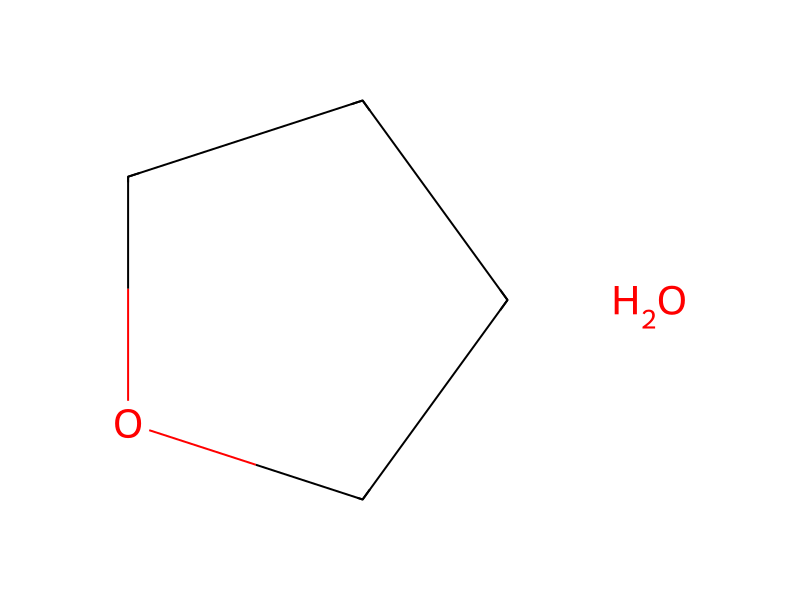
[F:1][C:2]1[CH:19]=[C:18]([N+:20]([O-:22])=[O:21])[CH:17]=[CH:16][C:3]=1[O:4][C:5]1[C:14]2[C:9](=[CH:10][C:11]([OH:15])=[CH:12][CH:13]=2)[N:8]=[CH:7][CH:6]=1.[OH-].[Na+].[CH3:25][C:26]1([O:29][CH2:28]1)[CH3:27]>C1COCC1.O.CCOC(C)=O>[F:1][C:2]1[CH:19]=[C:18]([N+:20]([O-:22])=[O:21])[CH:17]=[CH:16][C:3]=1[O:4][C:5]1[C:14]2[C:9](=[CH:10][C:11]([O:15][CH2:25][C:26]([CH3:28])([OH:29])[CH3:27])=[CH:12][CH:13]=2)[N:8]=[CH:7][CH:6]=1Participants
6
Reactant 3



Product 1

Reagents, catalysts & solvents 2

Conditions
- Temperature
- 45 °C
Procedure
To a solution of 4-(2-fluoro-4-nitrophenoxy)quinolin-7-ol (60 g, 0.2 mol) in THF/H2O (1 L, THF/H2O=1:1, v/v) was added NaOH (24 g, 0.6 mol) at room temperature, followed by isobutylene oxide (144 g, 2 mol). The reaction was stirred at 45° C. for 10 hours, and then diluted with EtOAc (1 L). The resulted solution was washed with 1 M NaOH aqueous solution (500 mL×4). The organic layer was separated, dried over Na2SO4 and concentrated in vacuo. The residue was washed with 500 mL of petroleum ether, and collected through filtration to give the title compound as a light yellow solid (31.6 g, 42.5%).
Workup
- washThe resulted solution was washed with 1 M NaOH aqueous solution (500 mL×4)
- customThe organic layer was separated
- dry with materialdried over Na2SO4
- concentrationconcentrated in vacuo
- washThe residue was washed with 500 mL of petroleum ether
- filtrationcollected through filtration
Sources & evidence
- ORD record
- ord-2b0631696206404d8415e987f85b2276
- Source dataset
- uspto-grants-2015_09
- Patent number
- US09133162B2
Reaction notes
Loading…