Dimethyl Sulfoxide → 3-Fluoro-2-(morpholin-4-yl)benzaldehyde
Reaction equation

F[C:2]1[C:9]([F:10])=[CH:8][CH:7]=[CH:6][C:3]=1[CH:4]=[O:5].[NH:11]1[CH2:16][CH2:15][O:14][CH2:13][CH2:12]1.C(=O)([O-])[O-].[K+].[K+].CS(C)=O>O>[F:10][C:9]1[C:2]([N:11]2[CH2:16][CH2:15][O:14][CH2:13][CH2:12]2)=[C:3]([CH:6]=[CH:7][CH:8]=1)[CH:4]=[O:5]Participants
Reactant 4



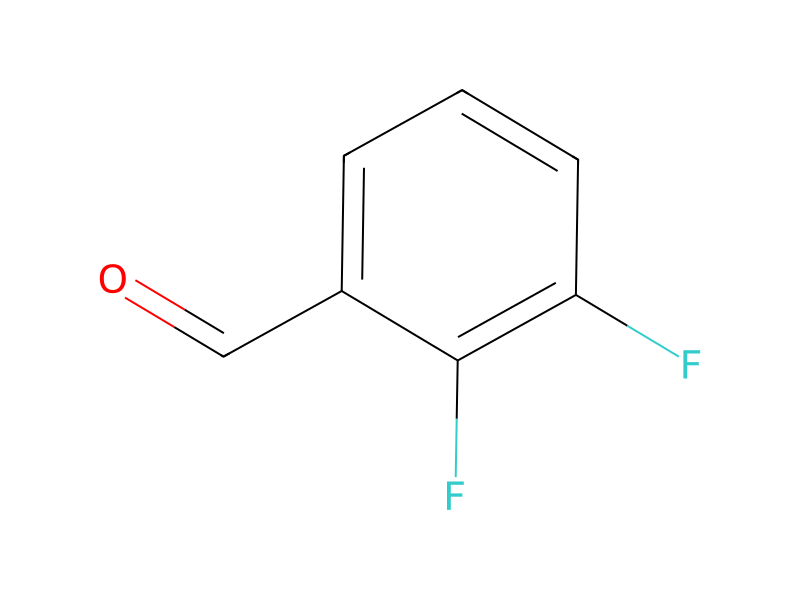
Product 1

Reagents, catalysts & solvents 1

Conditions
- Temperature
- 100 °C
Procedure
A 100 mL round-bottom flask was charged with 2,3-difluorobenzaldehyde (2.00 g, 14.1 mmol, 1.00 equiv), morpholine (1.84 g, 21.1 mmol, 1.50 equiv), potassium carbonate (4.90 g, 35.4 mmol, 2.52 equiv), and dimethyl sulfoxide (20 mL). The resulting solution was stirred overnight at 100° C. in an oil bath and diluted with H2O (50 mL). The resulting solution was extracted with dichloromethane (3×20 mL) and the organic layers were combined, washed with H2O (3×50 mL), dried over anhydrous sodium sulfate, filtered and concentrated under reduced pressure. The residue was chromatographed on a silica gel column with ethyl acetate/petroleum ether (1/20) to yield 0.840 g (28% yield) of 3-fluoro-2-(morpholin-4-yl)benzaldehyde as a yellow solid. 1H NMR 300 MHz, (CDCl3) δ 10.54 (s, 1H), 7.63 (d, J=7.5 Hz, 1H), 7.18-7.34 (m, 2H), 3.85 (br, 4H), 3.23 (br, 4H). LCMS (ESI, m/z): 210 [M+H].
Workup
- extractionThe resulting solution was extracted with dichloromethane (3×20 mL)
- washwashed with H2O (3×50 mL)
- dry with materialdried over anhydrous sodium sulfate
- filtrationfiltered
- concentrationconcentrated under reduced pressure
- customThe residue was chromatographed on a silica gel column with ethyl acetate/petroleum ether (1/20)
Sources & evidence
- ORD record
- ord-46a2152046994f7cb22b9f71b10585c8
- Source dataset
- uspto-grants-2015_09
- Patent number
- US09133148B2
Reaction notes
Loading…