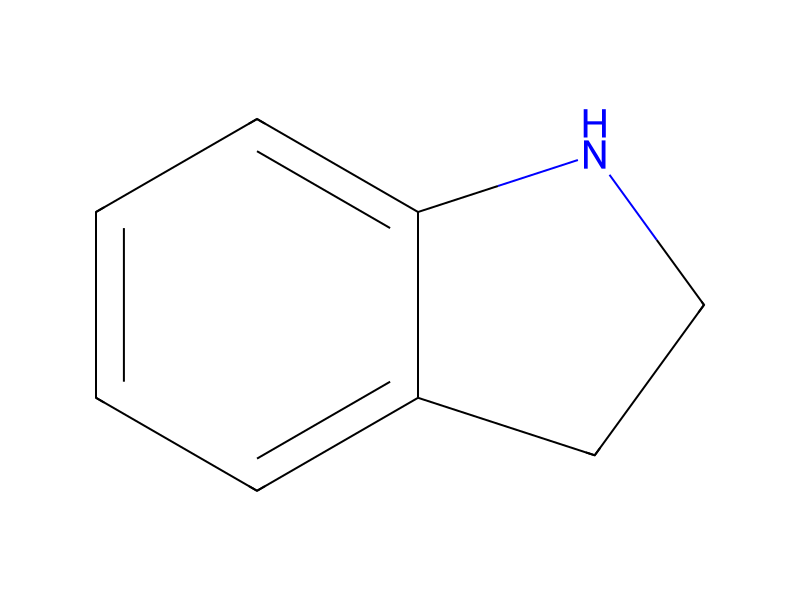
Indoline → 2-[2-(2,3-dihydro-1H-indol-1-yl)-2-oxoethyl]-6-(morpholin-4-yl)pyrimidin-4(3H)-one
Reaction equation

[N:1]1([C:7]2[N:8]=[C:9]([CH2:14][C:15]([O-:17])=O)[NH:10][C:11](=[O:13])[CH:12]=2)[CH2:6][CH2:5][O:4][CH2:3][CH2:2]1.[Na+].[NH:19]1[C:27]2[C:22](=[CH:23][CH:24]=[CH:25][CH:26]=2)[CH2:21][CH2:20]1>>[N:19]1([C:15](=[O:17])[CH2:14][C:9]2[NH:10][C:11](=[O:13])[CH:12]=[C:7]([N:1]3[CH2:2][CH2:3][O:4][CH2:5][CH2:6]3)[N:8]=2)[C:27]2[C:22](=[CH:23][CH:24]=[CH:25][CH:26]=2)[CH2:21][CH2:20]1Participants
3


Procedure
The product is prepared by following the procedure described in example 1d, step 3d, using 260 mg of sodium [4-(morpholin-4-yl)-6-oxo-1,6-dihydropyrimidin-2-yl]acetate and 238 mg of indoline instead of N-[3-(dimethylamino)propyl]-N′-ethylcarbodiimide hydrochloride. 230 mg of 2-[2-(2,3-dihydro-1H-indol-1-yl)-2-oxoethyl]-6-(morpholin-4-yl)pyrimidin-4(3H)-one are obtained in the form of a pale pink solid, the characteristics of which are the following:
Workup
- customThe product is prepared
Sources & evidence
- ORD record
- ord-c51214087dbb45d7b2495a61c4933d75
- Source dataset
- uspto-grants-2015_09
- Patent number
- US09133168B2
Reaction notes
Loading…