Isobutyl chloroformate → N-(1-ethyl-2-pyrrolidylmethyl)-8-acetamino-1,4-benzodioxane-5-carboxamide
Reaction equation

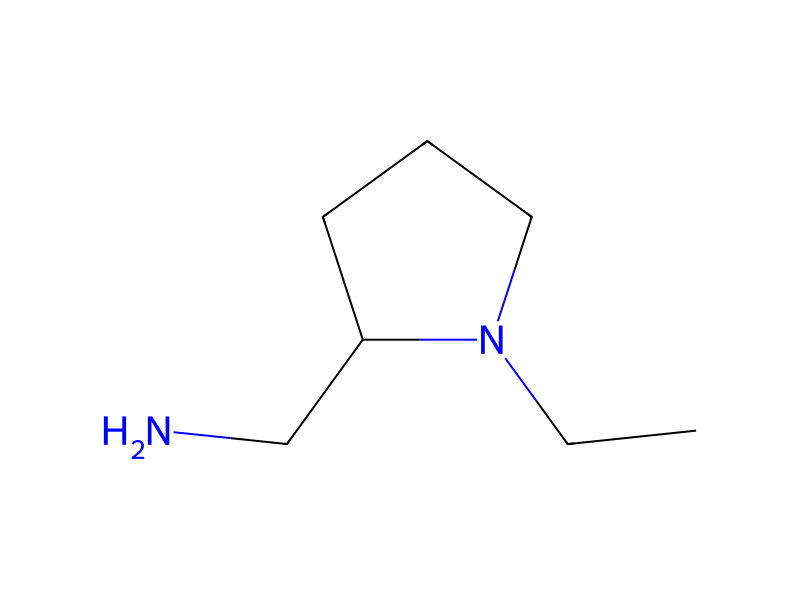
[NH:1]([C:5]1[C:10]2[O:11][CH2:12][CH2:13][O:14][C:9]=2[C:8]([C:15]([OH:17])=O)=[CH:7][CH:6]=1)[C:2]([CH3:4])=[O:3].ClC(OCC(C)C)=O.[CH2:26]([N:28]1[CH2:32][CH2:31][CH2:30][CH:29]1[CH2:33][NH2:34])[CH3:27]>>[CH2:26]([N:28]1[CH2:32][CH2:31][CH2:30][CH:29]1[CH2:33][NH:34][C:15]([C:8]1[C:9]2[O:14][CH2:13][CH2:12][O:11][C:10]=2[C:5]([NH:1][C:2]([CH3:4])=[O:3])=[CH:6][CH:7]=1)=[O:17])[CH3:27]Participants
4



Procedure
According to the method described in Example 31, the 8-acetamino-1,4-benzodioxane-5-carboxylic acid was treated with isobutyl chloroformate and 1-ethyl-2-aminomethylpyrrolidine. N-(1-ethyl-2-pyrrolidylmethyl)-8-acetamino-1,4-benzodioxane-5-carboxamide was obtained. The structure was confirmed by nuclear magnetic resonance analysis.
Sources & evidence
- ORD record
- ord-3fb4e5ed1902451aa88f86396561b397
- Source dataset
- uspto-grants-1982_04
- Patent number
- US04323503
Reaction notes
Loading…