Hydrochloric Acid → HCID 13409032, compound
Reaction equation

[C:1](Cl)(=[O:10])[C:2]1[CH:7]=[CH:6][C:5]([O:8]C)=[CH:4][CH:3]=1.[Cl:12][C:13]1[C:18]([Cl:19])=[CH:17][CH:16]=[CH:15][C:14]=1[O:20]C.[Cl-].[Al+3].[Cl-].[Cl-].Cl>C1C=CC=CC=1>[Cl:12][C:13]1[C:18]([Cl:19])=[C:17]([C:1](=[O:10])[C:2]2[CH:7]=[CH:6][C:5]([OH:8])=[CH:4][CH:3]=2)[CH:16]=[CH:15][C:14]=1[OH:20]Participants
Reactant 4

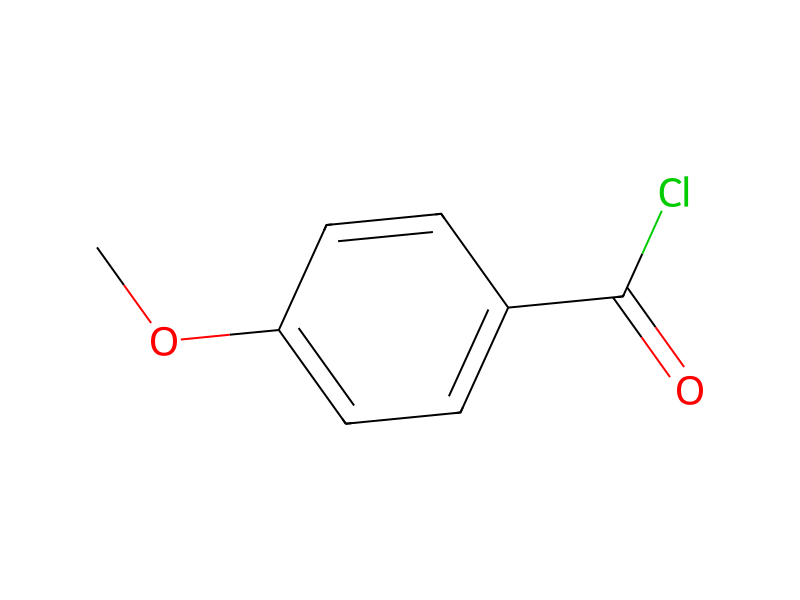


Product 1

Reagents, catalysts & solvents 1

Conditions
- Temperature
- 5 °C
Procedure
A mixture of 15.4 g of p-anisoyl chloride and 17.7 g of 2,3-dichloroanisole in 80 ml of dry benzene is cooled at 5° C. After adding 13.3 g of anhydrous aluminum chloride in portions at 5° to 10° C. over a period of five minutes, the cloudy greenish mixture is warmed up to room temperature and then stirred for 48 hours. It is then cooled at 15° C. and 25 ml more of dry benzene is added, followed by the addition of 26.6 g of anhydrous aluminum chloride in portions at 15° C. over a period of five minutes. After the addition is completed, the mixture is stirred at room temperature for 21/2 hours, heated to 45° C. for 90 minutes and to 75° C. to 80° C. for one hour. The reaction mixture is then treated with ice and concentrated hydrochloric acid. The organic phase is separated, and the solid residue is washed with boiling dichloroethane to yield 15 g (53% of theory) of crude 2,3-dichloro-4-(4-hydroxybenzoyl)phenol, melting at 208° to 210° C.
Workup
- temperaturethe cloudy greenish mixture is warmed up to room temperature
- temperatureIt is then cooled at 15° C.
- additionAfter the addition
- stirringthe mixture is stirred at room temperature for 21/2 hours
- temperatureheated to 45° C. for 90 minutes and to 75° C. to 80° C. for one hour
- customThe organic phase is separated
- washthe solid residue is washed with boiling dichloroethane
Sources & evidence
- ORD record
- ord-539be2ac30044c5f87c2901955d7b068
- Source dataset
- uspto-grants-1981_05
- Patent number
- US04268691
Reaction notes
Loading…