4-Hydroxybenzoic Acid → HCID 18704411, compound
Reaction equation

[CH2:1](I)[CH2:2][CH2:3][CH2:4][CH2:5][CH2:6][CH2:7][CH2:8][CH2:9][CH3:10].O[C:13]1[CH:21]=[CH:20][C:16]([C:17]([OH:19])=[O:18])=[CH:15][CH:14]=1.C(=O)([O-])[O-:23].[Na+].[Na+]>CN(C)C=O>[CH2:1]([C:13]1[CH:21]=[CH:20][C:16]([C:17]([OH:19])=[O:18])=[CH:15][CH:14]=1)[CH2:2][CH2:3][CH2:4][CH2:5][CH2:6][CH2:7][CH2:8][CH2:9][CH2:10][OH:23]Participants
5
Reactant 3
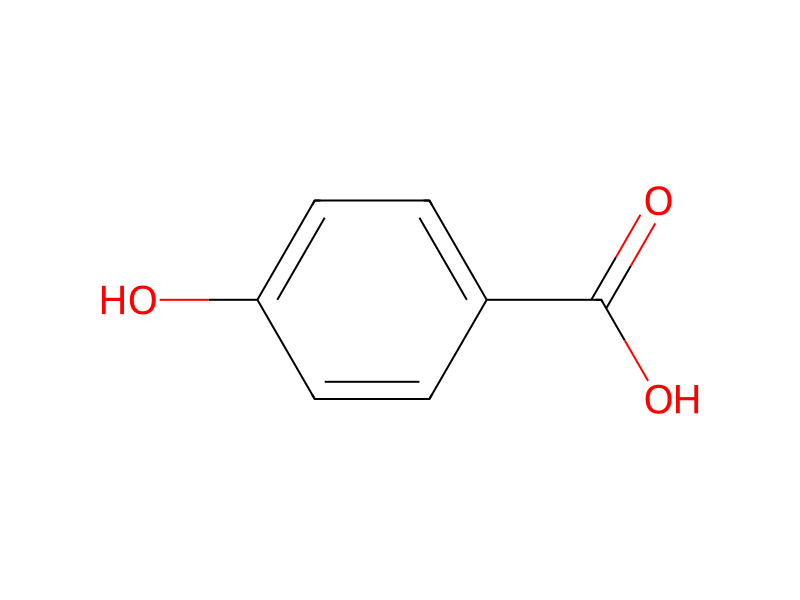


Product 1

Reagents, catalysts & solvents 1

Procedure
38.83 g (144.8 mmol) of decyl iodide is added to a mixture of 20 g (144.8 mmol) of 4-hydroxybenzoic acid and 46 g (434.4 mmol) of sodium carbonate in 400 ml of dimethylformamide, and it is heated for 4 hours to 70° C. Solid is filtered out, the filtrate is evaporated to the dry state in a vacuum, and the residue is taken up in 300 ml of methylene chloride, and 300 ml of 5% aqueous hydrochloric acid is added. It is thoroughly stirred, the organic phase is separated, and it is dried on magnesium sulfate. Then, the organic phase is evaporated to the dry state. The residue is chromatographed on silica gel (mobile solvent: n-hexane-acetone=20:1).
Workup
- temperatureis heated for 4 hours to 70° C
- filtrationSolid is filtered out
- customthe filtrate is evaporated to the dry state in a vacuum
- addition300 ml of 5% aqueous hydrochloric acid is added
- customthe organic phase is separated
- customit is dried on magnesium sulfate
- customThen, the organic phase is evaporated to the dry state
- customThe residue is chromatographed on silica gel (mobile solvent: n-hexane-acetone=20:1)
Sources & evidence
- ORD record
- ord-ce125a99c1034a3db3c578bd60c380b1
- Source dataset
- uspto-grants-2000_07
- Patent number
- US06083479
Reaction notes
Loading…