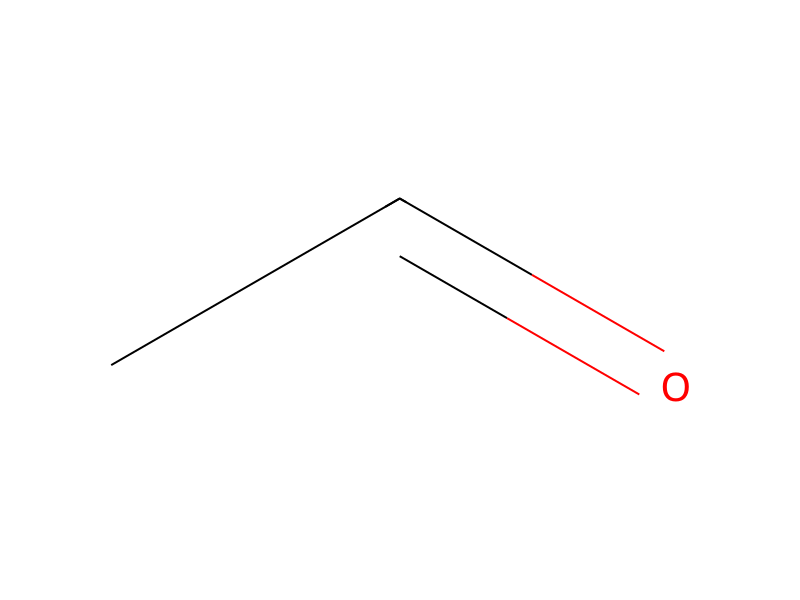
Acetaldehyde → HCID 10220835, compound
Reaction equation

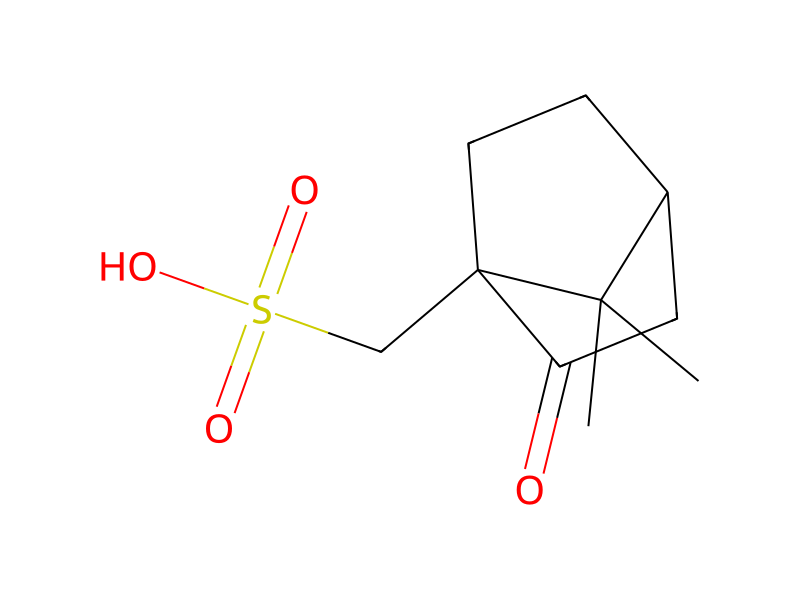
[Cl:1][C:2]1[CH:3]=[C:4]([CH2:13][CH3:14])[C:5]([NH2:12])=[C:6]([S:8]([NH2:11])(=[O:10])=[O:9])[CH:7]=1.[CH:15](=O)[CH3:16].C12(CS(O)(=O)=O)C(C)(C)C(CC1)CC2=O>C(#N)C>[Cl:1][C:2]1[CH:3]=[C:4]([CH2:13][CH3:14])[C:5]2[NH:12][CH:15]([CH3:16])[NH:11][S:8](=[O:10])(=[O:9])[C:6]=2[CH:7]=1Participants
Reactant 3

Product 1

Reagents, catalysts & solvents 1

Conditions
- Temperature
- 0 °C
Procedure
To a 25 mL RB flask was added 5-chloro-3-ethyl-2-aminobenzenesulfonamide D (0.4074 g, 1.74 mmol), 8.5 mL acetonitrile, and 3Å molecular sieves. The stirring solution was cooled to 0° C. and acetaldehyde (0.15 mL, 2.68 mmol) and (±) 10-camphor sulphonic acid (catalytic) were added. After 1 h at 0° C., the reaction was filtered through Celite and solvent was removed to give crude D1. The light brown solid was dissolved in EtOAc, passed through silica, and concentrated to give pure D1 (0.4426 g, 98%), m.p. 181-183° C. 1H NMR (300 MHz, DMSO): δ7.70 (1H, d, J=11.8 Hz), 7.35 (1H, d, J=2.2 Hz), 7.21 (1H, d, J=2.2 Hz), 6.24 (1H, s), 4.80 (1H, m), 2.52 (2H, m), 1.48 (3H, d, 7.1 Hz), 1.13 (3H, t, J=7.4 Hz). 13C NMR (500 MHz, DMS0): δ140.2, 132.4, 131.1, 122.2, 120.5, 120.0, 62.2, 23.2, 20.1, 12.7. FT-IR (KBr): 3405.9, 3232.5, 3001.5, 2942.7, 2884.0, 1490.5, 1438.5, 1309.6, 1282.4, 1160.2, 1140.1, 864,5, 743.8, 718.0, 567.5 cm-1. HRMS: M+ calculated=260.0386, found=260.0386.
Workup
- filtrationthe reaction was filtered through Celite and solvent
- customwas removed
Sources & evidence
- ORD record
- ord-1f8e1629692b48dfa7f42afa38aa2cae
- Source dataset
- uspto-grants-2000_07
- Patent number
- US06083947
Reaction notes
Loading…