Dicyclohexylcarbodiimide → HCID 13490822, compound
Reaction equation

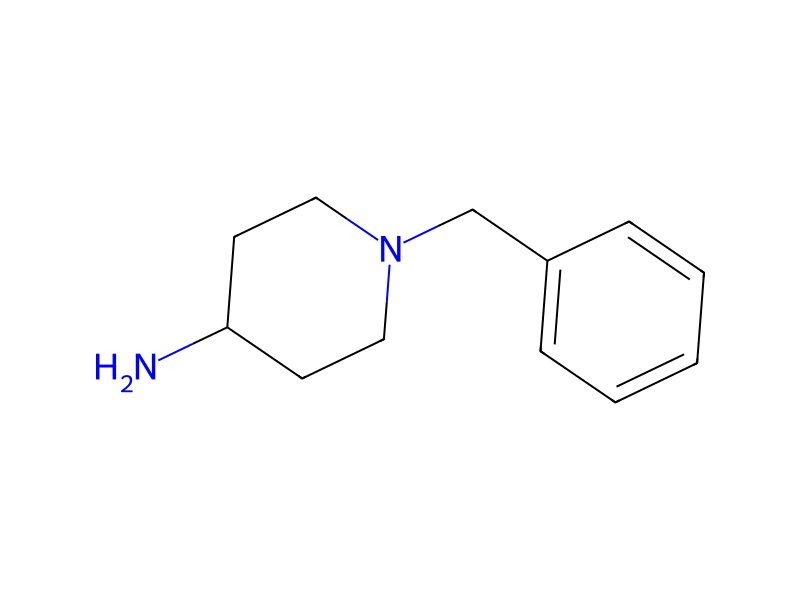
[F:1][C:2]1[CH:3]=[C:4]2[C:8](=[CH:9][CH:10]=1)[NH:7][CH:6]=[C:5]2[C:11]([OH:13])=O.[NH2:14][CH:15]1[CH2:20][CH2:19][N:18]([CH2:21][C:22]2[CH:27]=[CH:26][CH:25]=[CH:24][CH:23]=2)[CH2:17][CH2:16]1.C1(N=C=NC2CCCCC2)CCCCC1>O1CCCC1>[CH2:21]([N:18]1[CH2:19][CH2:20][CH:15]([NH:14][C:11]([C:5]2[C:4]3[C:8](=[CH:9][CH:10]=[C:2]([F:1])[CH:3]=3)[NH:7][CH:6]=2)=[O:13])[CH2:16][CH2:17]1)[C:22]1[CH:23]=[CH:24][CH:25]=[CH:26][CH:27]=1Participants
Reactant 3


Product 1

Reagents, catalysts & solvents 1

Procedure
To a solution of 5.1 g of 5-fluoroindole-3-carboxylic acid in 150 ml of tetrahydrofuran were added 5.5 g of 4-amino-1-benzylpiperidine and 5.8 g of dicyclohexylcarbodiimide, and the whole mixture was refluxed under heating on a water bath for 3 hours. After completion of the reaction, the precipitated dicyclohexylurea and a part of the objective product were filtered and suspended in 200 ml of hot tetrahydrofuran. The suspension was stirred and the insoluble dicyclohexylurea was filtered off with suction. The combined filtrates were concentrated and the residue was crystallized with ethyl acetate. The resulting crystals were filtered to give 8.3 g of N-(1-benzyl-4-piperidyl)-5-fluoroindole-3-carboxamide. The product, when recrystallized from a mixture of ethyl acetate and ethanol, melts at 215°-217° C.
Workup
- temperaturethe whole mixture was refluxed
- temperatureunder heating on a water bath for 3 hours
- customAfter completion of the reaction
- filtrationthe precipitated dicyclohexylurea and a part of the objective product were filtered
- filtrationthe insoluble dicyclohexylurea was filtered off with suction
- concentrationThe combined filtrates were concentrated
- customthe residue was crystallized with ethyl acetate
- filtrationThe resulting crystals were filtered
Sources & evidence
- ORD record
- ord-7fc7769603624aba9e8d33ff7ae7b99d
- Source dataset
- uspto-grants-1986_10
- Patent number
- US04616009
Reaction notes
Loading…