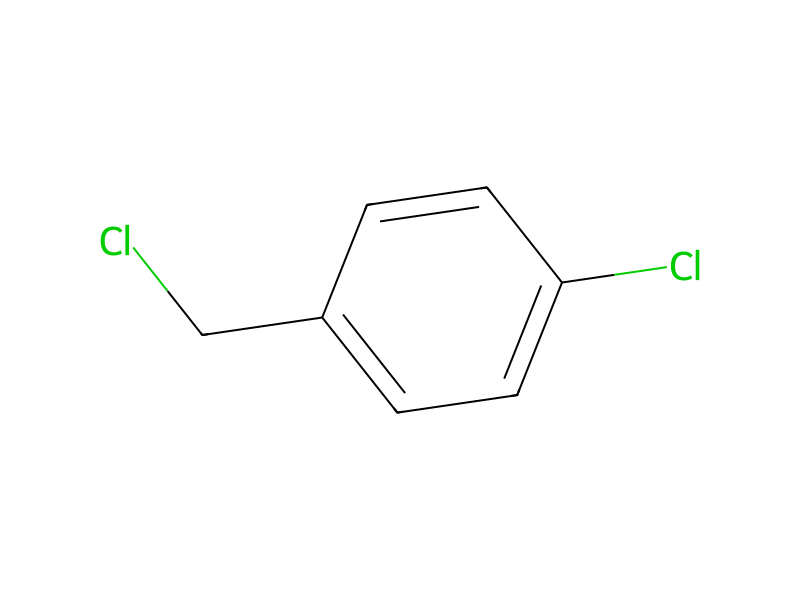
1-Chloro-4-(chloromethyl)benzene → n-Butyl 3-{4-[1-(4-chlorobenzyl)-piperazin-4-yl]-phenyl}-propionate
Reaction equation

[N:1]1([C:7]2[CH:12]=[CH:11][C:10]([CH2:13][CH2:14][C:15]([O:17][CH2:18][CH2:19][CH2:20][CH3:21])=[O:16])=[CH:9][CH:8]=2)[CH2:6][CH2:5][NH:4][CH2:3][CH2:2]1.C(=O)([O-])[O-].[K+].[K+].[Cl:28][C:29]1[CH:36]=[CH:35][C:32]([CH2:33]Cl)=[CH:31][CH:30]=1>C(#N)C>[Cl:28][C:29]1[CH:36]=[CH:35][C:32]([CH2:33][N:4]2[CH2:3][CH2:2][N:1]([C:7]3[CH:8]=[CH:9][C:10]([CH2:13][CH2:14][C:15]([O:17][CH2:18][CH2:19][CH2:20][CH3:21])=[O:16])=[CH:11][CH:12]=3)[CH2:6][CH2:5]2)=[CH:31][CH:30]=1Participants
5




Procedure
A mixture of 20.0 g. (68.8 mmole) n-butyl 3-[4-(piperazin-1-yl)-phenyl]-propionate, 200 ml. acetonitrile, 10.4 g. (75.6 mmole) pulverised potassium carbonate and 12.2 g. (75.6 mmole) 4-chlorobenzyl chloride is heated for 36 hours at reflux temperature, filtered with suction and the filtrate evaporated. The residue is taken up in diethyl ether and the hydrochloride precipitated out by adding hydrogen chloride-containing diethyl ether. It is filtered off with suction, recrystallised from isopropanol and dried. Yield 29.0 g. (87% of theory) of hydrochloride; m.p. 222°-225° C.
Workup
- additionA mixture of 20.0 g
- temperatureat reflux temperature
- filtrationfiltered with suction
- customthe filtrate evaporated
- customthe hydrochloride precipitated out
- additionby adding hydrogen chloride-
- additioncontaining diethyl ether
- filtrationIt is filtered off with suction
- customrecrystallised from isopropanol
- customdried
Sources & evidence
- ORD record
- ord-4bf36cc9ef214493bd9e04f305e4d2b9
- Source dataset
- uspto-grants-1986_10
- Patent number
- US04616086
Reaction notes
Loading…