Water → 1-(2-bromophenyl)-3-(1H-pyrrol-2-yl)-2-propen-1-one
Reaction equation

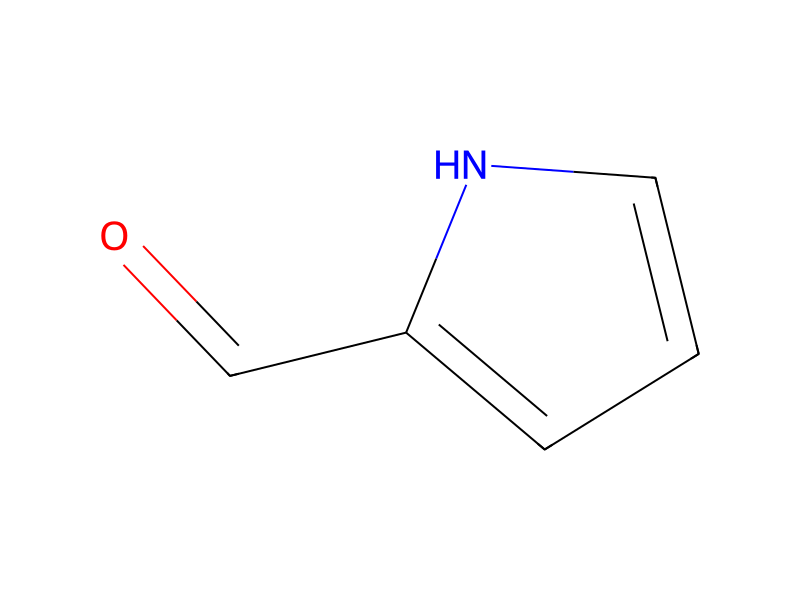
[NH:1]1[CH:5]=[CH:4][CH:3]=[C:2]1[CH:6]=O.[Br:8][C:9]1[CH:14]=[CH:13][CH:12]=[CH:11][C:10]=1[C:15](=[O:17])[CH3:16].[OH-].[K+].O>CC1CCCCC1.CCOC(C)=O>[Br:8][C:9]1[CH:14]=[CH:13][CH:12]=[CH:11][C:10]=1[C:15](=[O:17])[CH:16]=[CH:6][C:2]1[NH:1][CH:5]=[CH:4][CH:3]=1Participants
6




Conditions
- Temperature
- 45 °C
Procedure
A mixture of 20.0 g of (0.21 moles) 2-pyrrolecarboxaldehyde, 71.4 mL of (0.52 moles) o-bromoacetophenone, 72 mL of 1N potassium hydroxide and 800 mL of water was placed in a flask under nitrogen and heated to 45° C. for 72 hr. The reaction was cooled in an ice bath until a solid formed. The solid was taken up in methylcyclohexane/EtOAc, dried over 4A sieves and allowed to cool. The resulting solid was recrystallized from methylcyclohexane/EtOAc to give 43.5 g of 1-(2-bromophenyl)-3-(1H-pyrrol-2-yl)-2-propen-1-one as a yellow solid (75%), mp 76°-78° C.
Workup
- customwas placed in a flask under nitrogen
- temperatureThe reaction was cooled in an ice bath until a solid
- customformed
- dry with materialdried over 4A sieves
- temperatureto cool
- customThe resulting solid was recrystallized from methylcyclohexane/EtOAc
Sources & evidence
- ORD record
- ord-816212b44ce941eda55c7a526d07d5aa
- Source dataset
- uspto-grants-1989_01
- Patent number
- US04800207
Reaction notes
Loading…