p-Anisoyl chloride → HCID 14257798, compound
Reaction equation

[C:1](Cl)(=[O:10])[C:2]1[CH:7]=[CH:6][C:5]([O:8][CH3:9])=[CH:4][CH:3]=1.[Al+3].[Cl-].[Cl-].[Cl-].[OH:16][C:17]1[C:25]2[O:24][CH:23]=[C:22]([CH3:26])[C:21]=2[CH:20]=[C:19]([CH3:27])[C:18]=1[CH3:28]>ClCCCl>[OH:16][C:17]1[C:25]2[O:24][C:23]([C:1](=[O:10])[C:2]3[CH:7]=[CH:6][C:5]([O:8][CH3:9])=[CH:4][CH:3]=3)=[C:22]([CH3:26])[C:21]=2[CH:20]=[C:19]([CH3:27])[C:18]=1[CH3:28]Participants
5
Reactant 3
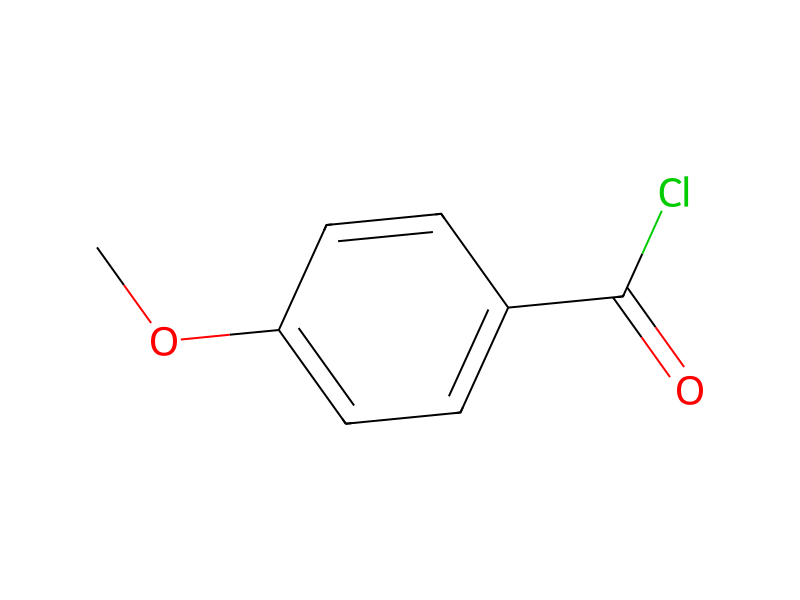


Product 1

Reagents, catalysts & solvents 1

Procedure
To p-anisoyl chloride (205 g) in 1,2-dichloroethane (2 L), cooled to 0° C., was added AlCl3 (240 g). The reaction mixture was warmed to room temperature and a solution of 7-hydroxy-3,5,6-trimethylbenzofuran (51 g) in 1,2-dichloroethane (400 mL) was added dropwise. The reaction was stirred for 51/2h then quenched with H2O (2 L). The organic layer was separated and the aqueous layer was extracted with CH2Cl2. The combined extracts were washed with 25% NH4OAc buffer, dried (Na2SO4) and filtered on silica gel to give 170 g of crude material which was used as such in the next step.
Workup
- customthen quenched with H2O (2 L)
- customThe organic layer was separated
- extractionthe aqueous layer was extracted with CH2Cl2
- washThe combined extracts were washed with 25% NH4OAc buffer
- dry with materialdried (Na2SO4)
- filtrationfiltered on silica gel
Sources & evidence
- ORD record
- ord-528784d565b848b09a69cd82514844d2
- Source dataset
- uspto-grants-1989_01
- Patent number
- US04800228
Reaction notes
Loading…