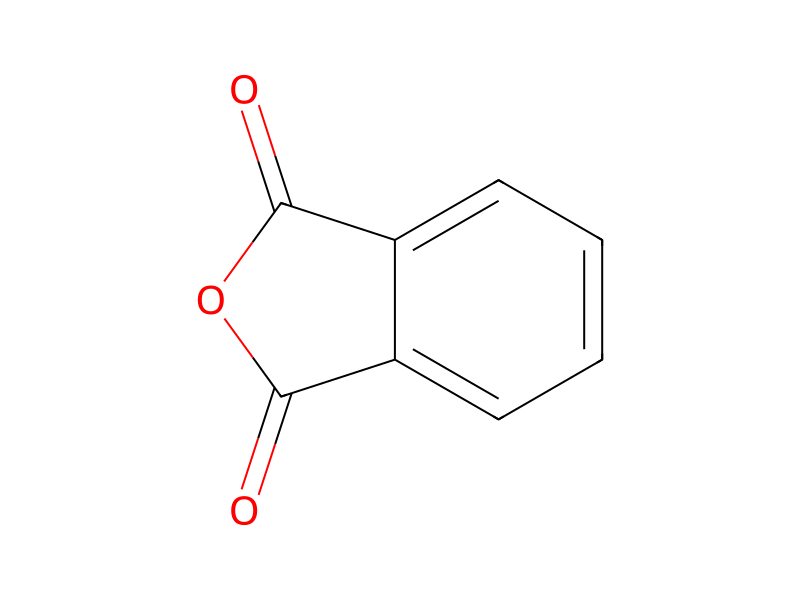
Phthalic Anhydride → 3-Nitrophthalic acid
Reaction equation

ClC1C=CC=C2C(OC(=O)C=12)=[O:6].[N+:13]([C:16]1[CH:26]=[CH:25][CH:24]=[C:18]2[C:19]([O:21][C:22](=[O:23])[C:17]=12)=[O:20])([O-:15])=[O:14].ClCl.C1(=O)OC(=O)C2=CC=CC=C12>>[N+:13]([C:16]1[CH:26]=[CH:25][CH:24]=[C:18]([C:19]([OH:6])=[O:20])[C:17]=1[C:22]([OH:21])=[O:23])([O-:15])=[O:14]Participants
5




Procedure
3-Chlorophthalic anhydride can also be prepared from 3-nitrophthalic anhydride by replacement of the nitro group by chlorine. The 3-nitrophthalic anhydride needed for this is prepared in three process steps by nitration of phthalic anhydride in moderate yield, by isomer separation of the nitrophthalic acids formed, by fractional crystallization and by conversion to the anhydride of the 3-nitrophthalic acid obtained (M. S. Newman, P. G. Scheurer, J. Am. Chem. Soc. 78 (1956), 5005; Organic Syntheses, Coil. Vol. 1 (1932), 399-401). This multistage and complicated route, which additionally gives poor yields, is not very suitable for industrial use.
Sources & evidence
- ORD record
- ord-abb16e57b34d498d8d6e475e7843a17e
- Source dataset
- uspto-grants-1997_11
- Patent number
- US05683553
Reaction notes
Loading…