Hydrochloric Acid → HCID 178526659, compound
Reaction equation

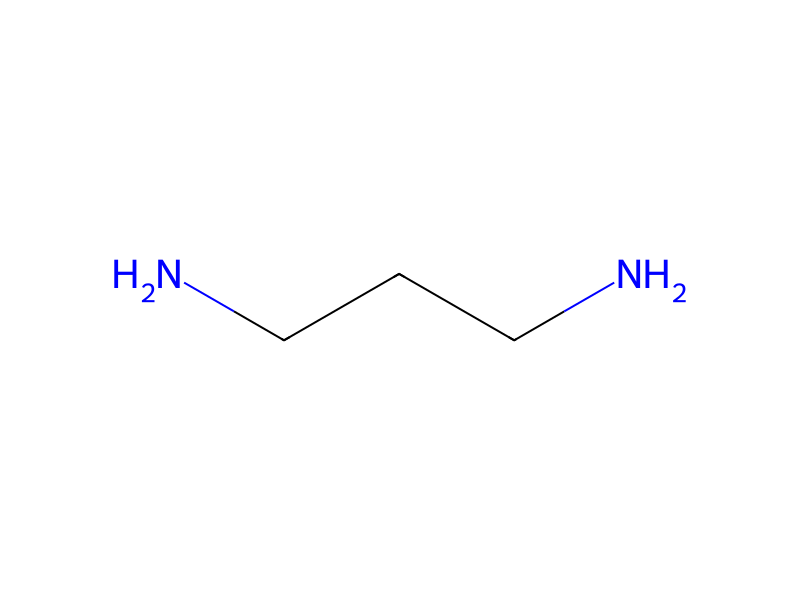
[NH2:1][CH2:2][CH2:3][CH2:4][NH2:5].[Cl:6][C:7]1[CH:12]=[C:11]([N+:13]([O-:15])=[O:14])[CH:10]=[C:9]([Cl:16])[C:8]=1[N:17]=[C:18]=S.Cl>C1(C)C=CC=CC=1>[Cl:6][C:7]1[CH:12]=[C:11]([N+:13]([O-:15])=[O:14])[CH:10]=[C:9]([Cl:16])[C:8]=1[N:17]=[C:18]1[NH:5][CH2:4][CH2:3][CH2:2][NH:1]1Participants
5
Reactant 3


Product 1

Reagents, catalysts & solvents 1

Procedure
A solution of 1.65 mL (0.02 mol) of 1,3-diaminopropane in toluene (10 mL) was cooled to -10° C. using an ice/methanol bath. To this solution was added 2,6-dichloro-4-nitrophenylisothiocyanate (2.45 g, 0.01 mol) in toluene (10 mL) dropwise over 30 minutes, which reacted to form a red oil. The reaction was stirred for an additional 2 hours, then heated at reflux for 4 hours. The mixture was cooled to room temperature then treated with 30 mL of 1 M HCl. After filtration of some insoluble material, the biphasic mixture was separated and the aqueous phase was basified to pH 9 using 1M NaOH. The resulting yellow precipitate was collected by filtration, washed with water, then hexane and air dried to give 0.6 g (21%) of the product.
Workup
- customwhich reacted
- customto form a red oil
- temperatureheated
- temperatureat reflux for 4 hours
- filtrationAfter filtration of some insoluble material
- customthe biphasic mixture was separated
- filtrationThe resulting yellow precipitate was collected by filtration
- washwashed with water
- dry with materialhexane and air dried
Sources & evidence
- ORD record
- ord-a5da8d72ce0d4d2795949b7b8e5b786a
- Source dataset
- uspto-grants-1997_11
- Patent number
- US05684156
Reaction notes
Loading…