Acetone → Bisphenol A
Reaction equation

NCCCSS[CH2:7][CH2:8][CH2:9]N.[OH-].[Na+].O.O.O.O.O.O.O.O.O.[S-2].[Na+].[Na+].N[CH2:26][CH2:27][CH2:28]S.[S].N#N.[S].[C:34]1([OH:40])[CH:39]=[CH:38][CH:37]=[CH:36][CH:35]=1.[CH3:41][C:42]([CH3:44])=[O:43]>>[OH:40][C:34]1[CH:39]=[CH:38][C:37]([C:27]([C:8]2[CH:7]=[CH:44][C:42]([OH:43])=[CH:41][CH:9]=2)([CH3:28])[CH3:26])=[CH:36][CH:35]=1Participants








Procedure
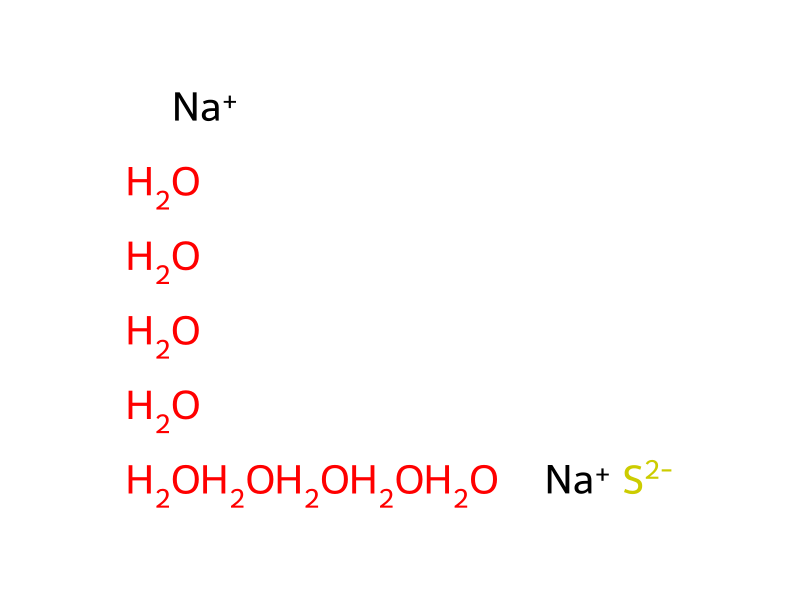
There was added to the above reaction mixture of the disulfide derivative of sulfonated polystyrene at a temperature of 50° C., 10 ml of a 50% sodium hydroxide solution and 20 grams of sodium sulfide nonahydrate. The resulting heterogeneous mixture was heated at reflux for 3.5 hours. The cooled reation mixture was filtered and the resin was washed with water followed by 1 liter of a 10% sulfuric acid solution. The resulting washed resin was then azeotropically dried with toluene. Based on method of preparation, there was obtained an ion-exchange catalyst consisting of about 20 mole percent of chemically combined sulfonated styrene units having aminopropylmercaptan units covalently attached to sulfur by nitrogen-sulfur linkages and about 80 mole percent of sulfonated styrene units. This ion-exchange resin was found to be an effective condensation catalyst for phenol and acetone to provide for the production of bisphenol-A in accordance with the procedure of Example 1.
Workup
- temperatureThe resulting heterogeneous mixture was heated
- temperatureat reflux for 3.5 hours
- filtrationThe cooled reation mixture was filtered
- washthe resin was washed with water
- washThe resulting washed resin
- dry with materialwas then azeotropically dried with toluene
- customBased on method of preparation
- customthere was obtained an ion-exchange catalyst
Sources & evidence
- ORD record
- ord-e68b436d629e419b8a593c101c250ee2
- Source dataset
- uspto-grants-1984_01
- Patent number
- US04424283
Reaction notes
Loading…