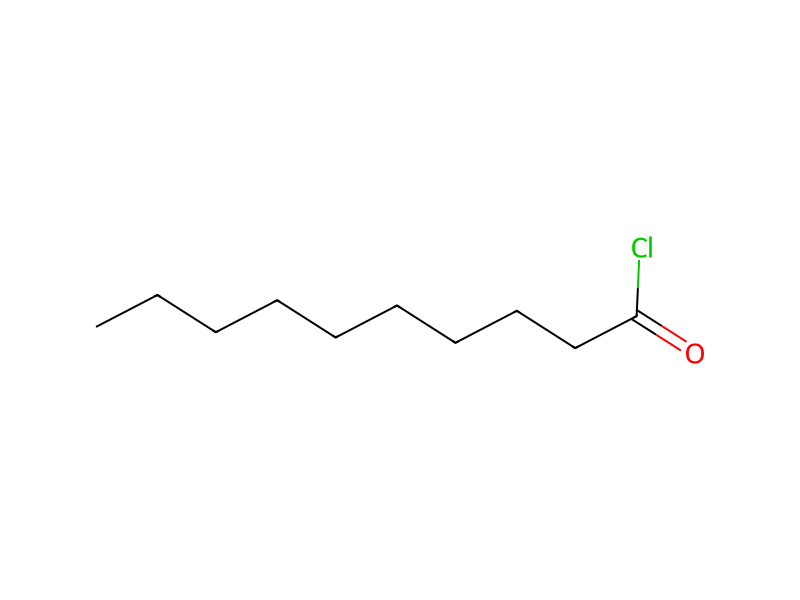
Decanoyl chloride → HCID 178443442, compound
Reaction equation

Cl.[CH3:2][C:3]1[NH:8][C:7]2[CH:9]=[N:10][CH:11]=[CH:12][C:6]=2[NH:5][N:4]=1.[C:13]([Cl:24])(=[O:23])[CH2:14][CH2:15][CH2:16][CH2:17][CH2:18][CH2:19][CH2:20][CH2:21][CH3:22]>>[ClH:24].[C:13]([N:5]1[C:6]2[CH:12]=[CH:11][N:10]=[CH:9][C:7]=2[NH:8][C:3]([CH3:2])=[N:4]1)(=[O:23])[CH2:14][CH2:15][CH2:16][CH2:17][CH2:18][CH2:19][CH2:20][CH2:21][CH3:22]Participants
3


Procedure
3.7 g (0.02 moles) of 3-methyl-1,4-dihydropyrido[3,4-e]-as-triazine hydrochloride are reacted with an excess of caprinic acid chloride as described in Example 2, to obtain 1-caprinoyl-3-methyl-1,4-dihydropyrido[3,4-e]-as-triazine hydrochloride with a yield of 62.7%; m.p.: 237°-238° C.
Sources & evidence
- ORD record
- ord-9f36313180d440f2a4c3d91a7a6bf582
- Source dataset
- uspto-grants-1984_01
- Patent number
- US04424351
Reaction notes
Loading…