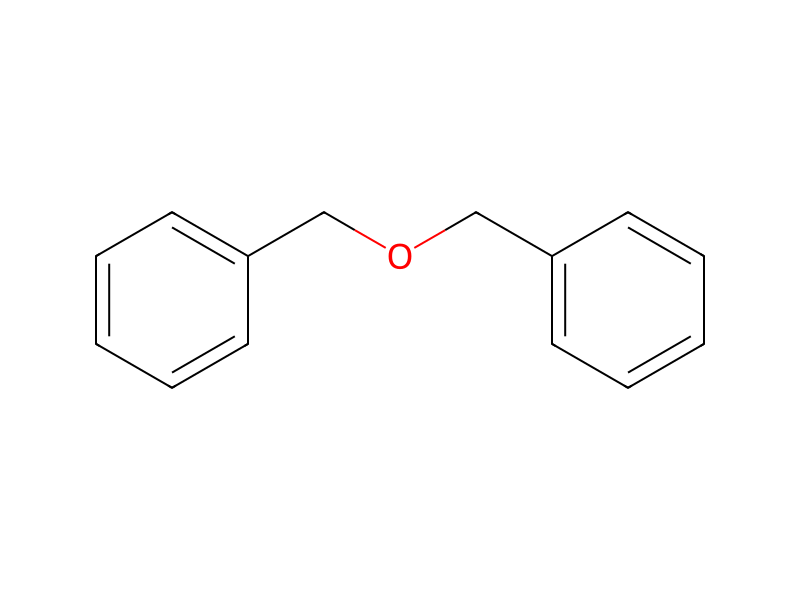
Dibenzyl ether → HCID 13261521, compound
Reaction equation

[CH3:1][C:2]1[CH:7]=[C:6]([CH3:8])[N:5]=[C:4]([NH:9][C:10]([NH:12][S:13]([C:16]2[CH:21]=[CH:20][CH:19]=[CH:18][C:17]=2[O:22]CC2C=CC=CC=2)(=[O:15])=[O:14])=[O:11])[N:3]=1.C(OCC1C=CC=CC=1)C1C=CC=CC=1>FC(F)(F)C(O)=O.CC(C)=O>[CH3:1][C:2]1[CH:7]=[C:6]([CH3:8])[N:5]=[C:4]([NH:9][C:10]([NH:12][S:13]([C:16]2[CH:21]=[CH:20][CH:19]=[CH:18][C:17]=2[OH:22])(=[O:15])=[O:14])=[O:11])[N:3]=1Participants
5
Reactant 2

Product 1

Reagents, catalysts & solvents 2


Procedure
A stirred solution of 0.5 g of N-[(4,6-dimethylpyrimidin-2-yl)aminocarbonyl]-2-(benzyloxy)benzenesulfonamide (from b, above) in 20 ml of trifluoroacetic acid was boiled under reflux for 1.5 hours. The proton magnetic resonance spectrum indicated complete cleavage of the benzyl ether. The trifluoroacetic acid was evaporated in vacuum and the oily residue stirred with water and diethyl ether, providing white solid. The solid was dissolved in acetone and reprecipitated by dilution of the solution with hexane, yielding N-[(4,6-dimethylpyrimidin-2-yl)aminocarbonyl]-2-hydroxybenzenesulfonamide as a white solid, m.p. ca. 180°. The mass spectrum showed a molecular ion, m/e 322; ##STR38## and no m/e 91 (no Ph--CH2+).
Workup
- temperatureunder reflux for 1.5 hours
- customThe trifluoroacetic acid was evaporated in vacuum
- customproviding white solid
- customreprecipitated by dilution of the solution with hexane
Sources & evidence
- ORD record
- ord-7bc554b17fa84913a9049a61f0258aaa
- Source dataset
- uspto-grants-1984_01
- Patent number
- US04425153
Reaction notes
Loading…