Hydrochloric Acid → 4-Nitro-N,N-dipropylbenzamide
Reaction equation

[N+:1]([C:4]1[CH:12]=[CH:11][C:7]([C:8](Cl)=[O:9])=[CH:6][CH:5]=1)([O-:3])=[O:2].[CH2:13]([NH:16][CH2:17][CH2:18][CH3:19])[CH2:14][CH3:15].Cl>CCOCC>[CH2:13]([N:16]([CH2:17][CH2:18][CH3:19])[C:8](=[O:9])[C:7]1[CH:11]=[CH:12][C:4]([N+:1]([O-:3])=[O:2])=[CH:5][CH:6]=1)[CH2:14][CH3:15]Participants
5
Reactant 3


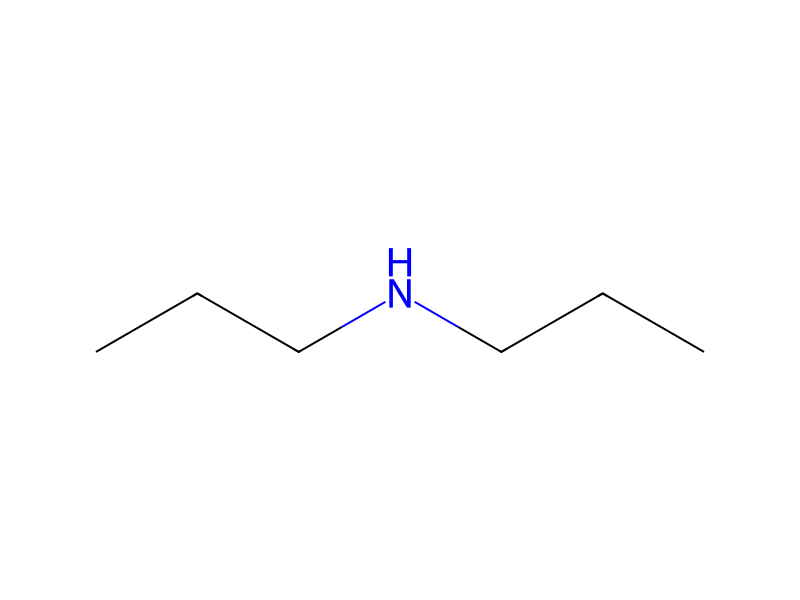
Product 1

Reagents, catalysts & solvents 1

Procedure
An amount of 37.1 gm (0.2 mol) of p-nitrobenzoyl chloride in 300 ml of ether were added dropwise, with agitation and at room temperature, into a solution of 50.6 gm (0.5 mol) of dipropylamine in 400 of ether. Then, the mixture was agitated for one hour at room temperature and one hour at boiling temperature, the reaction mixture was treated with dilute hydrochloric acid, and the ether phase washed with water and evaporated. An amount of 44.3 gm of p-nitrobenzoic acid dipropylamide in the form of a light-yellow, oily residue was obtained.
Workup
- washthe ether phase washed with water
- customevaporated
Sources & evidence
- ORD record
- ord-b6f7e71da5d44b99b681caf86c3b8661
- Source dataset
- uspto-grants-1984_01
- Patent number
- US04425327
Reaction notes
Loading…