Hydrochloric Acid → HCID 13576914, compound
Reaction equation

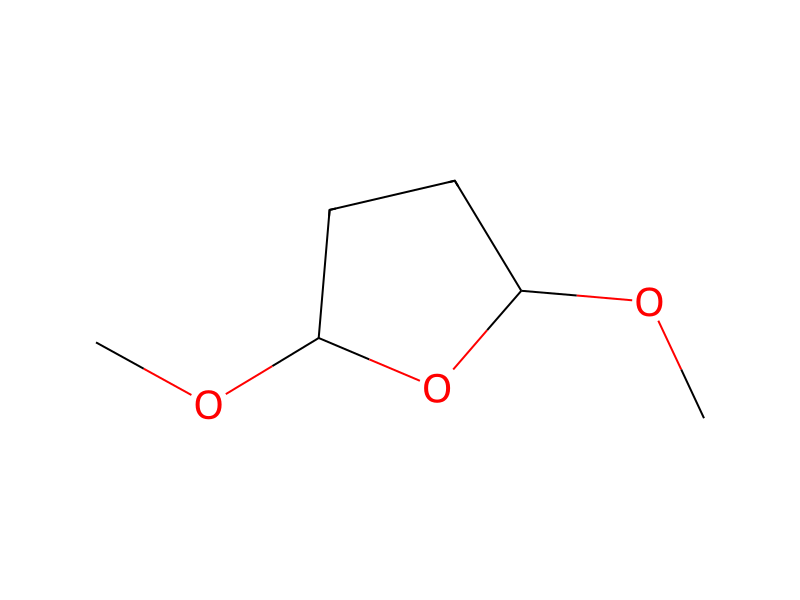
[NH2:1][C:2]1[C:12]([CH3:13])=[CH:11][C:5]2[CH:6]([CH3:10])[C:7](=[O:9])[O:8][C:4]=2[CH:3]=1.CO[CH:16]1[CH2:20][CH2:19][CH:18](OC)O1.Cl>O1CCOCC1>[CH3:10][CH:6]1[C:5]2[CH:11]=[C:12]([CH3:13])[C:2]([N:1]3[CH:16]=[CH:20][CH:19]=[CH:18]3)=[CH:3][C:4]=2[O:8][C:7]1=[O:9]Participants
5
Reactant 3


Product 1

Reagents, catalysts & solvents 1

Procedure
1.8 g of 6-amino-3,5-dimethylbenzofuran-2-(3H)-one are dissolved in 20 ml of dioxane and, while stirring at room temperature, 2 ml of 2,5-dimethoxytetrahydrofuran and 1.4 ml of 37% strength hydrochloric acid are added. After 30 minutes the aqueous phase is removed and the organic phase is concentrated to dryness by evaporation in vacuo. The residue is chromatographed over silica gel with methylene chloride. The resulting pale-yellow oil crystallises from butyl oxide. In this manner 3,5-dimethyl-6-(pyrrol-1-yl)-benzofuran-2(3H)-one having a melting point of 61°-63° C. is obtained.
Workup
- customAfter 30 minutes the aqueous phase is removed
- concentrationthe organic phase is concentrated to dryness by evaporation in vacuo
- customThe residue is chromatographed over silica gel with methylene chloride
- customThe resulting pale-yellow oil crystallises from butyl oxide
Sources & evidence
- ORD record
- ord-bb0f47caf2b74c399355a7a920b13715
- Source dataset
- uspto-grants-1984_01
- Patent number
- US04426380
Reaction notes
Loading…