Isobutanol → 2-Methylpropyl hydrogen sulfate
Reaction equation

[S:1](=[O:4])(=[O:3])=[O:2].O1CCOCC1.S(=O)(=O)=O.[CH2:15]([OH:19])[CH:16]([CH3:18])[CH3:17]>ClC(Cl)C>[CH2:15]([O:19][S:1](=[O:3])(=[O:2])[OH:4])[CH:16]([CH3:18])[CH3:17]Participants
Reactant 3

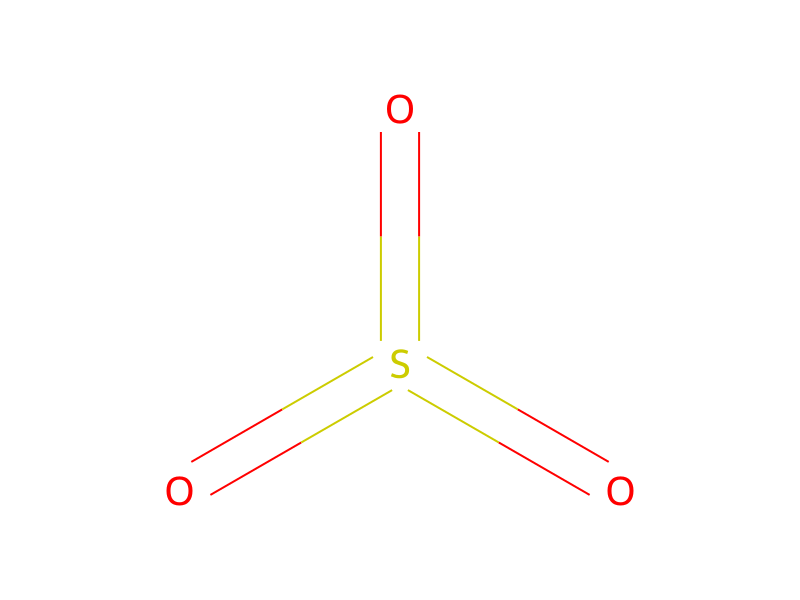

Product 1

Reagents, catalysts & solvents 1

Procedure
609 g sulfur trioxide-dioxane addition product, which contained 143.9 g (1.8 mols) sulfur trioxide and was dissolved in 400 g dichloroethane, was reacted with 137.1 g (1.85 mols) isobutanol, and a solution of sulfuric acid monoisobutylester in dichloroethane was obtained. 66 g of this solution, which contained 49 g (0.32 mol) sulfuric acid monoisobutylester, was added dropwise within 1 hour to 59.5 g (0.33 mol) dichlorophenylphosphane. The whole was initially heated for a short while to 30° C. and then cooled with water to maintain the reaction temperature at 20° C. Next, the reaction mixture was stirred for 4 hours at room temperature, stripped under a vacuum of 1 mm mercury and at a temperature of up to 30° C. 79 g of a brown, medium-viscous crude product was obtained. 31P-NMR-spectroscopy indicated that 41% of the phosphorus used was present in the crude product in the form of benzenephosphonic acid isobutylester chloride.
Sources & evidence
- ORD record
- ord-1b00c8b121994f129e23869d29217e4d
- Source dataset
- uspto-grants-1984_01
- Patent number
- US04427603
Reaction notes
Loading…