Acetic Acid → Methyl 2-cyano-3-phenylbutyrate
Reaction equation

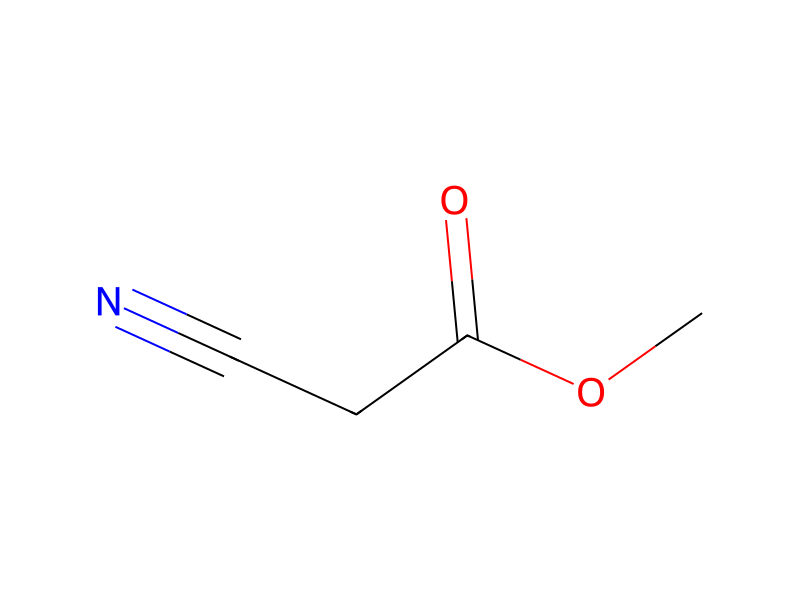
[C:1]([CH2:3][C:4]([O:6][CH3:7])=[O:5])#[N:2].[C:8]([C:11]1[CH:16]=[CH:15][CH:14]=[CH:13][CH:12]=1)(=O)[CH3:9].C([O-])(=O)C.[NH4+].C(O)(=O)C>C1(C)C=CC=CC=1.[Pd]>[C:1]([CH:3]([CH:8]([C:11]1[CH:16]=[CH:15][CH:14]=[CH:13][CH:12]=1)[CH3:9])[C:4]([O:6][CH3:7])=[O:5])#[N:2]Participants
7
Reactant 4



Product 1

Reagents, catalysts & solvents 2


Procedure
In another example, methyl cyanoacetate can be reacted with acetophenone in the presence of ammonium acetate and acetic acid in refluxing toluene solvent followed by hydrogenation with 5% Pd on C catalyst to yield methyl 2-cyano-3-phenylbutyrate. The latter compound can then be reacted with methyl bromacetate in the presence of potassium carbonate to provide the α-methylbenzyl substituted dimethyl cyanoethane-1,2-dicarboxylate starting 1,2-diester (See Example 8, below): ##STR10## The latter material can then be subjected to the aforesaid 1,2-ester transposition to provide the isomeric terminal diester (See Example 1, below.)
Sources & evidence
- ORD record
- ord-ad6aea1d217f4f088d2f8d30e96e22ad
- Source dataset
- uspto-grants-1984_01
- Patent number
- US04428887
Reaction notes
Loading…