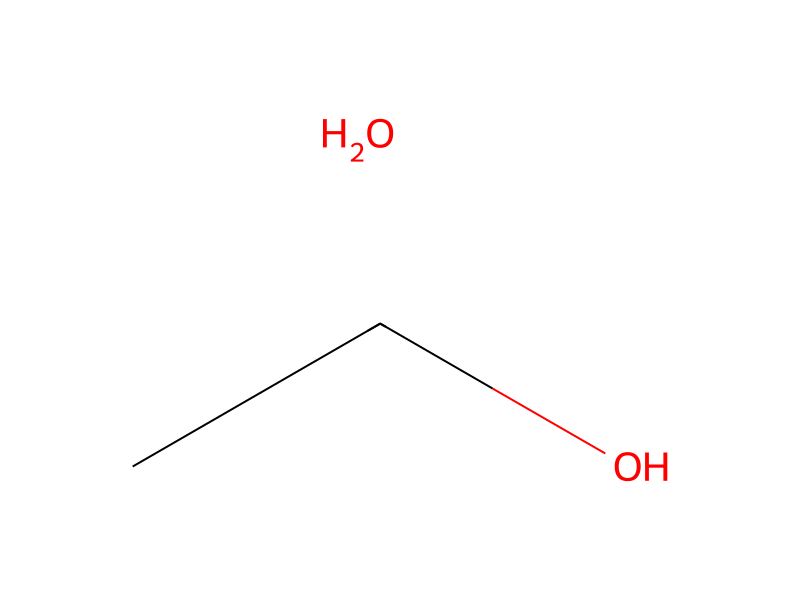
Water ethanol → HCID 54676503, compound
Reaction equation

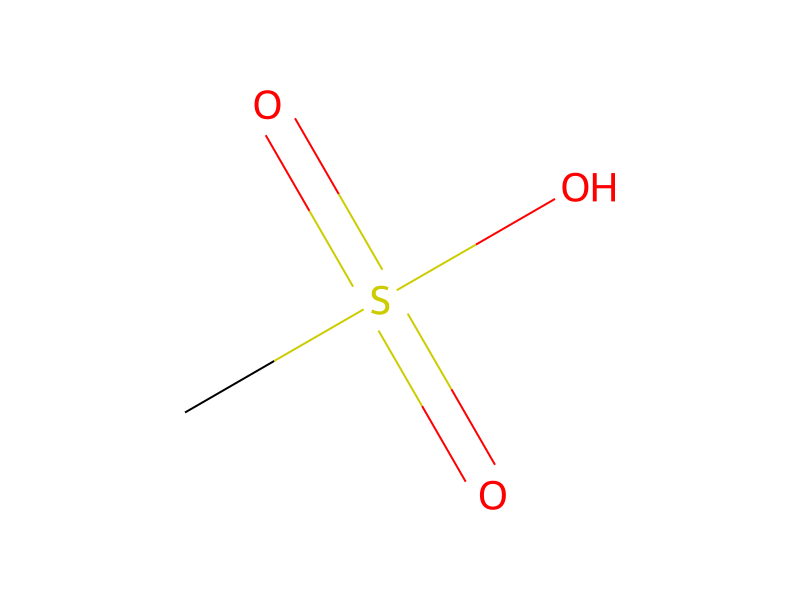
C([O:3][C:4](=O)[C:5](=[O:21])[CH:6]([C:19]#[N:20])[CH2:7][CH2:8][CH2:9][CH2:10][CH2:11][CH2:12][CH2:13][CH2:14][CH2:15][CH2:16][CH2:17][CH3:18])C.C([OH:25])C.O>CS(O)(=O)=O>[OH:21][C:5]1[C:4](=[O:3])[NH:20][C:19](=[O:25])[C:6]=1[CH2:7][CH2:8][CH2:9][CH2:10][CH2:11][CH2:12][CH2:13][CH2:14][CH2:15][CH2:16][CH2:17][CH3:18]Participants
4
Reactant 2

Product 1

Reagents, catalysts & solvents 1
Procedure
1 G. of the 3-cyano-2-oxopentadecanoic acid ethyl ester is dissolved in 5 ml of methanesulfonic acid and the mixture allowed to stand overnight at room temperature. The reaction mixture is worked up by first pouring into ethanol-water (20 ml ethanol--5 ml water). After standing for several hours, the ethanol is removed by evaporation. The aqueous acidic residue is diluted further with water and then extracted with chloroform. The chloroform solution is then washed well with water, dried and evaporated to give the desired 3-hydroxy-4-(n-dodecyl)-3-pyrroline-2,5-dione. Recrystallization from hexane or cyclohexane provides pure 3-hydroxy-4-(n-dodecyl)-3-pyrroline-2,5-dione, mp 108°-109° C.
Workup
- waitAfter standing for several hours
- customthe ethanol is removed by evaporation
- additionThe aqueous acidic residue is diluted further with water
- extractionextracted with chloroform
- washThe chloroform solution is then washed well with water
- customdried
- customevaporated
Sources & evidence
- ORD record
- ord-9d8e4fc06ec24c3d940c9152d05a045b
- Source dataset
- uspto-grants-1984_01
- Patent number
- US04428959
Reaction notes
Loading…