1-Tert-butylpiperazine → 1-Phenylpiperazine
Reaction equation

C(O[C:6]1[CH:11]=[CH:10][CH:9]=[CH:8][C:7]=1Br)CCC.C([N:17]1[CH2:22][CH2:21][NH:20][CH2:19][CH2:18]1)(C)(C)C.CC(C)([O-])C.[Na+]>C1(C)C=CC=CC=1.C1C=CC(P(C2C(C3C(P(C4C=CC=CC=4)C4C=CC=CC=4)=CC=C4C=3C=CC=C4)=C3C(C=CC=C3)=CC=2)C2C=CC=CC=2)=CC=1>[C:6]1([N:17]2[CH2:22][CH2:21][NH:20][CH2:19][CH2:18]2)[CH:7]=[CH:8][CH:9]=[CH:10][CH:11]=1Participants
6
Reactant 3



Product 1

Reagents, catalysts & solvents 2

Procedure
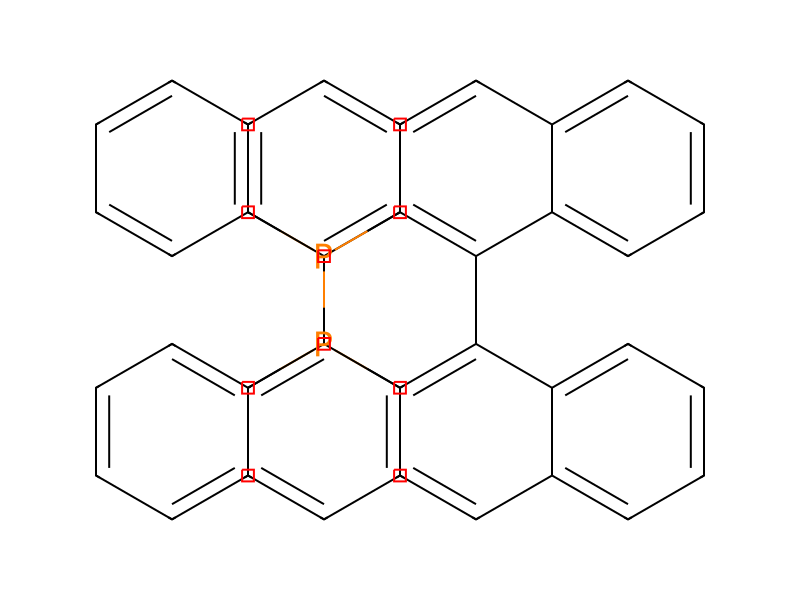
Part A: To a solution of n-butyloxybromobenzene (5.00 g, 21.82 mmol) in toluene (50 mL) was added tert-butyl piperazine (4.88 g, 26.18 mmol) and sodium tert-butoxide (2.94 g, 30.55 mmol). After stirring at ambient temperature for several minutes, BINAP (0.408 g, 0.655 mmol) and tris(dibenzyldeneacetone)-dipallidium (0) (0.200 g, 0.218 mmol) were added. The resulting mixture was heated to eighty degrees Celsius for 21 hours. After cooling to ambient temperature, the reaction mixture was filtered through a pad of Celite®, washing with diethyl ether and dichloromethane. Chromatography (on silica, ethyl acetate/hexanes) provided the phenyl-piperazine as a tan solid (5.56 g, 76%).
Workup
- temperatureThe resulting mixture was heated to eighty degrees Celsius for 21 hours
- temperatureAfter cooling to ambient temperature
- filtrationthe reaction mixture was filtered through a pad of Celite®
- washwashing with diethyl ether and dichloromethane
Sources & evidence
- ORD record
- ord-57d6173298034604bd9735ba369e20f5
- Source dataset
- uspto-grants-2002_12
- Patent number
- US06492367B1
Reaction notes
Loading…