Potassium Carbonate → Ethyl 4-methyl-5-phenyl-2-thiazolecarboxylate
Reaction equation

[CH3:1][CH:2]([NH:11][C:12](=O)[C:13]([O:15][CH2:16][CH3:17])=[O:14])[C:3](=O)[C:4]1[CH:9]=[CH:8][CH:7]=[CH:6][CH:5]=1.P12(SP3(SP(SP(S3)(S1)=S)(=S)S2)=S)=[S:20].C([O-])([O-])=O.[K+].[K+].[OH-].[Na+]>C(Cl)(Cl)Cl.O>[CH3:1][C:2]1[N:11]=[C:12]([C:13]([O:15][CH2:16][CH3:17])=[O:14])[S:20][C:3]=1[C:4]1[CH:9]=[CH:8][CH:7]=[CH:6][CH:5]=1Participants
7


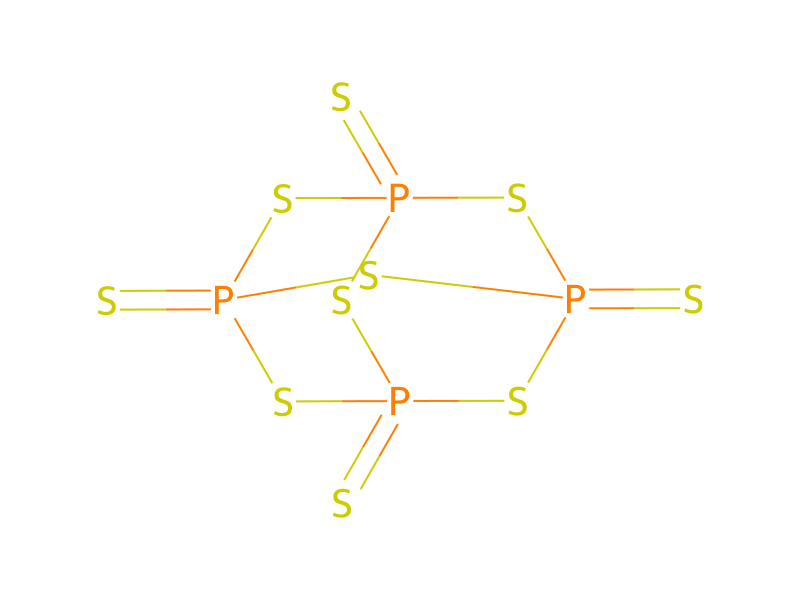




Procedure
The product from Step 89b (2.58 g, 10.4 mmol, 1 eq) and P2S5 (4.83 g, 10.9 mmol, 1.05 eq) are suspended in 30 mL CHCl3. The mixture is heated under reflux. After 12h, water and solid K2CO3 are carefully added until all material dissolves. The aqueous layer is made sufficiently basic with 1N NaOH (pH more than 10) and extracted with EtOAc. The combined organic layers are washed with 1N NaOH and brine, dried over MgSO4, filtered and concentrated to give ethyl 4-methyl-5-phenyl-1,3-thiazole-2-carboxylate as a yellow oil (2.51 g, 98%). MS (ESI) for C13H13NO2S m/z 248.1 (M+H)+.
Workup
- temperatureThe mixture is heated
- temperatureunder reflux
- dissolutiondissolves
- extractionextracted with EtOAc
- washThe combined organic layers are washed with 1N NaOH and brine
- dry with materialdried over MgSO4
- filtrationfiltered
- concentrationconcentrated
Sources & evidence
- ORD record
- ord-c7c6152d08354200bc13f3e66860c543
- Source dataset
- uspto-grants-2002_12
- Patent number
- US06492385B2
Reaction notes
Loading…