1,2-Dichloroethane → 5-(Bromomethyl)quinoxaline
Reaction equation

ClCCCl.[Br:5]CC1C=C2C(=CC=1)N=CC=N2.[CH3:17][C:18]1[CH:27]=[CH:26][CH:25]=[C:24]2[C:19]=1[N:20]=[CH:21][CH:22]=[N:23]2.BrN1C(=O)CCC1=O>C(O)(=O)C.C(Cl)Cl>[Br:5][CH2:17][C:18]1[CH:27]=[CH:26][CH:25]=[C:24]2[C:19]=1[N:20]=[CH:21][CH:22]=[N:23]2Participants


Procedure
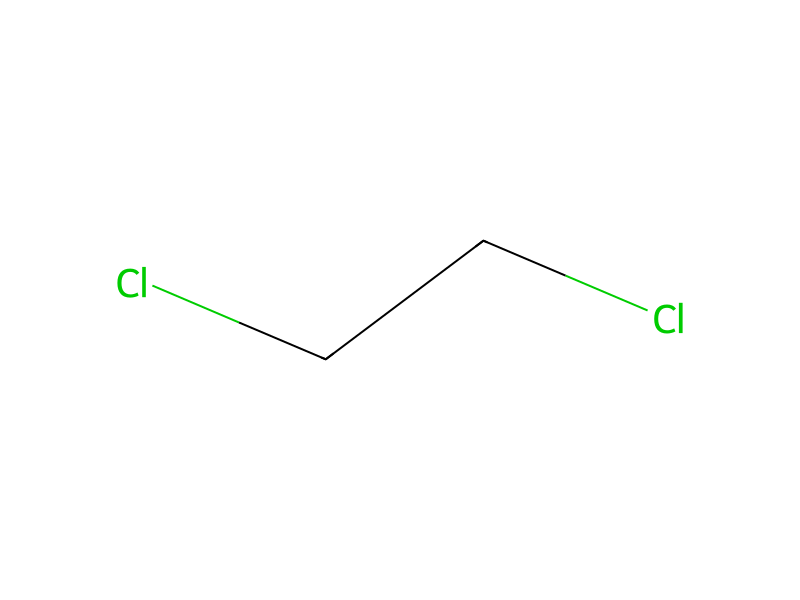
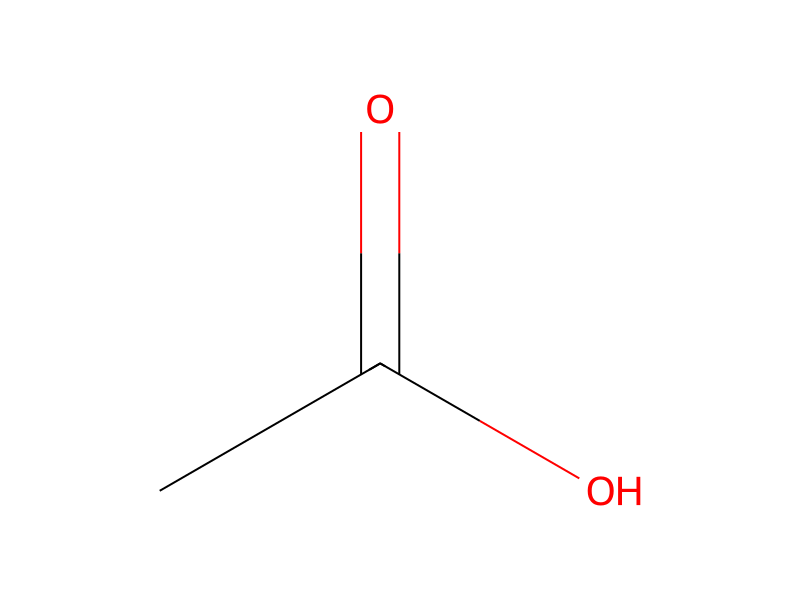
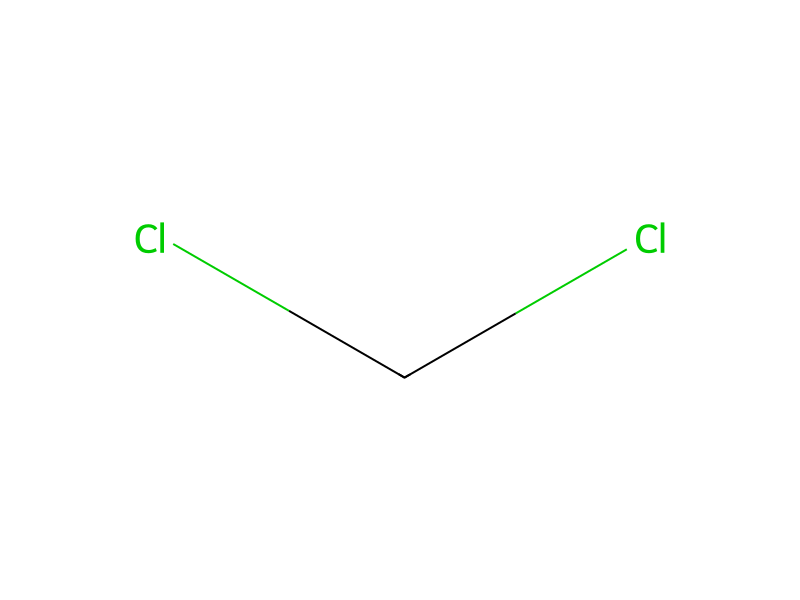
In polar solvents, such as 1,2-dichloroethane, a good yield of 6-(bromomethyl)-quinoxaline was observed and consequently other hydrochlorocarbons (for example, methylene chloride) would be expected to be good as well. However, these solvents are less preferred due to their high toxicity and volatility. In other polar solvents, such as acetic acid, 5-(methyl)-quinoxaline reacted with N-bromosuccinimide almost quantitatively to give 5-(bromomethyl)-quinoxaline. However, the 6-isomer reacted to give 6-(bromomethyl)-quinoxaline that quickly decomposed to give a black tar. Therefore, benzylic bromination with N-bromosuccinimide in acetic acid can only apply to one isomer (the 5-isomer) but not to the mixtures of 5- and 6-methylquinoxalines obtained from ortho-toluene diamine. In acetonitrile, the 5-isomer reacted with N-bromosuccinimide to give 5-(bromomethyl)-quinoxaline in a good yield (>90%) but the 6-isomer did not react. Therefore, benzylic bromination with N-bromosuccinimide in acetonitrile can only apply to one isomer (the 5-isomer) but not to the methylquinoxalines mixtures obtained from ortho-toluene diamine. An acceptable yield was obtained for the benzylic chlorination of 6-methyl-quinoxaline using N-chlorosuccinimide in acetonitrile (conversion =60% and selectivity =80%) but the reaction was very slow requiring 8 to 12 hours reflux (Example 15).
Sources & evidence
- ORD record
- ord-a8776990f74942af936ea3f7b38d109e
- Source dataset
- uspto-grants-2002_12
- Patent number
- US06492517B1
Reaction notes
Loading…