Ethylenediamine → N~1~-(7-Chloroquinolin-4-yl)ethane-1,2-diamine
Reaction equation

Cl[C:2]1[C:11]2[C:6](=[CH:7][C:8]([Cl:12])=[CH:9][CH:10]=2)[N:5]=[CH:4][CH:3]=1.[NH2:13][CH2:14][CH2:15][NH2:16]>>[Cl:12][C:8]1[CH:7]=[C:6]2[C:11]([C:2]([NH:13][CH2:14][CH2:15][NH2:16])=[CH:3][CH:4]=[N:5]2)=[CH:10][CH:9]=1Participants
3
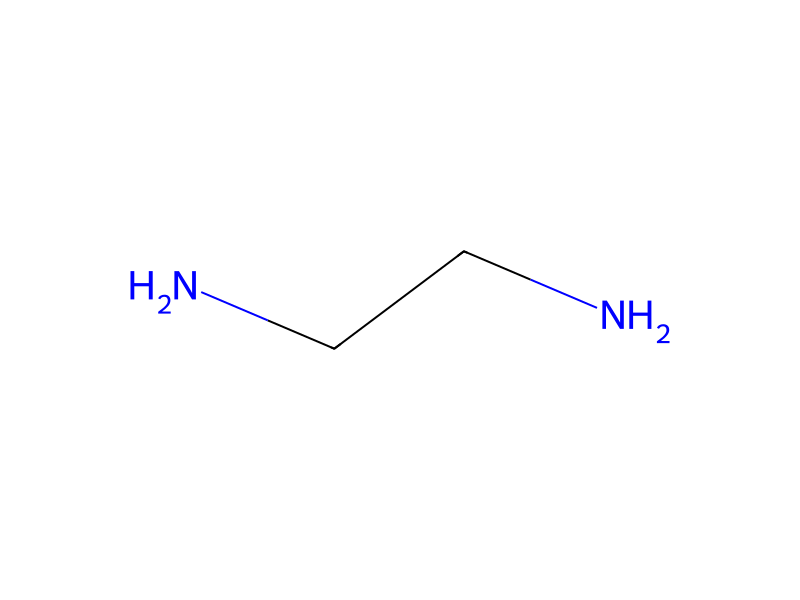
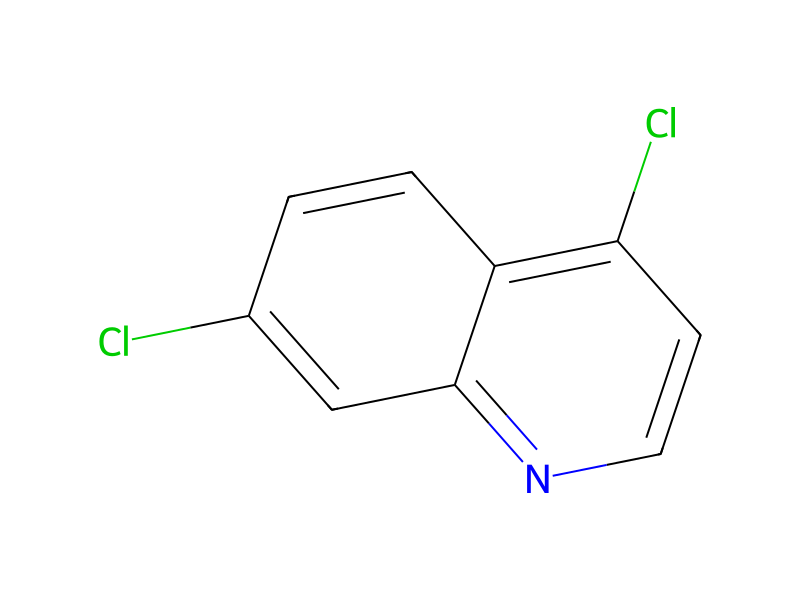

Conditions
- Temperature
- 85 °C
Procedure
A mixture of 4,7-dichloroquinoline (2.0 g, 10 mmol) and 1,2-diaminoethane (2.7 g, 45 mmol) is heated at 85° C. for 5 hours with magnetic stirring. After adding 1N soda (15 ml), the solid obtained is extracted with ethyl acetate (100 ml) at 50° C. The organic phase is washed with distilled water and then using a saturated NaCl solution and then again with distilled water and finally is dried on sodium sulphate. The solvent is evaporated and the product obtained is vacuum-dried (1.3 g, 58%).
Workup
- additionAfter adding 1N soda (15 ml)
- customthe solid obtained
- extractionis extracted with ethyl acetate (100 ml) at 50° C
- washThe organic phase is washed with distilled water
- dry with materialagain with distilled water and finally is dried on sodium sulphate
- customThe solvent is evaporated
- customthe product obtained
- customis vacuum-dried (1.3 g, 58%)
Sources & evidence
- ORD record
- ord-adef0cb1b6344542b8d70a060337db00
- Source dataset
- uspto-grants-2009_07
- Patent number
- US07566710B2
Reaction notes
Loading…