Anthracene → Anthracene, 9-(methylthio)-
Reaction equation

[CH3:1][S:2]SC.[CH:5]1[C:18]2[C:9](=[CH:10][C:11]3[C:16]([CH:17]=2)=[CH:15][CH:14]=[CH:13][CH:12]=3)[CH:8]=[CH:7][CH:6]=1>C(#N)C.[N+]([O-])([O-])=O.[Ag+]>[CH3:1][S:2][C:17]1[C:18]2[C:9]([CH:10]=[C:11]3[C:16]=1[CH:15]=[CH:14][CH:13]=[CH:12]3)=[CH:8][CH:7]=[CH:6][CH:5]=2Participants
5
Reactant 2
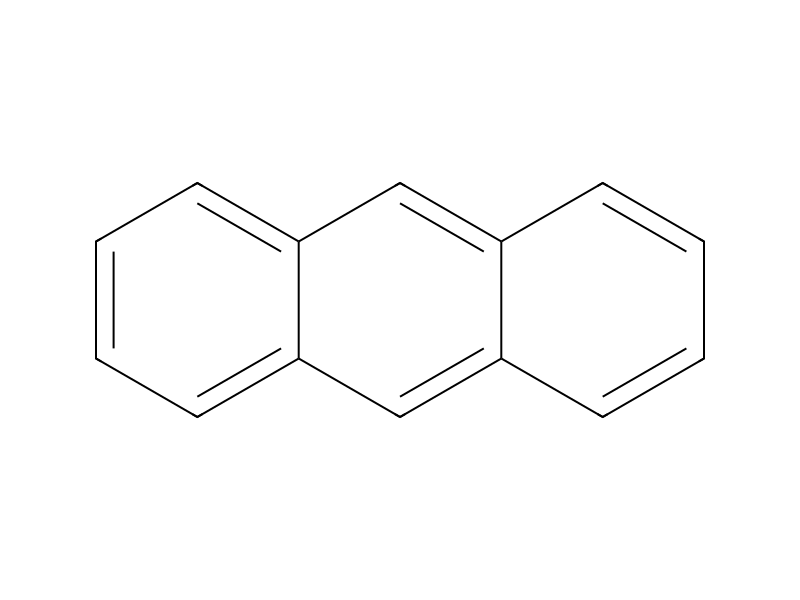

Product 1

Reagents, catalysts & solvents 2


Procedure
For example, in acetonitrile, dimethyl disulfide shows an irreversible first oxidation peak at 1.05 V vs Ag/O.1M AgNO3 in acetonitrile reference electrode using the technique of cyclic voltimetry. The oxidation peak of anthracene is about 400 mV more positive than that for dimethyl disulfide. Consequently, pursuant to this invention, dimethyl disulfide can be selectively oxidized electrolytically in the presence of anthracene to produce the organothiated product, 9-methylthioanthracene, in very good yield.
Sources & evidence
- ORD record
- ord-2cdd16daf9a14b7e92717ca99d808735
- Source dataset
- uspto-grants-2002_08
- Patent number
- US06432294B1
Reaction notes
Loading…