Diisopropylethylamine → HCID 54231445, compound
Reaction equation

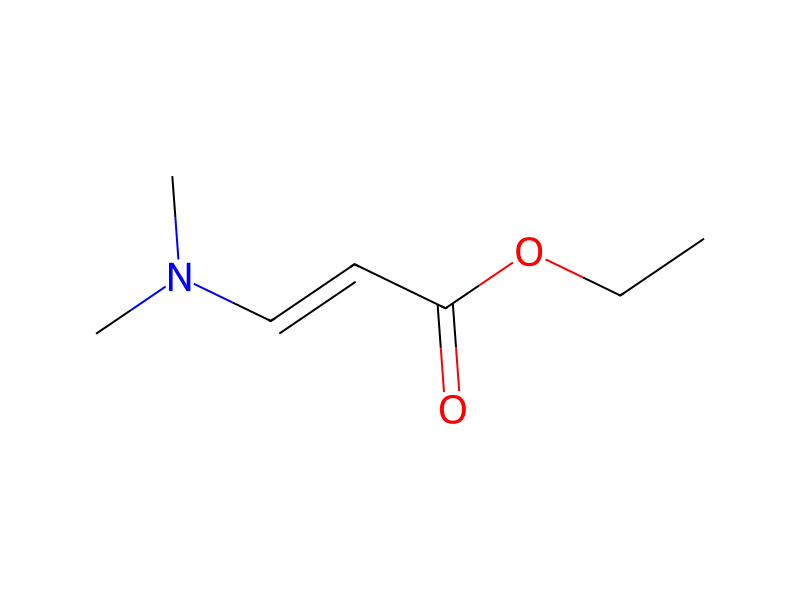
[Cl:1][C:2]1[C:10]([C:11]#[N:12])=[C:9]([Cl:13])[C:8]([F:14])=[CH:7][C:3]=1[C:4](Cl)=[O:5].[CH3:15][N:16]([CH3:24])[CH:17]=[CH:18][C:19]([O:21][CH2:22][CH3:23])=[O:20].C(N(C(C)C)C(C)C)C>ClCCl>[Cl:1][C:2]1[C:10]([C:11]#[N:12])=[C:9]([Cl:13])[C:8]([F:14])=[CH:7][C:3]=1[C:4]([C:18](=[CH:17][N:16]([CH3:24])[CH3:15])[C:19]([O:21][CH2:22][CH3:23])=[O:20])=[O:5]Participants
5
Reactant 3


Product 1

Reagents, catalysts & solvents 1

Conditions
- Temperature
- 50 °C
Procedure
Starting at room temperature, a solution of 1075 g of 2,4-dichloro-3-cyano-5-fluorobenzoyl chloride (about 94% strength, corresponding to 1010.5 g=4.00 mol) in 850 ml of dichloromethane is added dropwise to a solution of 626 g (4.372 mol) of ethyl 3-dimethylamino-acrylate and 591 g (4.572 mol) of ethyl diisopropyl-amine (Hünig's base) in 1060 ml of dichloromethane. In the course of this, the temperature rises to about 50-55° C. (dropwise addition time about 90 minutes). The reaction mixture is subsequently stirred at 50° C. for 2 hours and then employed in the next stage without further working up.
Workup
- customStarting at room temperature
- customrises to about 50-55° C.
- additiondropwise addition time about 90 minutes)
Sources & evidence
- ORD record
- ord-4a9e492fa55d4237b6831c633c2b68af
- Source dataset
- uspto-grants-2002_08
- Patent number
- US06432948B1
Reaction notes
Loading…