3-Pyridinecarboxaldehyde → HCID 22311394, compound
Reaction equation

N1C=CC=C(C=O)C=1.Cl.N12CCC(CC1)C(=O)C2.[OH-].[K+].N1C=CC=C(C=C2C(=O)C3CCN2CC3)C=1.[C:37]1([CH:43]([CH:50]2[C:55](=[O:56])[CH:54]3[CH2:57][CH2:58][N:51]2[CH2:52][CH2:53]3)[C:44]2[CH:45]=[N:46][CH:47]=[CH:48][CH:49]=2)[CH:42]=[CH:41][CH:40]=[CH:39][CH:38]=1.C1([Mg]Br)C=CC=CC=1.[BH4-].[Na+]>C(O)C>[C:37]1([CH:43]([CH:50]2[CH:55]([OH:56])[CH:54]3[CH2:57][CH2:58][N:51]2[CH2:52][CH2:53]3)[C:44]2[CH:45]=[N:46][CH:47]=[CH:48][CH:49]=2)[CH:42]=[CH:41][CH:40]=[CH:39][CH:38]=1Participants
Reactant 7
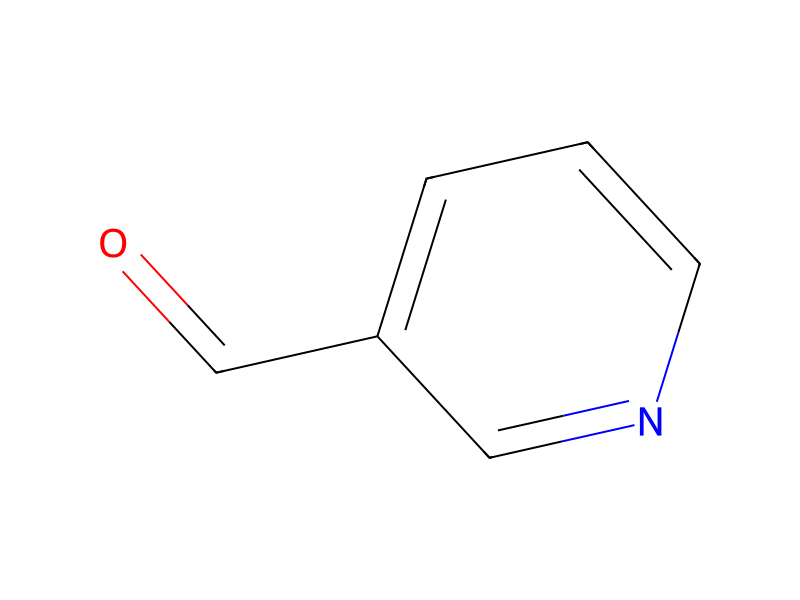 HCID 103713-Pyridinecarboxaldehyde
 HCID 14797Potassium Hydroxide
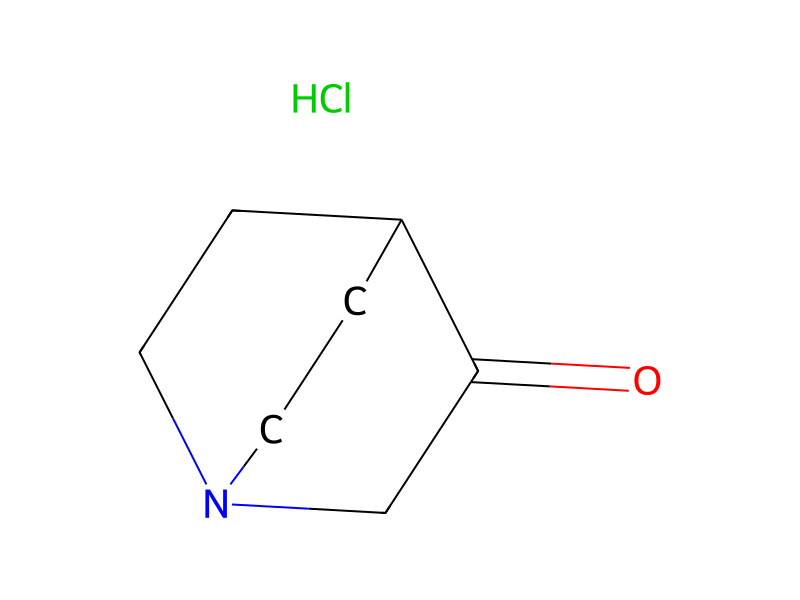 HCID 1020191-Azabicyclo(2.2.2)octan-3-one, hydrochloride (1:1)
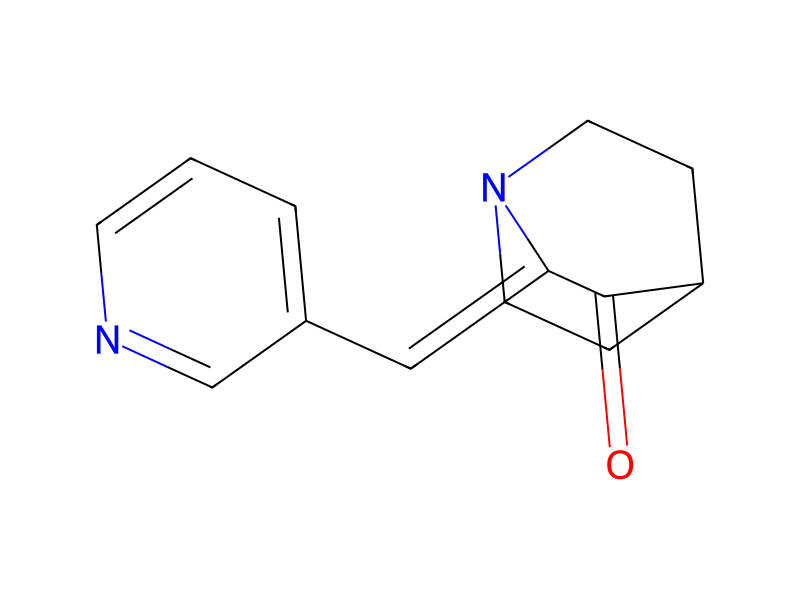 HCID 6118222-(Pyridin-3-ylmethylidene)-1-azabicyclo[2.2.2]octan-3-one2×
 HCID 4311764Sodium borohydride
 HCID 22311374HCID 22311374, compound
 HCID 178418255HCID 178418255, compound
Product 1

Reagents, catalysts & solvents 1

Procedure
The manner in which 2-(1-phenyl-1-(3-pyridyl)methyl)-1-azabicyclo[2.2.2]octanes, 2-(2-phenyl-1-(3-pyridyl)ethyl)-1-azabicyclo[2.2.2]octanes and 2-(3-phenyl-1-(3-pyridyl)propyl)-1-azabicyclo[2.2.2]octanes of the present invention can be synthetically produced can vary. For example, pyridine-3-carboxaldehyde and quinuclidin-3-one hydrochloride (commercially available from Aldrich) are reacted together in the presence of methanolic potassium hydroxide as described in Neilsen and Houlihan, Org. React. 16: 14-38 (1968) to give the aldol condensation product, 2-(3-pyridylmethylene)-1-azabicyclo[2.2.2]octan-3-one as a crystalline solid. 2-(3-pyridylmethylene)-1-azabicyclo[2.2.2]octan-3-one can then be converted to 2-(1-phenyl-1-(3-pyridyl)methyl)-1-azabicyclo[2.2.2]octane-3-one by treatment with phenylmagnesium bromide in ethanol at −10° C. The ketone is then treated with sodium borohydride to yield the alcohol, 2-(1-phenyl-1-(3-pyridyl)methyl)-1-azabicyclo[2.2.2]octan-3-ol. This intermediate is reacted with neat thionyl chloride at room temperature to give 3-chloro-2-(1-phenyl-1-(3-pyridyl)methyl)-1-azabicyclo[2.2.2]octane as a crystalline solid. Removal of the chlorine is accomplished by hydrogenation in the presence of Raney nickel as described by de Koning, Org. Prep. Proced Int. 7:31 (1975) to give the desired product, 2-(1-phenyl-1-(3-pyridyl)methyl)-1-azabicyclo[2.2.2]octane. The related compounds, 2-(2-phenyl-1-(3-pyridyl)ethyl)-1-azabicyclo[2.2.2]octane and 2-(3-phenyl-1-(3-pyridyl)propyl)-1-azabicyclo[2.2.2]octane can be prepared in a similar manner by replacing phenylmagnesium bromide with benzylmagnesium bromide or 2-phenethylmagnesium bromide, respectively, in the synthetic approach given above.
Workup
- customReact
- custom16: 14-38 (1968) to give
Sources & evidence
- ORD record
- ord-3476f329fa274539aec3d1835590314c
- Source dataset
- uspto-grants-2002_08
- Patent number
- US06432975B1
Reaction notes
Loading…