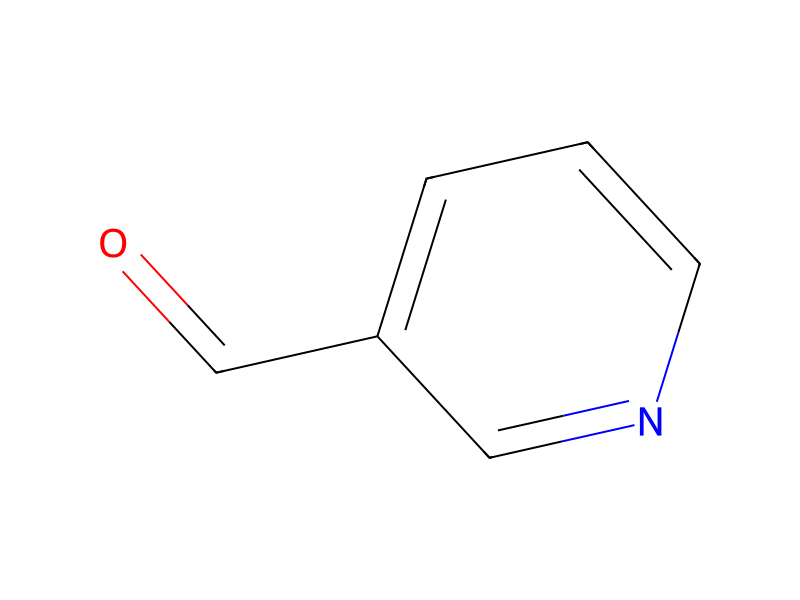
3-Pyridinecarboxaldehyde → 2-(3-Pyridinylmethyl)-3-quinuclidinol
Reaction equation

C1([O:7][CH:8]2[CH:13]3[CH2:14][CH2:15][N:10]([CH2:11][CH2:12]3)[CH:9]2[CH2:16][C:17]2[CH:18]=[N:19][CH:20]=[CH:21][CH:22]=2)C=CC=CC=1.N1C=CC=C(C=O)C=1.Cl.N12CCC(CC1)C(=O)C2.[OH-].[K+].N1C=CC=C(C=C2C(=O)C3CCN2CC3)C=1>CO.[Ni]>[N:19]1[CH:20]=[CH:21][CH:22]=[C:17]([CH2:16][CH:9]2[CH:8]([OH:7])[CH:13]3[CH2:12][CH2:11][N:10]2[CH2:15][CH2:14]3)[CH:18]=1Participants
Reactant 5


Product 1

Reagents, catalysts & solvents 2


Procedure
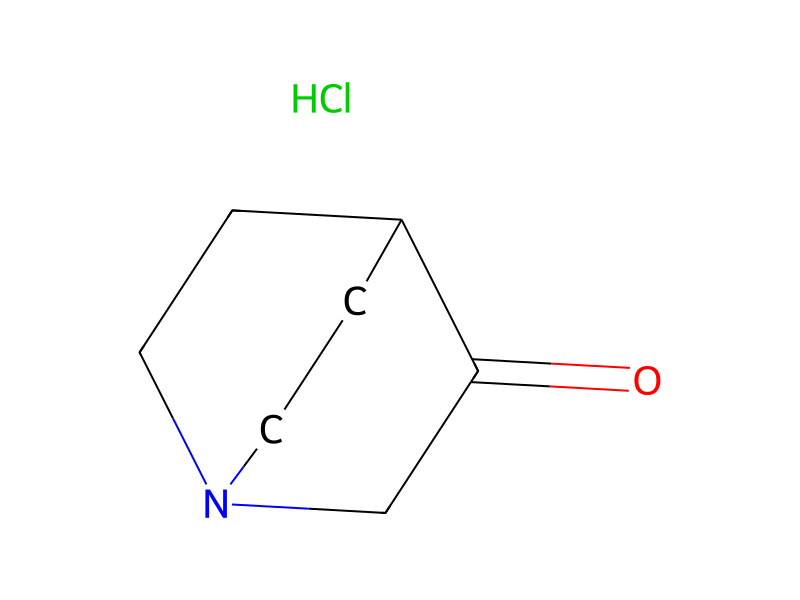
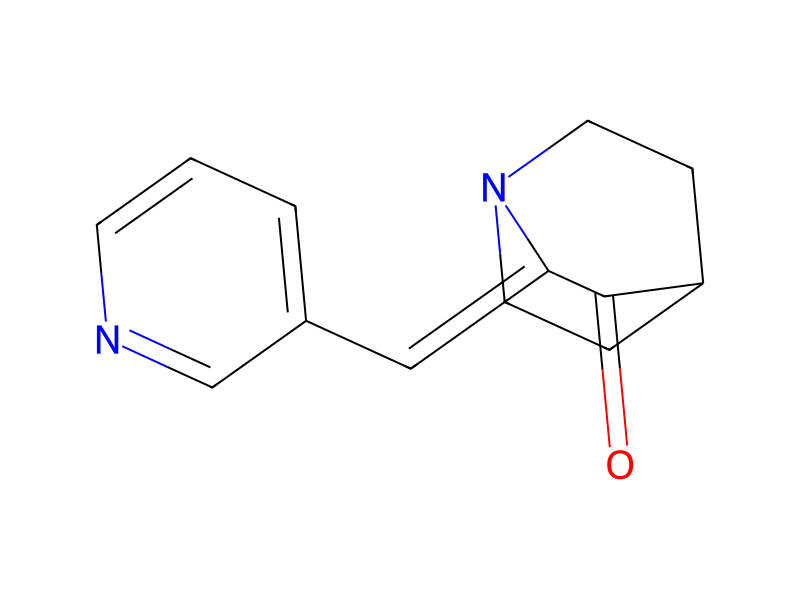
The manner in which 3-(phenyloxy)-2-(3-pyridylmethyl)-1-azabicyclo[2.2.2]octane of the present invention is synthesized can vary. For example, pyridine-3-carboxaldehyde and quinuclidin-3-one hydrochloride (commercially available from Aldrich) are reacted together in the presence of methanolic potassium hydroxide as described in Neilsen and Houlihan, Org. React. 16: 14-38 (1968). This aldol condensation product, 2-(3-pyridylmethylene)-1-azabicyclo[2.2.2]octan-3-one, is then dissolved in methanol and hydrogenated in the presence of Raney nickel catalyst to afford 2-(3-pyridylmethyl)-1-azabicyclo[2.2.2]octan-3-ol. This alcohol is then etherified with phenol via Mitsunobu coupling with diethylazidocarboxylate and triphenylphosphine, as described by Guthrie et al., J. Chem. Soc., Perkin Trans I45: 2328 (1981), to afford the desired product, 3-(phenyloxy)-2-(3-pyridylmethyl)-1-azabicyclo[2.2.2]octane.
Workup
- customReact
Sources & evidence
- ORD record
- ord-bf2b5f90170b4b01885a2c71599168b9
- Source dataset
- uspto-grants-2002_08
- Patent number
- US06432975B1
Reaction notes
Loading…